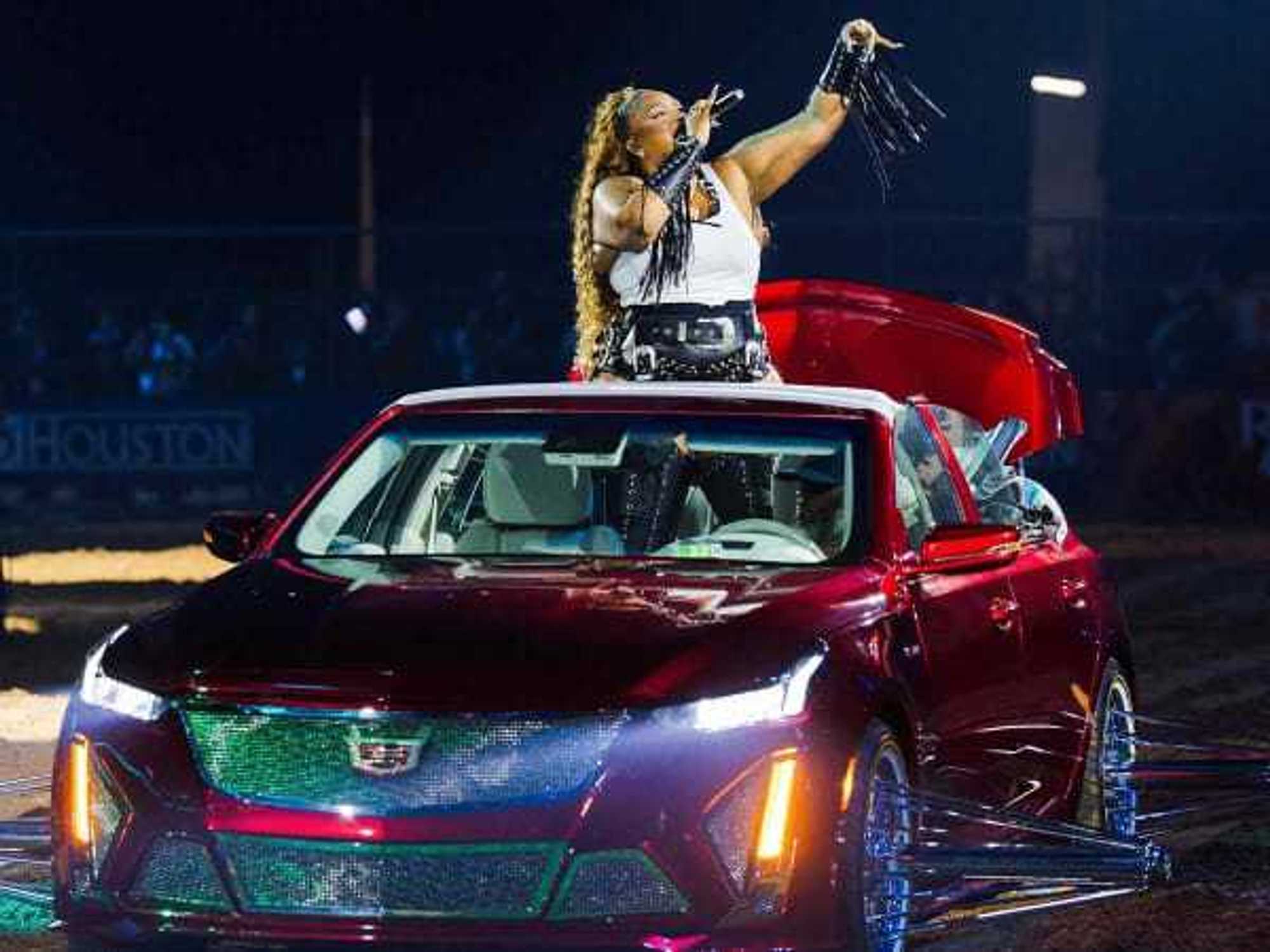
Much like Mayor of Trill Town Bun B’s past rodeo shows, Lizzo’s sold-out Friday night show, closing out Black Heritage Day, was a rapturous celebration of Houston pride with a live jukebox.
The best rodeo shows are when no one sits down, even if their boots make their dogs holler, and when the show ends, everyone spills out of the stadium barefoot, or the menfolk carry the heels. No other city would allow you to eat chicken fried lobster, drink award-winning wine by the bottle, watch teenagers wrestle calves for cash, see kindergartens hold on to a sheep with a death grip, and stomp your Ariats to “Still Tippin’” with 70,000 other people within the span of six hours.
Along with Go Tejano Day, Black Heritage Day (which became a part of the RodeoHouston DNA in 1993) showcases the diversity found on the concrete and the hay off Kirby Drive every year. It’s a whole day of celebration on the grounds, including field trips, art installations, traveling museum exhibits, and an unofficial HBCU reunion event. As cowpokes in cowboy hats battled various beasts before the show, the big screen highlighted roving bands of women dressed in their finest rodeo attire. The sidewalks around NRG Stadium were a Friday night fashion show. Friday was also the kickoff of spring break for most Houston-area school districts, meaning the grounds will be insanely busy over the next week.
Proud Alief Elsik High School alum and University of Houston product Lizzo was supposed to have made her triumphant hometown rodeo debut back in 2020, but Covid-19 scuttled the second half of that season, including her appearance. Just a few weeks ago, she gushed on Late Night with Seth Meyers about how important the show would be to her, mentioning seeing John Mayer and Beyoncé during her teen years in town.
At 9:15 pm, just next door to the 8th Wonder of the World the “9th Wonder of the World” — Texas Southern University’s Ocean of Soul Marching Band — made its way onto the show floor to massive applause as a hype video of Houston landmarks played on the show screens. If RodeoHouston needs a house band — founded in 1969 — this is it. In fact, it should be legally mandated that they appear every year.
Before Lizzo even appeared, the show felt like a Super Bowl halftime show, with three SLABs driving out into the dirt, with the woman herself kicking off “About Damn Time” from the back seat of a fourth SLAB, clad in a black leather studded duster, surrounded by TSU dancers. This is the kind of big-budget spectacle that the rodeo salivates for. Backed by a mostly-female band onstage, the Ocean of Soul provided a constant brassy, bassy undercurrent.
“This is the city that raised me,” Lizzo said, taking in the 69,362 souls in her midst.
She was met with a hurricane-force wall of screams as she launched into “Cuz I Love You,” ditching her black leather duster for a white tank top.
Houston’s own gospel pop quartet The Walls Group appeared just then for the Black National Anthem, “Lift Every Voice And Sing.” Lizzo and the Walls siblings then wove “Special” into “Total Praise.” We’d all buy a Lizzo gospel album, and you know it.
Her collaboration with Cardi B “Rumors” — flaunting rodeo lyrical standards — gave way to her own rendition 4 Non Blondes’ “What’s Up,” giving Linda Perry’s grunge pop classic a torch song glow-up.
Lizzo got back into her custom SLAB for her own “Yitty On Yo Tittys” from last summer’s My Face Hurts From Smiling album, complete with a human-sized dancing Labubu. The Ocean of Soul got its own interlude while keen eyes could see Lizzo side stage, tuning up her famous flute with a familiar line.
Wait, is that? Yes, by God, that’s Houston’s national anthem.
Soon Slim Thug, Mike Jones, and Paul Wall sauntered out for “Still Tippin’” as city pride began to sweat from the stadium walls, all while the Ocean of Soul kept strutting along. The professor emeritus’ of Houston's 2000s rap explosion, you look up from your phone and realize all these Houston rap standards are all over 20 years old now. Paul is a silver fox, Slim is a real estate magnate, and even people in Japan know Jones’ personal phone number.
“At the end of the day, I just want Houston to feel good as hell,” Lizzo said, tapping directly into “Good As Hell.” Was that a pregnant lady in a cowboy hat dancing on the big screen? How much more Houston can a fetus be?
The only truly Houston things left to do tonight were to sweat through your Wranglers in the parking lot, gaze at the Astrodome, sit in standstill traffic, and join the drive-thru parade at the closest Whataburger.
Setlist
With Texas Southern University’s Ocean Of Soul
About Damn Time
Juice
2 Be Loved (Am I Ready)
Soulmate
Cuz I Love You
With The Walls Group
Lift Every Voice And Sing
Special > Total Praise
Rumors > What’s Up
Tempo > Wobble
Boys (with Ocean Of Soul)
Mo City Don (Z-Ro Cover)
Yitty On Yo Tittys
Screwed (with Ocean Of Soul)
Still Tippin’ (with Slim Thug, Mike Jones, and Paul Wall)
Truth Hurts
Good As Hell (with Ocean Of Soul)