Eric Rohmer, the great French filmmaker whose death was reported today, was a sly but sympathetic observer of human folly, forever attentive to the ways intelligent and articulate people tend to over-analyze everything, even their own emotions, and very often wind up talking themselves out of opportunities for happiness. He was at the vanguard of the French New Wave during the late 1950s, alongside Francois Truffaut, Jean-Luc Godard and other impassioned young critics who gradually evolved from writing about movies to making their own.
But as Dave Kehr notes in his eloquent New York Times tribute: "In opposition both to the intensely personal, confessional tone of much of the work of Truffaut and the politically provocative films of Godard, Mr. Rohmer remained true to a restrained, rationalist aesthetic, close to the principles of the 18th-century thinkers whose words he frequently cited in his movies. And yet Mr. Rohmer’s work was warmed by an undercurrent of romanticism and erotic yearning, made perhaps all the more affecting for never quite breaking through the surface of his elegant, orderly films."
You can divine Rohmer's influence in films by such diverse directors as Whit Stillman, Steven Soderbergh, Andrew Bujalski and, especially, Richard Linklater (whose Before Sunrise is, arguably, the best Eric Rohmer movie that Rohmer himself didn't actually make). Better still, you can go back straight to the source by renting or purchasing such Rohmer masterworks as My Night at Maud's, Claire's Knee, Chloe in the Afternoon, Pauline at the Beach and Summer.
As movies featuring gay characters who have full lives have become more numerous in the 21st century, so too have those characters’ experiences. One of the few things that has not been shown regularly, however, is gay parenthood, an idea that is explored in a unique way in the new film, Club Kid.
Peter (Jordan Firstman) is a party hard kind of person, both in his personal and professional life as a party planner. The crowd and scene he runs with in New York also leans heavily into drugs of all kinds, which gets Peter into trouble in 2016 when he inadvertently has a threesome with a straight British woman. Ten years later, that woman’s friend shows up on his doorstep with his son, Arlo (Reggie Absolom), and leaves him in Peter’s custody.
Peter must quickly learn not only how to take care of a child, but also adjust his life, which is not exactly kid-friendly. He excises his free-loading roommate, Nicky (Eldar Isgandarov); distances himself from his messy friend, Sophie (Cara Delevigne); and tries to stop doing and selling drugs. Some things prove easier to accomplish than others, especially because Peter’s friendly-but-chaotic friend group continues to come around and encourage bad behavior.
Written and directed by first-time feature filmmaker Firstman, the film depicts a lifestyle and characters that most other movies would use as colorful side events to the main story. Peter keeps company with drag queens, transgender women, and all manner of gay men who don’t have their own lives figured out. But because queer people are the focus of the film, not the others, everyone in his life is treated with respect, even if they still bring some tumult to Peter and Arlo’s new life together.
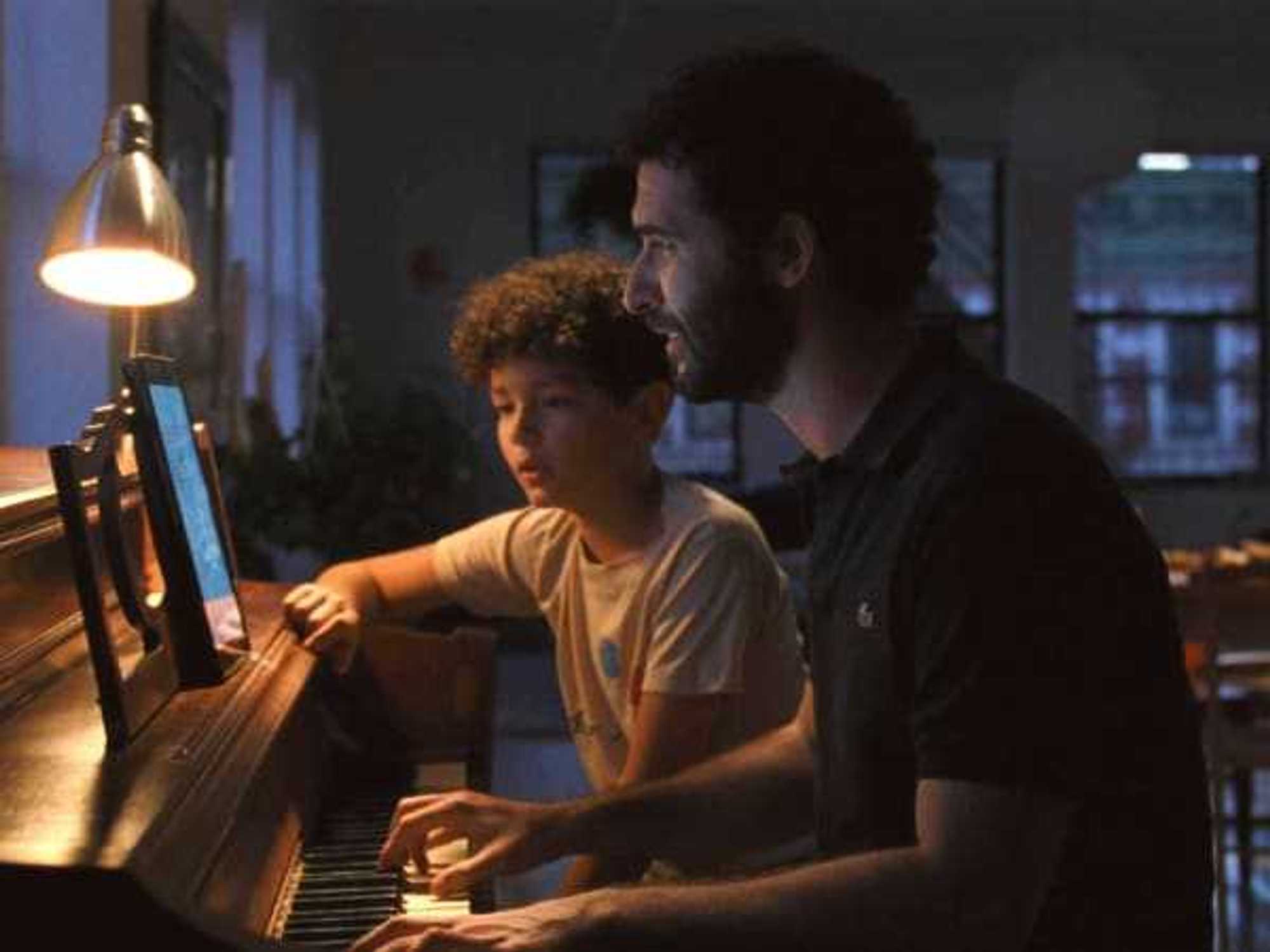
Peter goes through a degree of trial-and-error in figuring out how to handle Arlo, including what he likes to eat, how he likes to dress, and what kind of music he likes. Those scenes accomplish the goal of bonding the two of them with relatively minimal effort, but the film could have used a bit more friction. The situation through which Arlo comes into Peter’s life is dramatic, but Firstman never treats it that seriously, choosing instead to minimize any strong feelings either of the characters have.
This light touch continues for the majority of the film, as Firstman elides questions that would naturally arise if this were a real-life scenario. A third-act revelation finally brings some heft to the story, but it’s almost too little, too late in order to access the emotions that the filmmaker seems to be asking of the audience. He wants to show that Peter has changed in significant ways, but there’s not enough evidence on-screen to sell that idea.
Firstman, who’s been featured in TV shows like English Teacher and I Love LA, makes a good impression in a role he wrote for himself. He’s helped tremendously by Absolom, who puts in a great performance that actually feels like a real kid. Peter’s group of friends, played by Delevigne and a mixture of actors and non-actors, all bring an authenticity to the film that makes the story come alive even more.
Club Kid is a solid first effort by Firstman, who should be applauded for broaching a subject not often addressed in movies and for showcasing types of people who don’t get seen much in mainstream films. If the storytelling had been a little stronger, though, it might have been even more memorable.
---
Club Kid is now playing in select theaters; it opens wide on November 25,