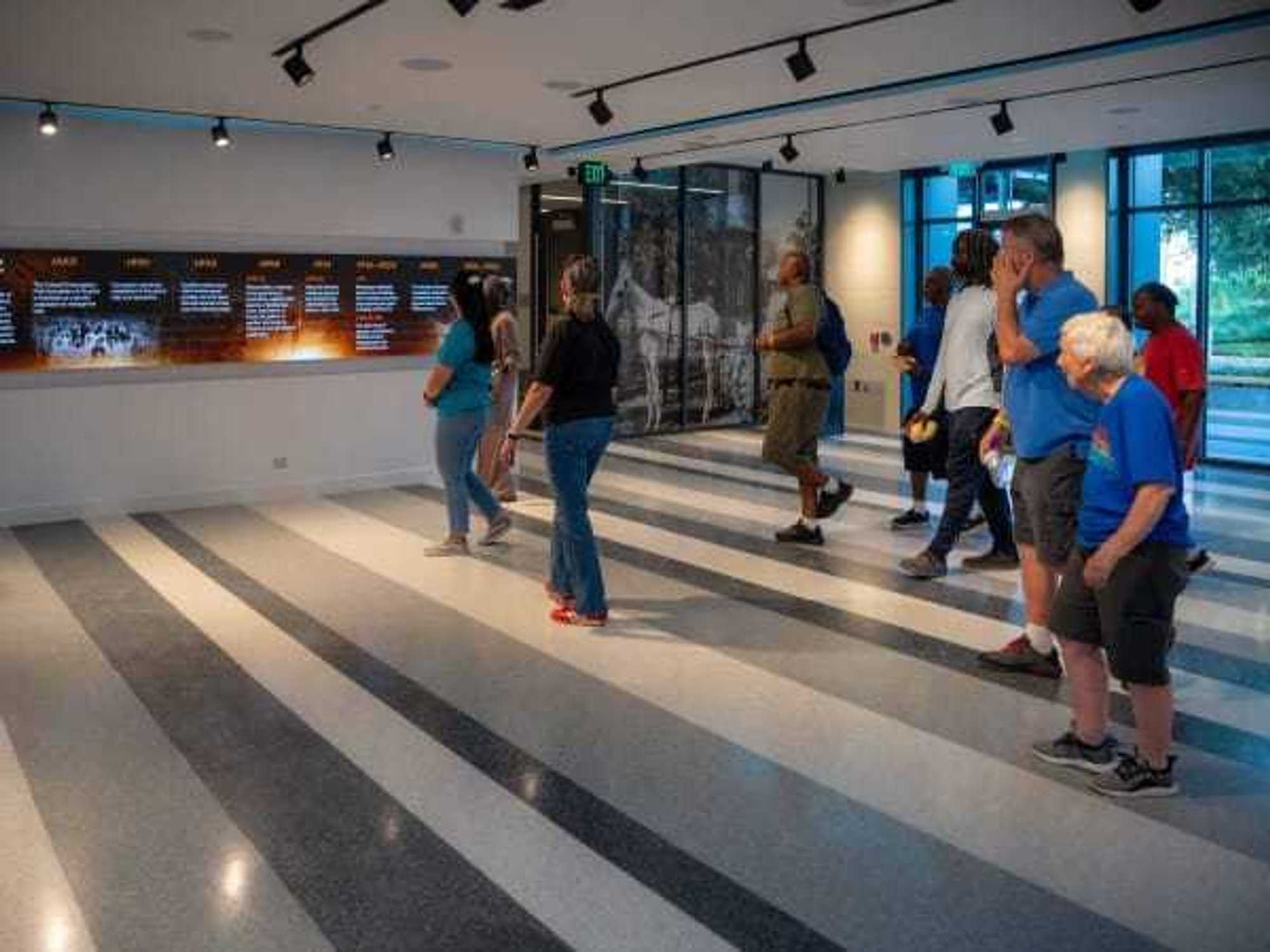
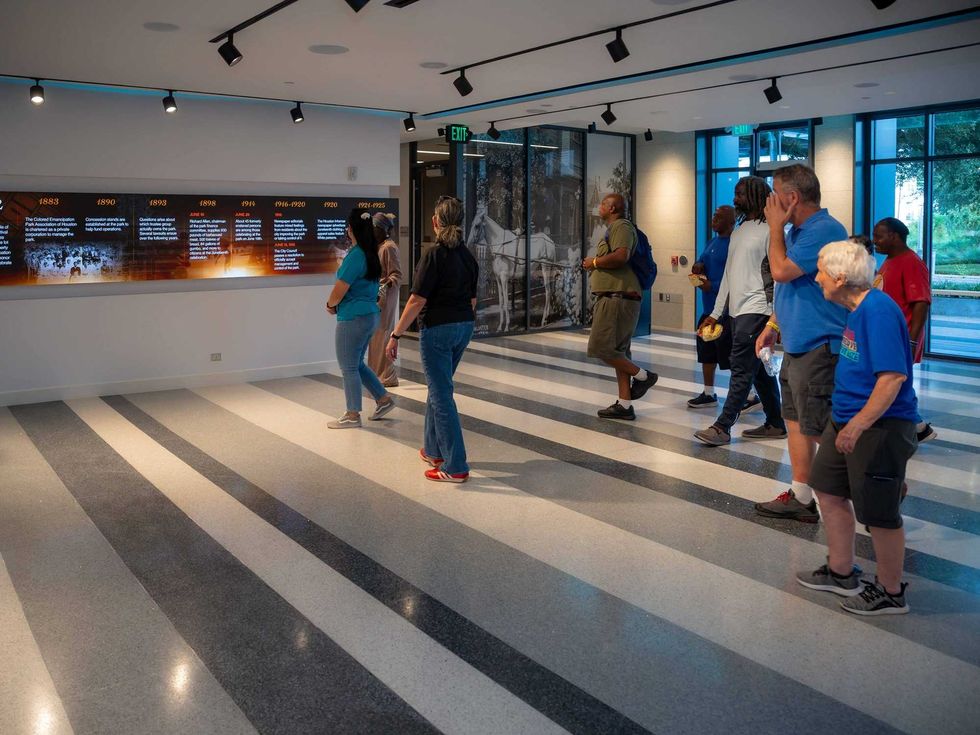
Historic Third Ward now has an equally historic, newly-renovated third space in the form of the Cultural Center at Emancipation Park. The Emancipation Park Conservancy officially opened it for the public on Tuesday, October 6, as part of the National Night Out campaign, a community-building initiative designed to bring together neighborhoods and the law enforcement officers that serve them.
“Emancipation Park has always been a place where the Third Ward community comes together to celebrate, connect, and create memories,” said Corey Wilson, president and CEO of EPC. “The completion of the Cultural Center will create even more opportunities for people to learn, gather, and experience arts and culture. National Night Out is the perfect opportunity to invite the community back into this space and celebrate what’s next for Emancipation Park.”
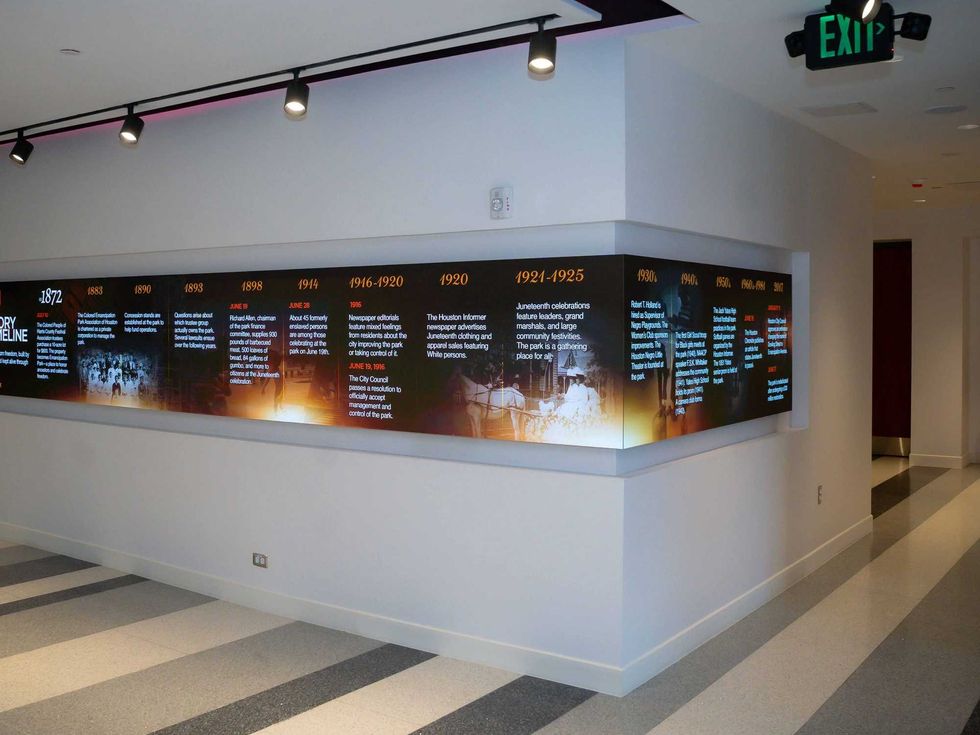
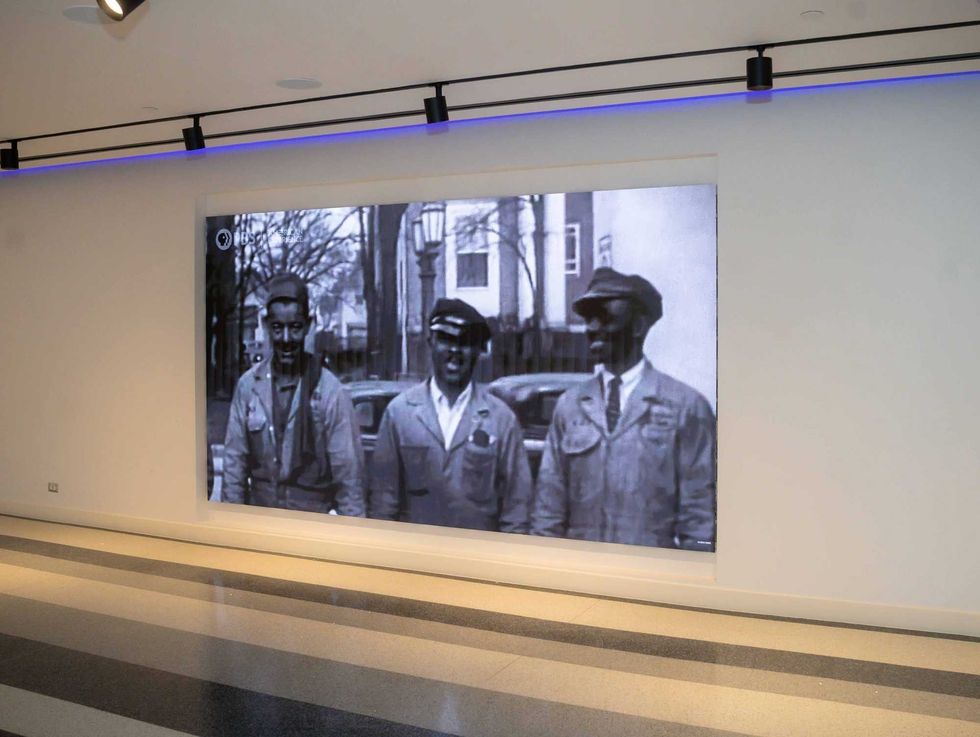
The renovations to the Cultural Center are part of an $18.5 million investment plan that built on a the success of a $34 million campaign completed in 2017 that has fundamentally revamped the park as a modern neighborhood multi-purpose space and gathering spot. Among the upgrades are walls lined with historic photographs and infographics about the history of Third Ward that offer residents and visitors a chance to understand the rich heritage of the area while also providing venues for classes, workshops, and presentations. Other improvements include a new gift shop and enhanced audio-visual amenities.
Emancipation Park is actually the oldest public park in Houston. It was founded in 1872 by four formerly enslaved persons, including the Reverend Jack Yates. The park was built to host early Juneteenth celebrations and has been a cornerstone of Third Ward ever since.
“Emancipation Park was created by the community, for the community, and that legacy continues to guide its future,” said Ramon Manning, board chair of EPC. “We are excited to open the doors to the renovated Cultural Center and welcome our neighbors to enjoy this special place, make memories, and celebrate all that Emancipation Park means to the Third Ward.”
Funding for the Cultural Center's renovation comes from Houston Endowment; The Brown Foundation, Inc.; Wortham Foundation; Shell; O’Quinn Foundation; Claire and Joe Greenberg; Sarah and Doug Foshee; Melvyn and Cyvia Wolff Family Fun; Sara and Bill Morgan; and Carla Knobloch. The Jacqueline W. Bostic Stage was added to the park last year as a performance space thanks to support from the Kinder Foundation.