As Americans grow increasingly concerned about where their food comes from, beef sourcing has become part of a larger conversation about quality, safety, and supporting American ranchers.
The White House's decision to allow 300,000 metric tons of ground beef into the U.S. tariff-free has drawn criticism from groups such as the U.S. Cattlemen’s Association and some Republican lawmakers. The plan aims to lower beef prices as the U.S. cattle herd shrinks, but it has also raised questions about the origins and quality of imported beef.
As the debate over beef sourcing continues, we chatted with several Houston restaurants about where their beef comes from and what goes into their burgers, from in-house grinding to relationships with local ranchers. While the vast majority of Houston restaurants are using high quality beef that's safe to eat, these establishments are going above and beyond, including by grinding their beef in-house.
The burger-making process at Eunice starts with butchering. Chef and owner Drake Leonards says the process not only ensures a quality product but also provides a teaching opportunity for the restaurant’s younger chefs.
“I love a steakhouse burger — a hand-formed, 8-ounce patty packed with rich beef flavor. Butchering in-house allows us to control the beef used from the chuck, brisket, ribeye, and tenderloin,” Leonards tells CultureMap. “The firm fat from the ribeye and brisket helps provide the moisture and balance needed for a juicy beef patty.”
The team starts with chuck and brisket, carefully trimming away silver skin. The meat then goes into an ice-cold meat grinder with the hard fat from the brisket, along with trim from the butchering of ribeyes and tenderloins, to maintain the 80/20 ratio that Leonards says is essential.
“Our double-grind method allows the meat and fat to distribute evenly,” Leonards says. “Gently working each patty by hand allows the meat to stay loose and the fat to stay firm, so that it melts into the burger during cooking. The result is a juicy, flavorful steakhouse burger with the texture and richness we’re looking for.”
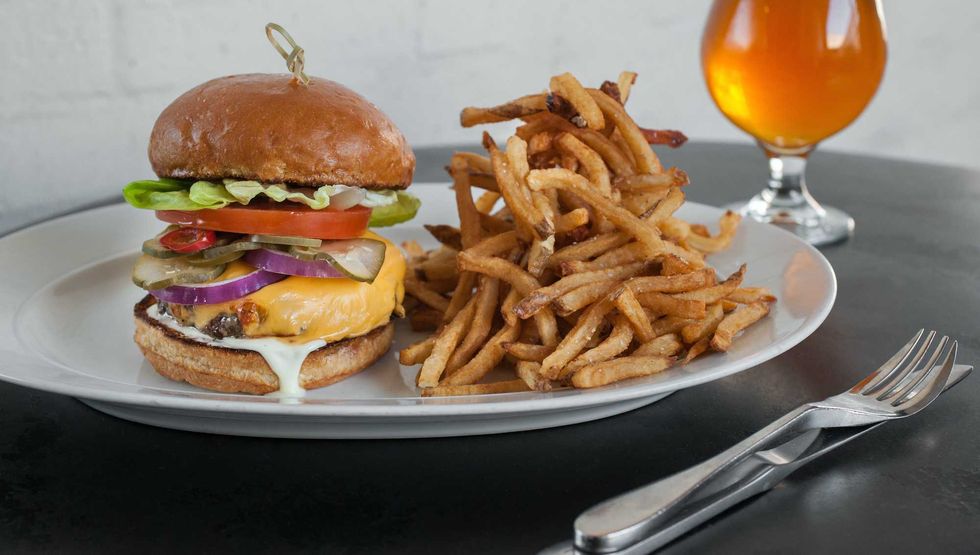
The patty is grilled and then finished with house pickles, red onion, American cheese, and dijonnaise, before being served on a toasted brioche bun from Magnol French Baking.
Not everyone has the team or the space to butcher their own beef for a single patty, but the attention to detail is still evident.
It would be hard to talk about ground beef in Houston without mentioning Boo’s Burgers. Joseph Boudreaux’s burgers garnered a cult following at pop-ups long before the self-taught chef opened his brick-and-mortar restaurant on the Navigation Esplanade last summer. In-house grinding has been central to Boo’s from the beginning.
“Our goal at Boo’s is pretty simple: to make the best burger we’re capable of making,” Boudreaux says. “Grinding our beef in-house gives us control over the quality and freshness from the very beginning. We know exactly what’s going into our grind, when it was ground, and how fresh it is when it hits the grill.”
Boo’s initially sourced its beef from Texas ranch 44 Farms, but growing production needs prompted the restaurant to switch to upper-third USDA Choice beef. The restaurant continues to grind its beef in-house.
“We’re also exploring ways to incorporate more local ranchers into our program,” Boudreaux adds.
Eastbound Barbecue already has a direct relationship with a local rancher, sourcing its beef from La Fortaleza, a Texas farm owned by the restaurant’s main investor.
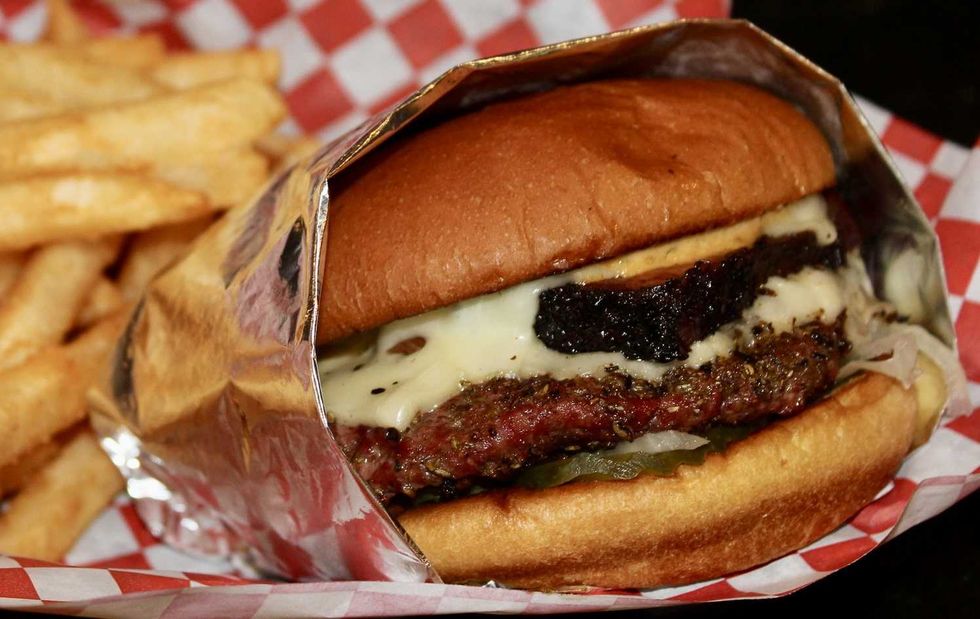
The hefty half-pound smoked wagyu patty is paired with two slices of brisket, two slices of American cheese, pickles, lime-serrano-cured onion, and a housemade spicy sauce on a toasted Martin’s potato roll.
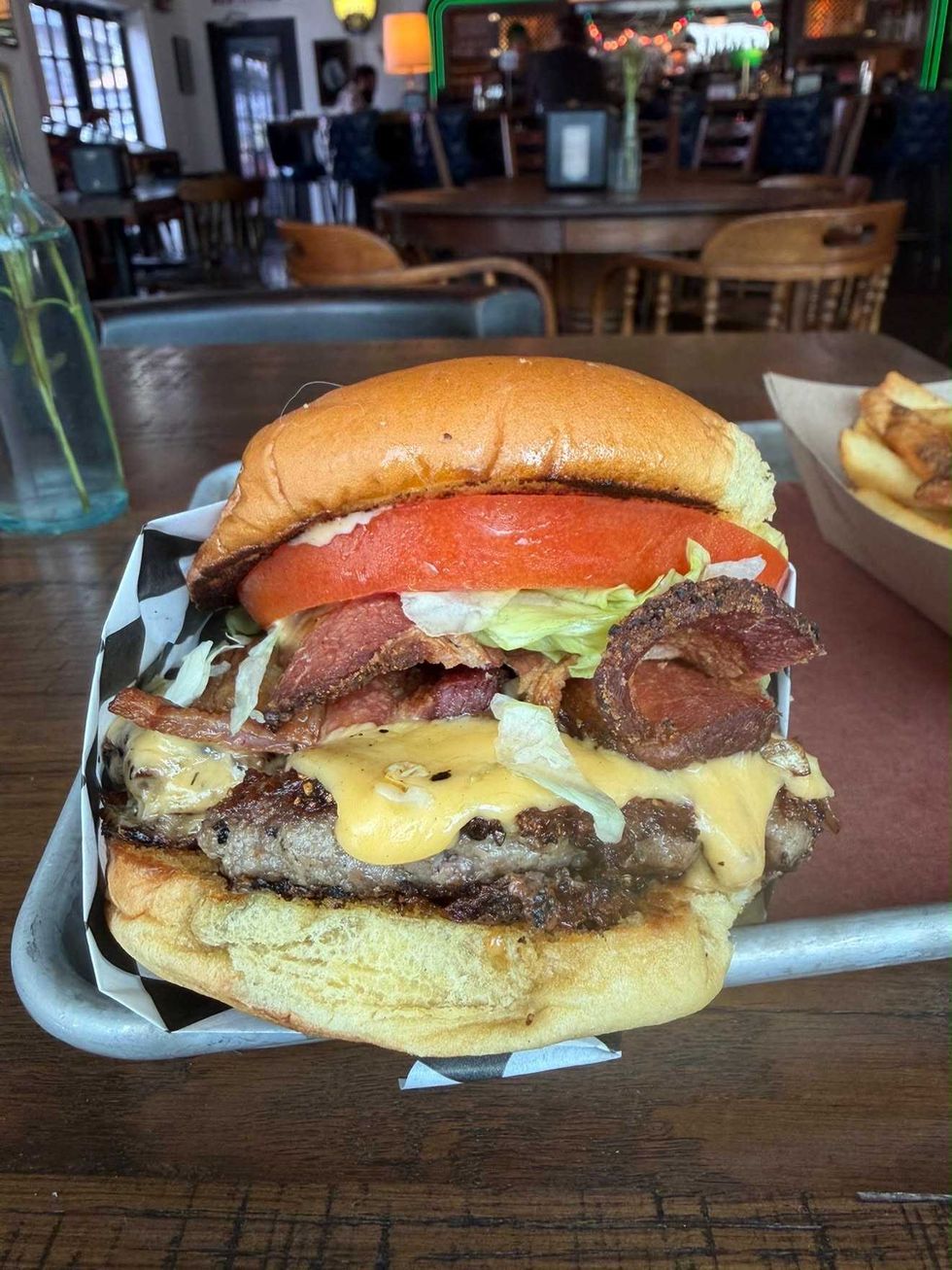
At Willow’s Smokehouse and Tavern, brisket goes into the patty itself. The newly-opened East End barbecue joint grinds its brisket trimmings into six-ounce patties, then sears them in tallow. Grilled onions, iceberg lettuce, tomato, house pickles, burger sauce, and two slices of American cheese round out the burger, all sandwiched between a Martin’s potato roll. For $4, diners can add slices of deep fried bacon. In a recent review, Texas Monthly barbecue editor Daniel Vaughn hailed Willow's burger as "an instant classic."
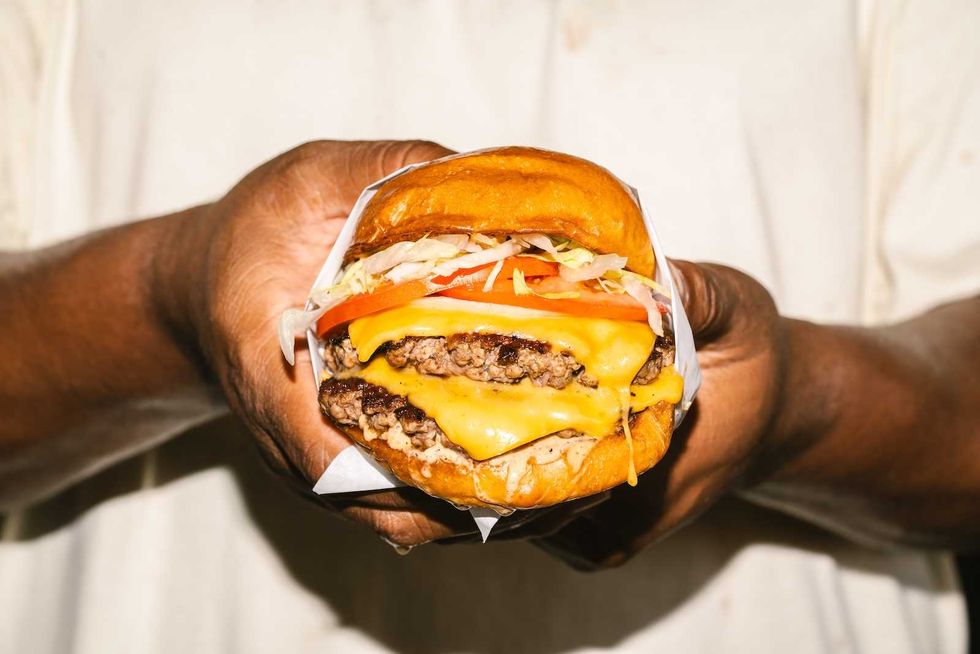
Toga, Comma Hospitality’s latest concept, sources its wagyu from Allen Brothers, a Chicago-based company that has been butchering beef for more than 100 years. The Japanese restaurant grinds a blend of brisket, chuck, and heart in-house for its burger patties. Melted Comté cheese adds richness, while tomato marmalade and frisée bring sweetness and freshness. Everything is tucked into a housemade potato bun.
Brasserie 19 may serve French cuisine, but it sources a brisket-and-chuck blend for its burger from Red Field Ranch, right down the road in Katy.
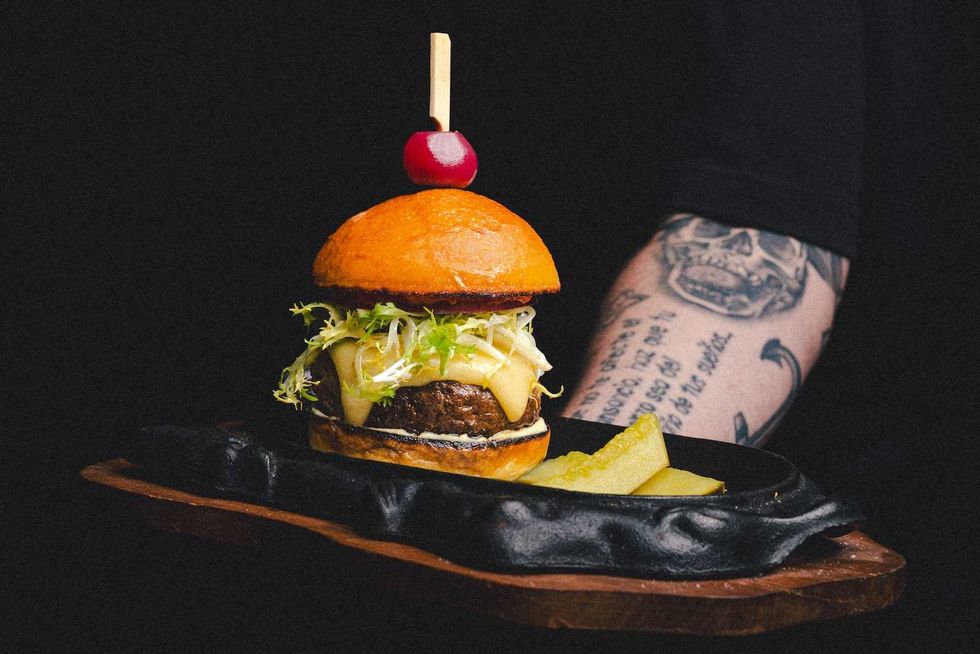
Courtesy of Toga
Japanese restaurant, Toga, grinds a blend of brisket, chuck, and heart in-house.
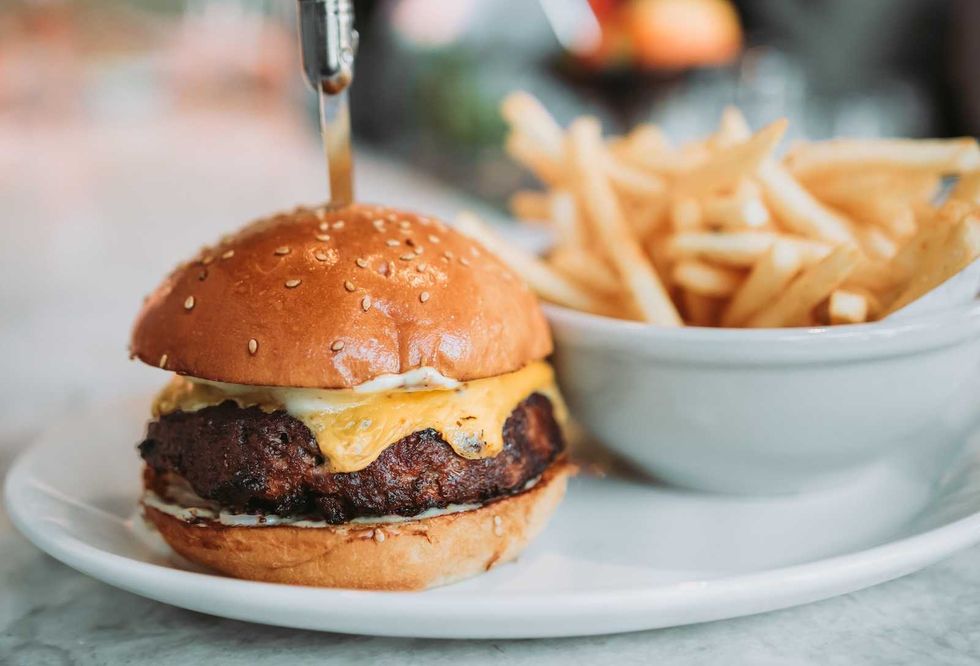
The restaurant also incorporates trimmings from its filets and ribeyes into the grind, reflecting chef Michael Hoffman’s belief in using as many parts of an ingredient as possible.
“Early in my career, I worked in a kitchen that had a sign on the wall that said, ‘Utilization is the key to success.’ That has always stuck with me,” Hoffman says. “We’re taking an already great local product and adding another layer of richness and flavor to it. It’s a simple thing, but it makes a big difference in the finished product.”
The cheeseburger comes on a brioche bun with bibb lettuce, tomato, onion, and housemade pickles.
“It’s great to work with a local farm like Red Field because they’re close by and we really believe in the quality of what they’re producing,” Hoffman says. “There’s something meaningful about knowing where your beef is coming from and having that relationship with the people raising it.”