[Editor’s note: When David Skinner, chef and owner of Kemah’s celebrated eculent and Ishtia restaurants, offered to share his experience eating at one of the world’s best restaurants, we said, of course. Read on for his experience at Copenhagen restaurant Noma’s pop-up in Los Angeles that took place this summer. Take it away, David.]
The crab was alive a few minutes before I ate it.
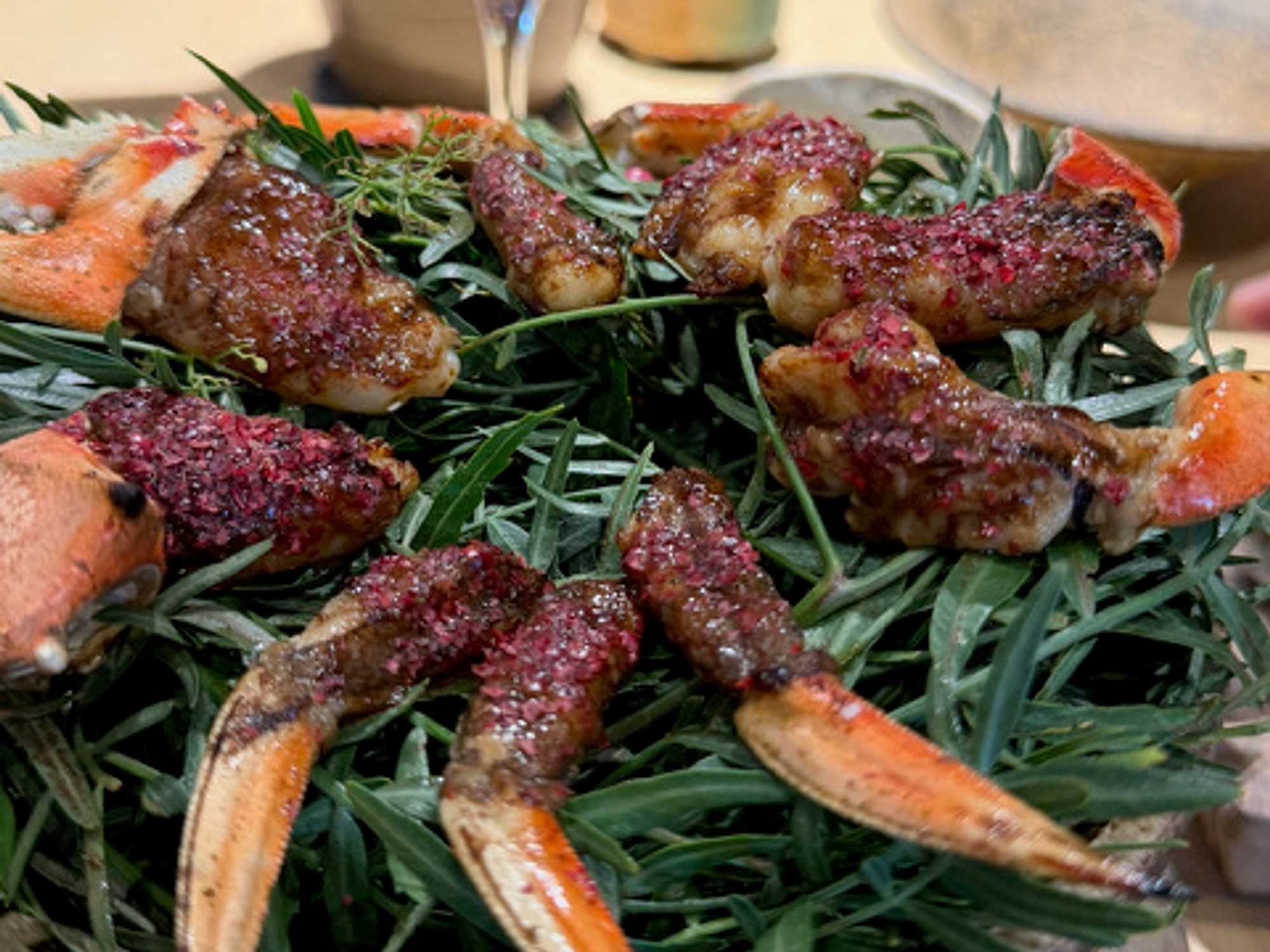
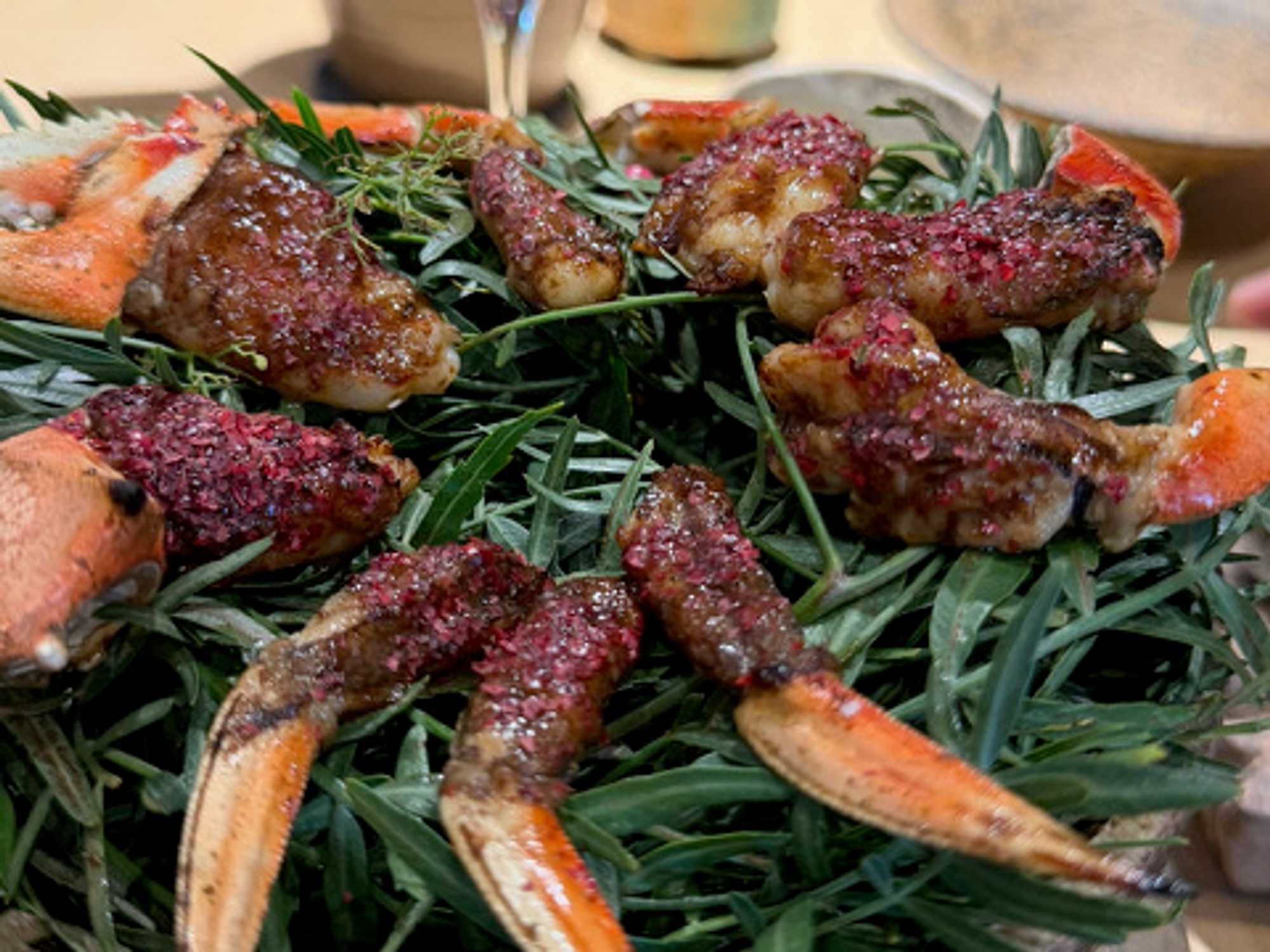
Just before service, the kitchen broke down a Dungeness crab and set it over open charcoal, the downtown Los Angeles skyline behind the smoke. It came to the table wreathed in dried pink pepper branches, with a butter sauce built on the same pepper. I've eaten crab all over the world — this was maybe the best crab ever.
That was the first of 17 courses at Noma LA, and the best bite of the afternoon. Leading with your best shot is either confidence or a statement. By the end of lunch, I'd decided it was both.
The residency had begun in turmoil. Founder René Redzepi stepped away from the residency the day it opened, following a news investigation into allegations of demeaning treatment of staff — conduct that had been discussed in industry circles for years. Protesters gathered at the gate that day. The kitchen, led by Pablo Soto, carried on through the residency's close on June 26.
I went for lunch at the Paramour Estate, the 1920s Mediterranean mansion in Silver Lake that Noma called home for 16 weeks. For more than 30 years, I've traveled the world in search of culture, a little mystery, and always food, eating everywhere from strangers' kitchen tables to three-Michelin-star dining rooms.
As the chef behind eculent and Ishtia in Kemah, I also eat with a cook's eye — which means I'll tell you what was brilliant and what was oversalted. Noma LA had a little of both, but after a half dozen meals at Noma over the past 10 years, I can say this one was a standout.
The setup
The logistics alone are remarkable. Noma relocated roughly 130 staff members and their families to Los Angeles and built a pantry sourced within 300 miles of the mansion. Lunch ran 17 courses over about four hours at $1,500 per person, including beverages and gratuity.
Chef Soto greeted us at the entrance with the full kitchen staff, a Noma tradition. By the time I arrived, the protesters were long gone, and the brigade seemed to be cooking with a sense of relief.
Rather than choose between the wine pairing and the nonalcoholic program, we asked our server, Mara, to mix the two course by course. She nailed it, moving from a sparkling rose-and-pink-pepper drink to a bright cherimoya lemonade to a 25-year-old Tony Coturri zinfandel from Glen Ellen that became the table's favorite pour.
The standouts
The crab. It opened the meal, and nothing that followed topped it. The pink pepper did double duty with the dried branches perfuming the shell, the butter sauce carrying a gentle heat — the sweet, smoky meat needed nothing else. Alongside came a 2022 Phelan Farm chardonnay from Rajat Parr's Cambria operation: white Burgundy in spirit, California in its bones.
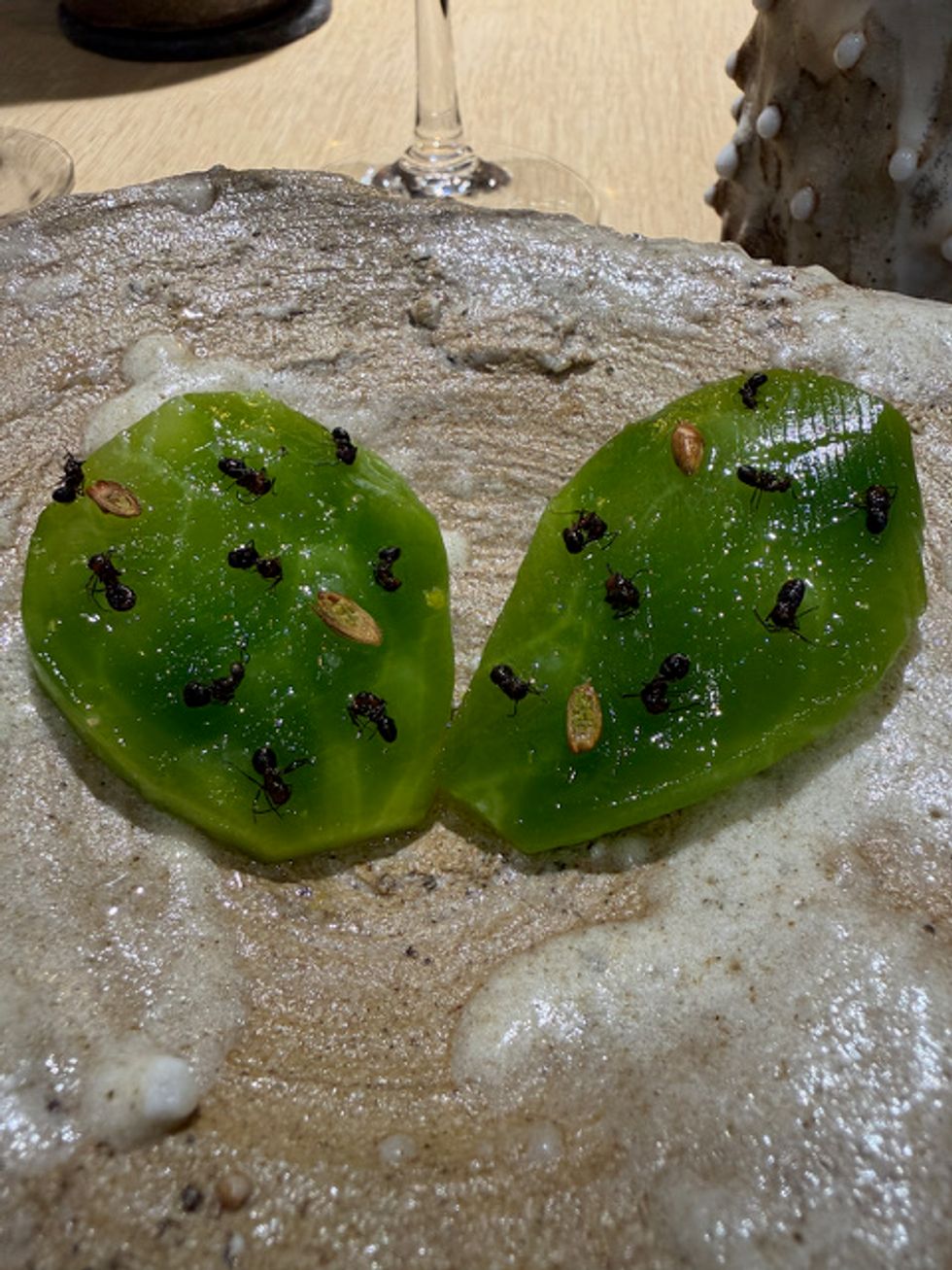
The cactus. Pickled tacinga cactus, marinated in Oaxacan mezcal and citrus and crowned with honeypot ants, arrived beneath a live cactus paddle with a eucalyptus handle.
The acorn. A single braised acorn, glazed with black pepper, sat atop an uni custard made with Santa Barbara sea urchin and caviar in hoja santa oil. The server described it as a nod to California's Indigenous peoples. As a Choctaw, whose ancestors relied on acorns for thousands of years, I felt that one. It was also the most technically accomplished savory course of the meal.
The seaweed and clams. Six varieties of Southern California seaweed with butter-kissed clams tasted like the coast itself. This is Noma at its best: not interpreting California so much as listening to it.
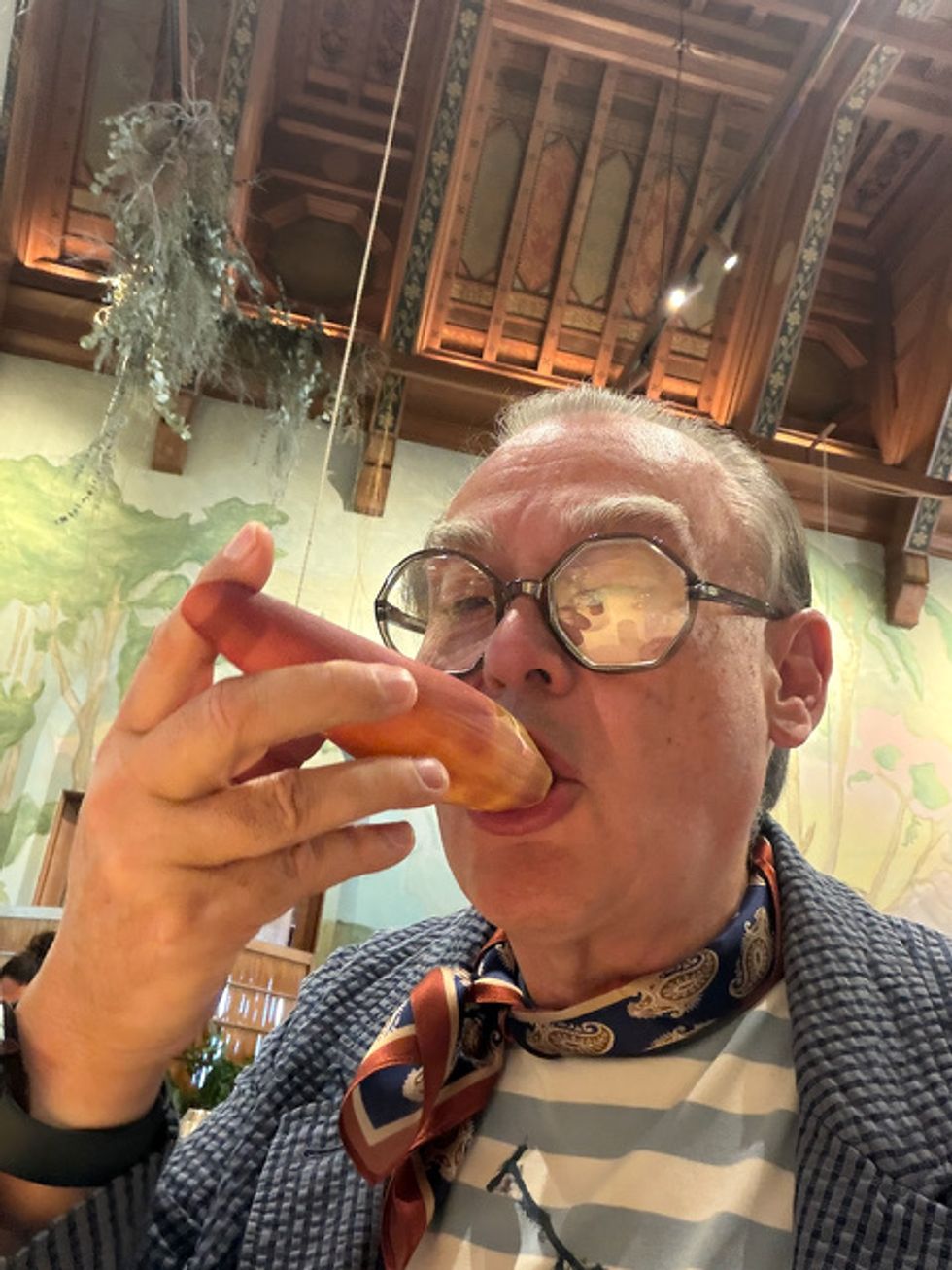
The tuna eye. I've eaten cod eye at Noma in Copenhagen, but this version was way better. The kitchen removed the tough cornea, replaced it with a thin disk of kumquat, and served the eye chilled inside a ruby-red banana flower bract. Rich and gelatinous, it's eaten in one bite. When our table wondered aloud where the rest of all that tuna goes, Mara had the answer: family meal for the staff.
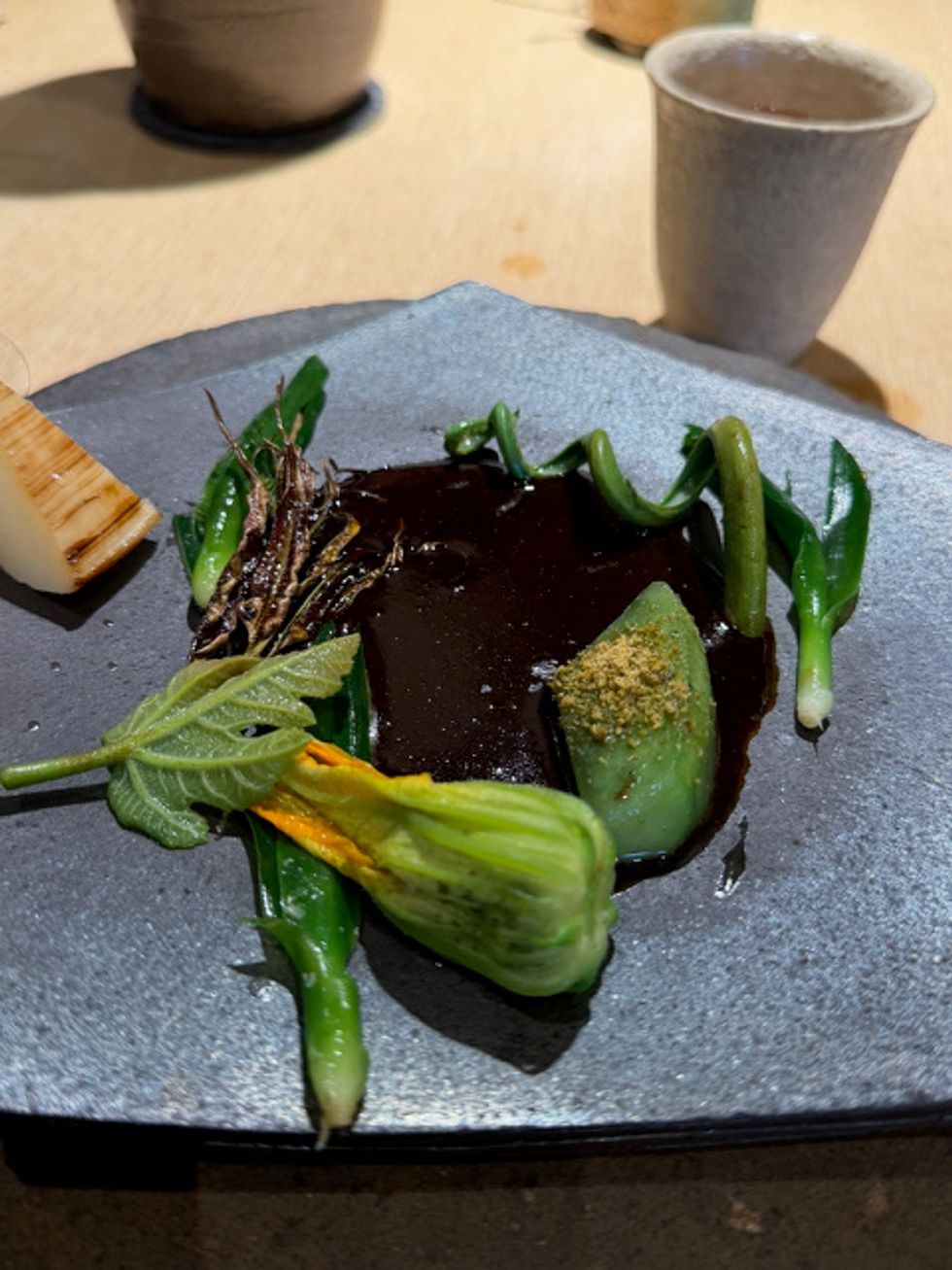
The kelp mole. Grilled greens, a squash blossom stuffed with huitlacoche, and an artichoke on its stalk arrived with tortillas from Komal, one of Los Angeles's top heirloom molinos, paired with a mole built on kelp.
Between the acorn, the cactus, and the mole, a question kept surfacing: what does it mean for a Danish kitchen to arrive in someone else's pantry and cook as though it has always been there? Some of these ingredients have fed Indigenous and Mexican cooks for centuries. Noma handled them with obvious respect and real curiosity. Sometimes, though, the line between homage and borrowing comes down to whether you're willing to say the name out loud.
Dessert kept the surprises coming, including a macadamia custard served in a sunflower whose base turned out to be beeswax. The finale arrived as a bundle of ferns tied with string. Diners snip it open with tiny scissors to find a chocolate cookie and a fortune inside. Mine quoted Nietzsche: You must have chaos within you to give birth to a dancing star.
Nietzsche, at $1,500 a head, in a Silver Lake mansion, from a kitchen whose founder walked away on opening day while protesters stood at the gate. The kitchen knew exactly what it was doing.
The full menu, course by course
For those keeping score, here's the complete lineup.
Pink pepper Dungeness crab
Daylily crab dumpling — The rest of the crab, tucked inside a trumpet-shaped daylily with buds plumped in crustacean liquor. The flower dominated; the crab was the reason to eat it.
Chilled lobster broth — Spiny lobster stock, dashi, and elderflower oil served chilled in the lobster's own coral-colored shell. A palate reset dressed as a course.
Spot prawn with matcha — Served in real seaweed, the head filled with smoked pumpkin paste for sucking, the tail painted with matcha. Paired with the 2024 Verso from Caleb Leisure in Sebastopol.
Sea urchin custard and braised acorn
Cactus with mezcal
Ragout of California botanicals — Seasonal greens, peas, and herbs in a warm, quiet preparation, tied together by a hint of horseradish.
SoCal seaweed and clam
Tuna neck — Minced tuna neck in a koji-inoculated steamed bun with the texture of suede, topped with translucent shards of dried chicken-stock skin. Paired with the 2000 Estate Zinfandel from Tony Coturri.
Tuna eye
Black pearl rice steamed in avocado leaf — Ringed with pistachio oil and scattered with dime-sized macadamia slices. Humble ingredients in the spirit of California great Jeremiah Tower.
Morels with habanero and yuzu — Sierra Nevada morels on turkey-tail mushrooms over hot stones. Bright and spicy, but heavy on the salt.
Greens and grilled artichoke in spiced kelp mole
Cherimoya and lemongrass — A green cocoa butter shell shaped like a cactus, hiding a smooth cherimoya ice cream. A California fruit most California menus ignore.
Macadamia milk custard and pistachio — Topped with heirloom Hong Kong kumquats from a handful of research trees that fruit four weeks a year, served in a beeswax-lined sunflower.
Silver Lake fortune cookie — A Chiapas chocolate mousse cookie garnished with insects, hidden in a bundle of ferns you cut open with tiny scissors. Fortune included.
The misses
Not every course landed. Morels with habanero and yuzu were oversalted, and some presentations were delivered too quietly to catch the full story. At $1,500 a seat, the storytelling should be as confident as the cooking.
The verdict
Having now eaten Noma's traveling editions in Tulum and Los Angeles, I'll offer an opinion that may be unpopular in certain circles: the pop-ups are better than Copenhagen. Maybe it's the hunt for new ingredients, or the urgency of a 16-week run in a borrowed house. Whatever the reason, the results are hard to argue with. I put that theory to the test in August, when I returned to Noma on my birthday, three days after it reopened with Soto at the helm. More on that meal soon.
Noma LA wasn't really a restaurant. It was an argument about a place, made in food, by people who flew 6,000 miles to make it. The argument was frequently brilliant, occasionally presumptuous, and closed with Nietzsche in a fortune cookie. On balance, it won.
----
David Skinner is a James Beard Award semifinalist for Best Chef: Texas and the owner of eculent and Ishtia in Kemah. He also writes the culinary travel journal Destination Eater on Substack.