With a name like No Vacancy, it comes as little surprise that this “hotel bar” on Main Street is the hottest new ticket in town. Draped in mystique, the 1970s-inspired bar offers guests pure nostalgia from every which way and is so authentic that it’s difficult to decide who would have enjoyed it more: Hunter S. Thompson or David Lynch.
Ostensibly run by “Dottie,” the mysterious, fantastical patroness of No Vacancy — whose past entertainment history was illuminated by red lights more than limelight — who invites guests to pass through the No Vacancy Pool to check-in at reception before choosing to spend the evening in the Lobby Bar, upstairs in Dottie’s Penthouse, or rent a suite…by the hour, of course.
Before anyone gets the wrong idea, No Vacancy is strictly a bar for flirtatious foreplay, a game night with friends, and certainly for people watching. Dottie won’t stand for any hanky-panky. So, if things get a little too hot to handle, get a room — someplace else.
The building at 410 Main Street, once a notorious Houston brothel in its own right, sets the perfect scene for a bar that displays framed brassieres once belonging to former showgirls and boasts an impressive collection of vintage Playboys. Even the large steel door (c.1877) that used to connect the brothel to the bank next door is still visible while taking the stairs up to Dottie’s Penthouse. And the bathrooms? All converted from what was once a row of shower rooms.
“It’s a downtown, rundown hotel, you know? It used to be nice, I think that’s the important part,” says No Vacancy partner Carson Hager, who also operates ‘80s themed bar Cherry. “Because in Dottie’s mind, it probably still is nice. It’s an actual bar. There are so few actual bars anymore. We just want people to like it. It’s not a dive bar — that’s an actual distinction. It’s a hotel bar. Go to an actual bar and enjoy the details and have a good time and go home.”
As for Hager’s relationship to the elusive Dottie: “When people ask, I tell them that I’m Dottie’s nephew and I run things when she’s not here.”
The commitment to the plot is evident in everything that is No Vacancy. Take, for instance, “Dottie’s Penthouse: The Menu Magazine.” This actual magazine — all 27 pages of it — offers guests a deep dive into Dottie’s personality while listing items of note such as Dottie’s house rules, Dottie’s Penthouse drink menu, fun facts, horoscopes, an advice column, crossword puzzle, raunchy cartoons, and even a fun “Which of Dottie’s Girls are You?” quiz.
“The details of the building are one thing, but the details of the actual storyline behind everything are even more consistent and more thorough,” explains creative director and Dottie’s cosmic proxy Shilo de Armas. “The Penthouse Magazine enforces the actual story — it’s not just saying a story into the wind. Those types of structural things are what I’m most proud of. Truly, if I die today, that is something that I would really want on my grave. Talk about it in my eulogy. I’m the most proud of that than anything I’ve done. It just brings everything together because it has her house rules on page three, and you learn about who Dottie is when you read those house rules.”
All of the hotel phones in No Vacancy are functional and routed through to reception and housekeeping. Guests in the suites may ring for service or choose to utilize the “Do Not Disturb” lights outside of the rooms. Housekeeping is outfitted in proper French maids’ outfits — feather dusters included — and cocktails arrive on carts, naturally.
No Vacancy’s vintage televisions play a curated selection of era-appropriate programming, with custom commercials produced in-house. Think Marvin Zindler and Thunderbolt Transmissions-inspired content. Guests can switch channels, but the network is always No Vacancy Television: “NVTV…always turned on.”
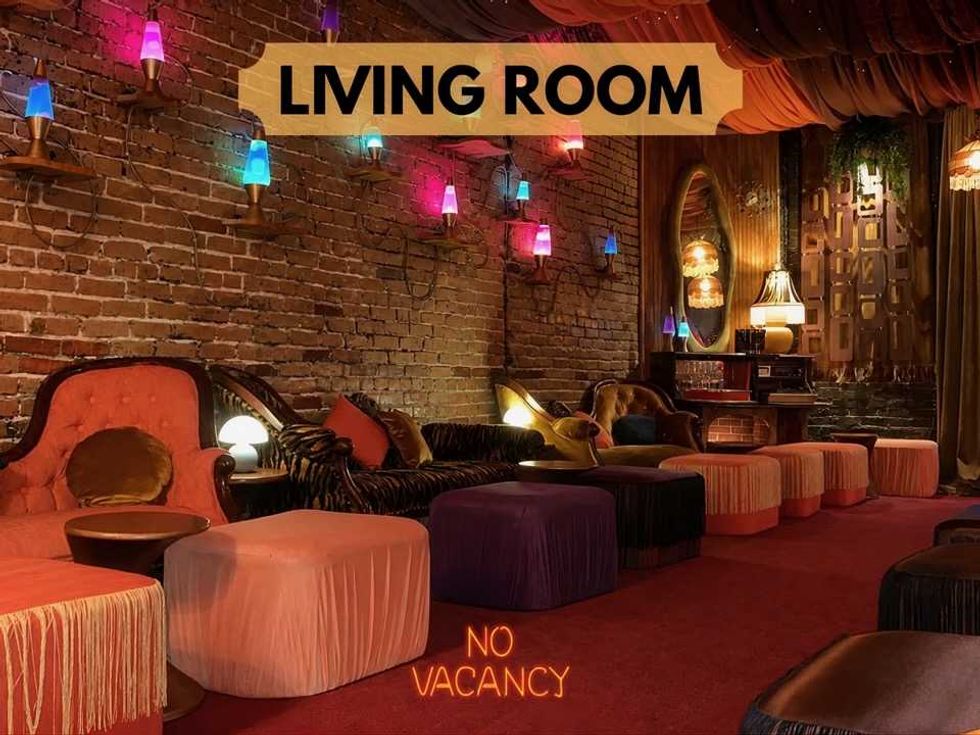
All of the furniture and decor are either vintage or antique, and the decision to go with carpeting throughout helps keep things intimate. Like many 70s-era spaces, patterns go wild at No Vacancy — think animal prints galore, plaids, stripes, and textured solids. Undergarments are tossed about, fabric canopies and draperies fill each room, and fringe adorns just about every other surface.
The downstairs level offers three different suites that can accommodate groups of four to six people, each with a different theme and speciality cocktail menu. While available by the hour, there is a 15 minute grace period to get settled in before the clock starts. Suites are $64.95-per-hour and include a round of complimentary welcome drinks upon arrival (up to four guests) — tailored to each suite.
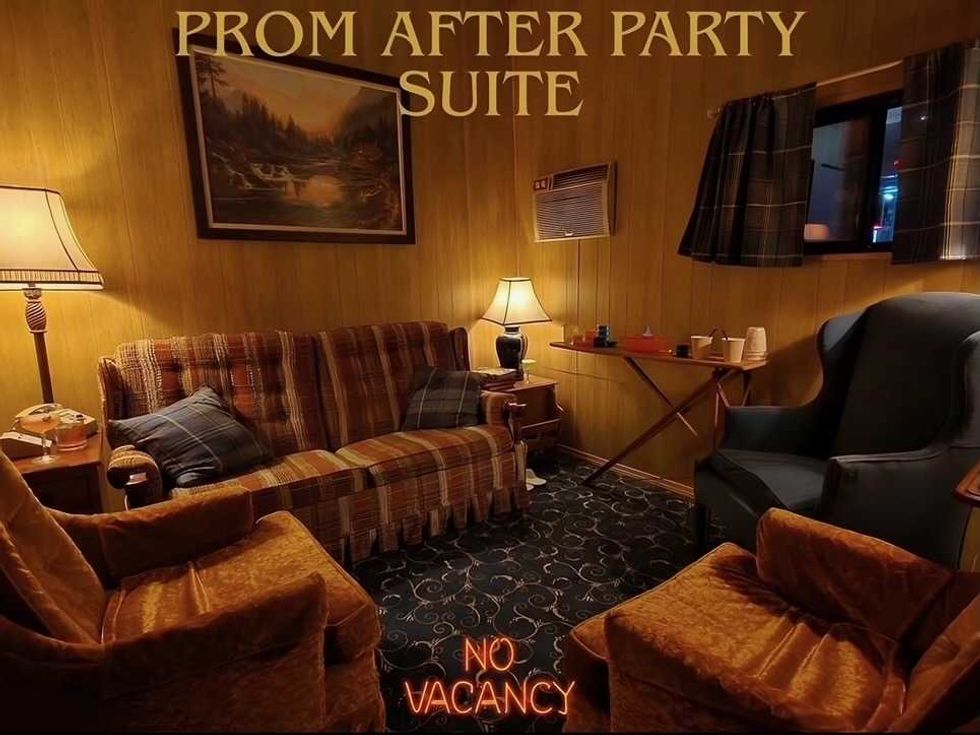
Prom After-Party Suite
Up to six guests may join, receiving a welcome bucket of Jell-O shots upon check-in. Dottie’s handmade binder of drinking games is sure to entertain. Suite-specific cocktails include Dottie’s Wine Coolers (bottled, of course) in Passionfruit Pizzazz, Strawberry Fields, and Fuzzy Navel. In addition to the aforementioned Jell-O shots, patrons may order a classic Tiki Trashcan Punch, made in-room to serve four, with “Rum, more rum, Montenegro, tropical fruit punch, and 151 for fun.”
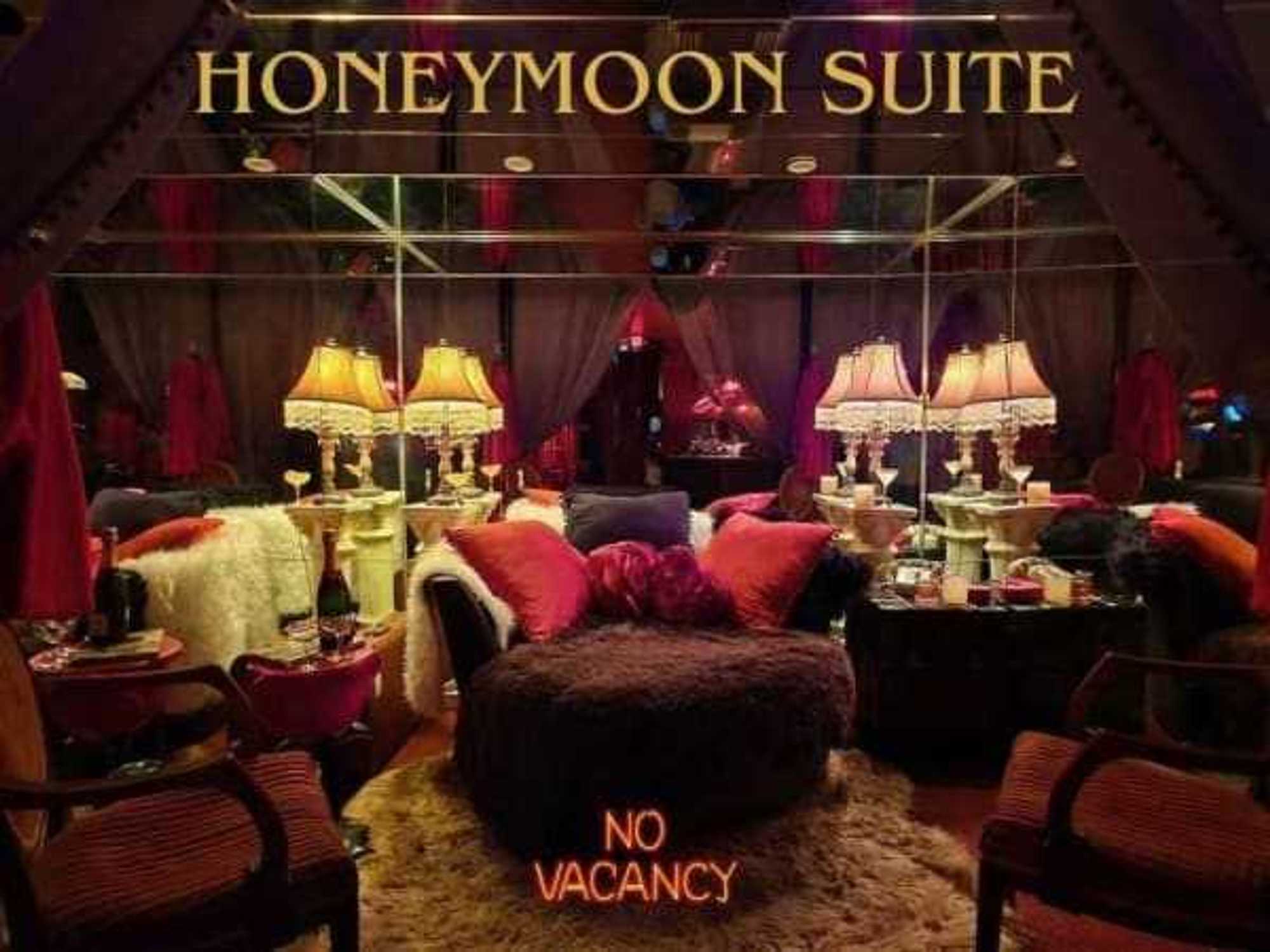
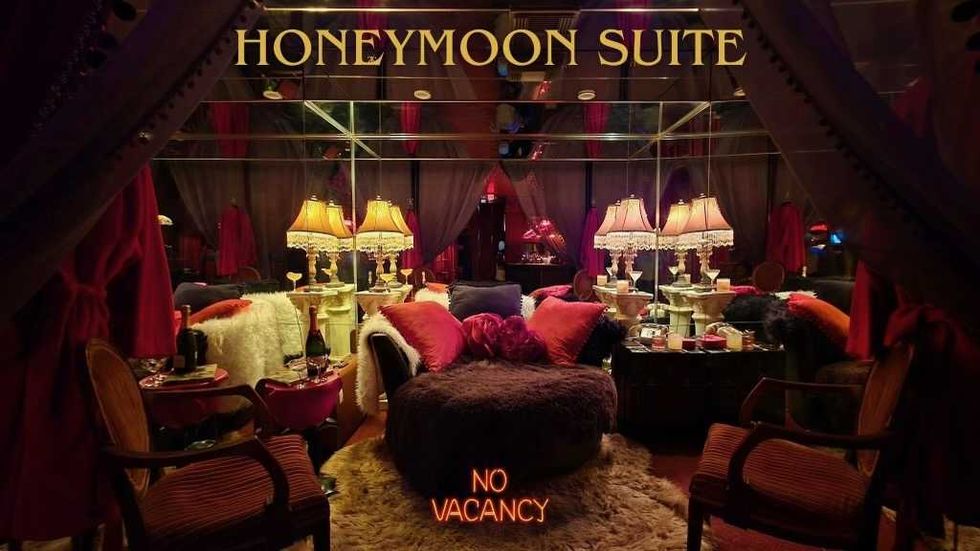
Honeymoon Suite
Up to four guests may join, receiving complimentary Moet champagne to begin the evening. This lover-inspired suite is encased in mirrors to three sides, plush privacy-draperies at the entrance, and includes fluffy red robes to enjoy during the evening. Imbibe suite-specific cocktails — “Save the Date,” “Honeymoon in Vegas,” and “Pillow Talk” — while cozied up in the round love seat.
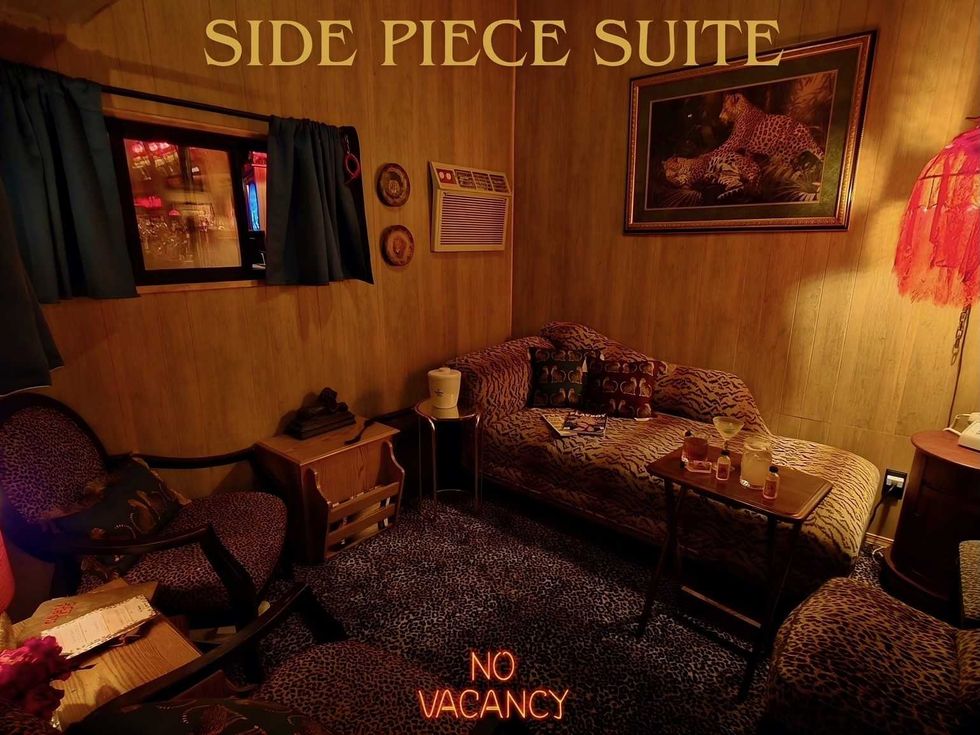
Side Piece Suite
Up to six guests may join, receiving complimentary “Penicillin shots” to begin the evening. The decor takes guests for a walk on the wild side, with animal print upholstery and jungle-themed artwork. Suite-specific cocktails include the “Post Nut Clarity,” Campañera, and the suite’s signature drink “Strawberry Letter,” which serves four and is served in a high heel carafe.
Lobby Bar
Just past reception and the Side Piece Suite, the Lobby Bar offers guests a comfy barstool or a place in the No Vacancy semi-private rooms. With high-top tables for two, each semi-private room can be closed with curtains for privacy or left open for mingling — the semi-private rooms can also be combined to accommodate small groups. Classics include “Dottie Does Downtown” and the “Centerfold Sour.”
No Vacancy Pool
Rounding out the offerings on the first floor is the “pool.” Part of the exterior entrance area, the pool area offers those who wish to wait a menu of their own. The “Corn Star Margaritas,” “Desert Rose,” and “Poolside Sour,” are sure to help the time pass quickly. Dottie’s Wine Coolers are also available poolside.
Dottie’s Penthouse
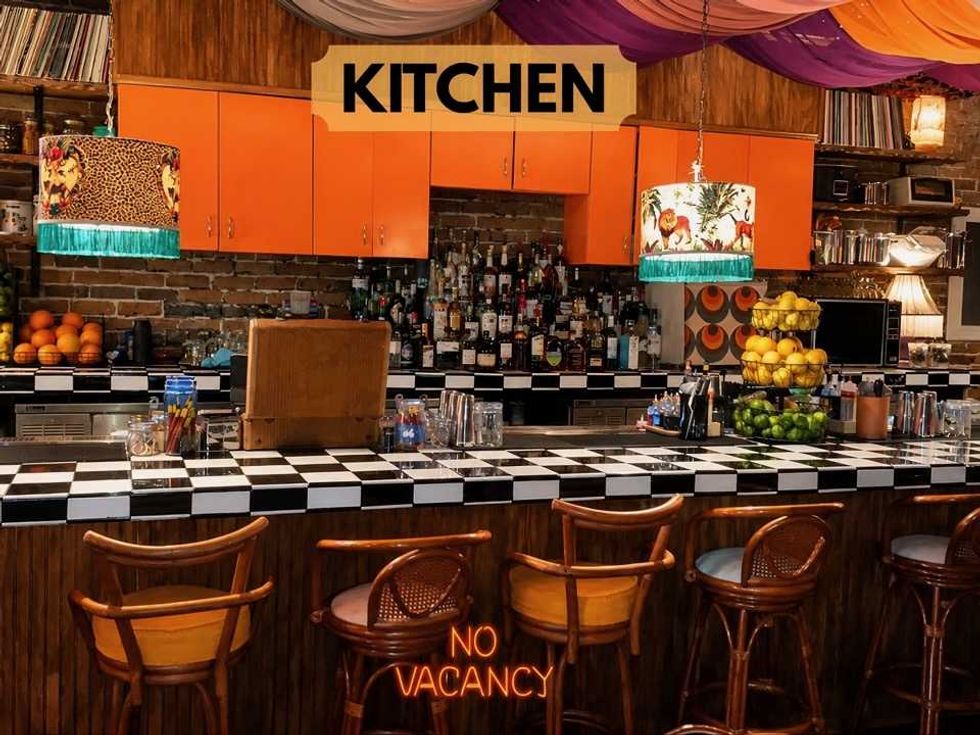
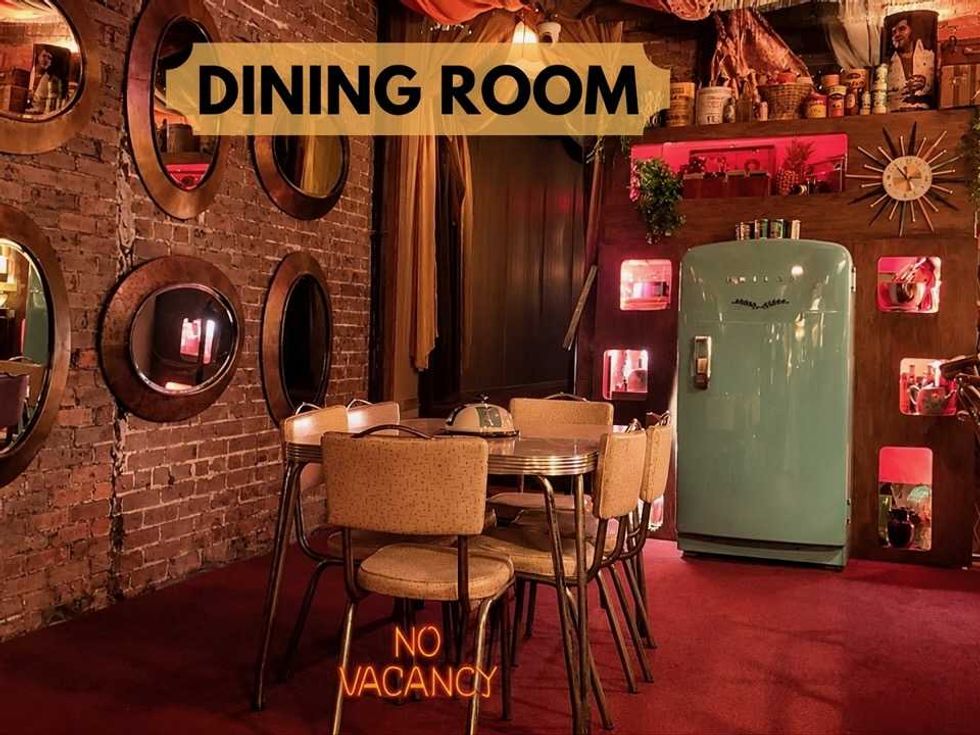
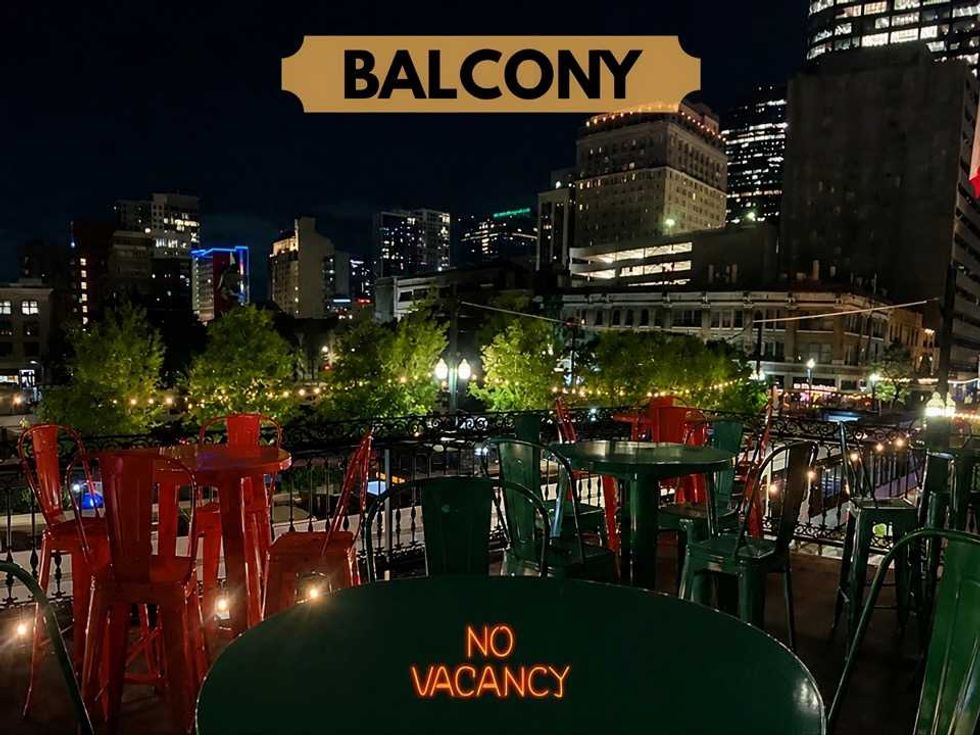
Upstairs, guests are welcome to lounge in Dottie’s penthouse apartment, so long as they behave. The penthouse is comprised of a dining room, kitchen (i.e., bar), living room, bedroom, balcony, and office. The low lighting — mostly thanks to Dottie’s lava lamp collection, 18 total on the living room wall — throughout the spaces vibe perfectly with the jazz music. Distinct zones are perfect for couples and small groups who want to sit and chat.
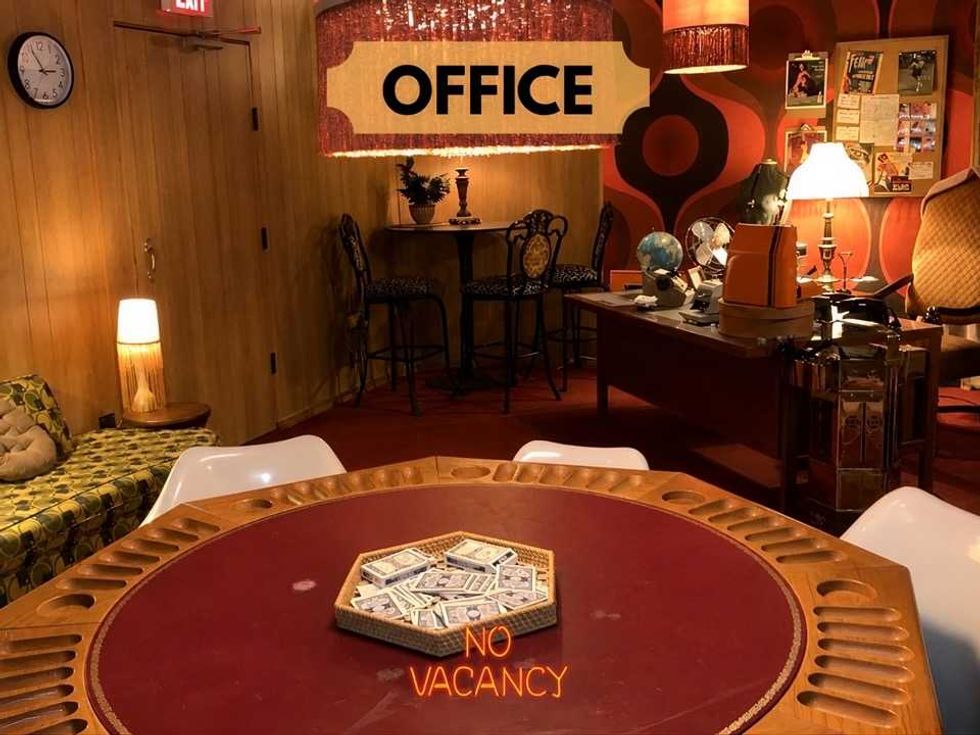
In the office, Dottie’s desk tells stories of its own, original building plans sit beneath a protective plexiglass, her counting machine, phone, Rolodex, and security camera screens all wrapped around the trappings of a seemingly ordinary business…take a closer look.
Dottie’s Kitchen serves cocktails named after her “girls,” and all that that implies. The mezcal-forward menu does offer a vast variety of cocktails, but Dottie highly encourages guests to try something smoky. If that’s not in the cards, reach for a classic Peach Pimm’s Highball or Watermelon Ranch Water.
As vintage fans continue to flock to No Vacancy, it’s worth noting that the bar only offers limited reservations for groups of eight or more in the Penthouse — but only until 7 pm on weekends. After that, it's first-come-first-served. Booking is available via text or through a quick DM to the No Vacancy Instagram account. It’s also a good idea to get on the waitlist if planning a last minute visit.
“Dottie is nutty about having a home,” says Hager. “There is no such thing as just hanging around. If you don’t have a seat, you’re not getting in.”
For those who choose to dress the part, or for those who just like to watch, No Vacancy has a strict no flash photography policy — and they mean it. No Meta glasses, ring lights, or cameras allowed either. No Vacancy is about as old-fashioned as they come.
“The people who needed something like this, and have been wanting something like this in Houston in particular, that’s who it’s for,” says de Armas. “We want it to be for the people who get it. If people don’t get it, they don’t get it. That’s fine — bye!”
No Vacancy is open 5 pm-2 am “every damn day.” Send Dottie a reservation or waitlist request at 713-597-7616 or DM her on Instagram.