A rendering previews The Riot's new home on Washington Avenue.
Courtesy of The Riot Comedy Club
A Houston comedy club has found a new home. The Riot Comedy Club will move from its current home in Montrose to a new venue on Washington Ave.
Beginning in August, The Riot will operate at a dedicated facility next to Southern-inspired cocktail bar Julep at 1925 Washington Ave. The move ends The Riot’s run at Montrose bar Rudyard’s, where it has operated since 2022. Between now and the new opening, The Riot will host shows at its location in Conroe.
“This wasn’t an easy decision, but as we’ve grown, it became clear we needed a space that fully delivers the experience we want to give our guests, our comedians, and our staff,” The Riot Comedy Club founder Brian Gendron said in a statement. “We’re not just changing locations – we’re building a dedicated venue for comedy that supports Houston’s growing scene, bringing together live shows, hospitality and an expanded food and beverage program.”
With 4,700 square feet of space, the new location will offer a 150 seats, full food and beverage service, and ADA accessibility. It will also operate as a coffee shop and cafe during the day.
Comedy fans with tickets to current shows will receive full refunds, according to a release. They’ll also be invited to a complimentary show at the new venue once it opens.
“Houston has an exciting, emerging and very underrated comedy scene, and we want to be the place that helps it grow,” Gendron said. “We’re committed to building a venue where local comedians can develop, national acts want to stop, and audiences can be part of something that’s genuinely good for this city.”
As movies featuring gay characters who have full lives have become more numerous in the 21st century, so too have those characters’ experiences. One of the few things that has not been shown regularly, however, is gay parenthood, an idea that is explored in a unique way in the new film, Club Kid.
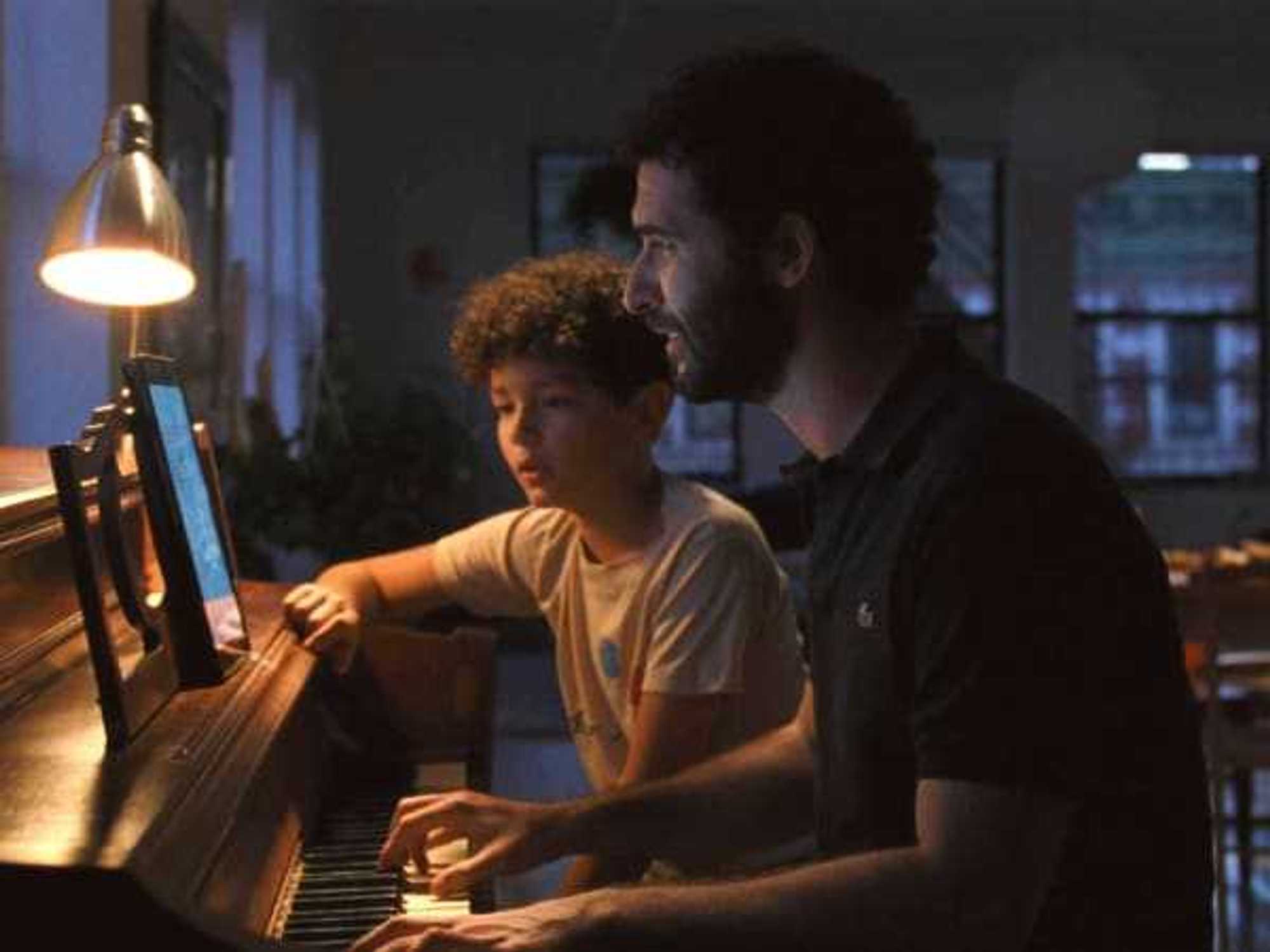
Peter (Jordan Firstman) is a party hard kind of person, both in his personal and professional life as a party planner. The crowd and scene he runs with in New York also leans heavily into drugs of all kinds, which gets Peter into trouble in 2016 when he inadvertently has a threesome with a straight British woman. Ten years later, that woman’s friend shows up on his doorstep with his son, Arlo (Reggie Absolom), and leaves him in Peter’s custody.
Peter must quickly learn not only how to take care of a child, but also adjust his life, which is not exactly kid-friendly. He excises his free-loading roommate, Nicky (Eldar Isgandarov); distances himself from his messy friend, Sophie (Cara Delevigne); and tries to stop doing and selling drugs. Some things prove easier to accomplish than others, especially because Peter’s friendly-but-chaotic friend group continues to come around and encourage bad behavior.
Written and directed by first-time feature filmmaker Firstman, the film depicts a lifestyle and characters that most other movies would use as colorful side events to the main story. Peter keeps company with drag queens, transgender women, and all manner of gay men who don’t have their own lives figured out. But because queer people are the focus of the film, not the others, everyone in his life is treated with respect, even if they still bring some tumult to Peter and Arlo’s new life together.
Peter goes through a degree of trial-and-error in figuring out how to handle Arlo, including what he likes to eat, how he likes to dress, and what kind of music he likes. Those scenes accomplish the goal of bonding the two of them with relatively minimal effort, but the film could have used a bit more friction. The situation through which Arlo comes into Peter’s life is dramatic, but Firstman never treats it that seriously, choosing instead to minimize any strong feelings either of the characters have.
This light touch continues for the majority of the film, as Firstman elides questions that would naturally arise if this were a real-life scenario. A third-act revelation finally brings some heft to the story, but it’s almost too little, too late in order to access the emotions that the filmmaker seems to be asking of the audience. He wants to show that Peter has changed in significant ways, but there’s not enough evidence on-screen to sell that idea.
Firstman, who’s been featured in TV shows like English Teacher and I Love LA, makes a good impression in a role he wrote for himself. He’s helped tremendously by Absolom, who puts in a great performance that actually feels like a real kid. Peter’s group of friends, played by Delevigne and a mixture of actors and non-actors, all bring an authenticity to the film that makes the story come alive even more.
Club Kid is a solid first effort by Firstman, who should be applauded for broaching a subject not often addressed in movies and for showcasing types of people who don’t get seen much in mainstream films. If the storytelling had been a little stronger, though, it might have been even more memorable.
---
Club Kid is now playing in select theaters; it opens wide on November 25,