Instead of a title, the album featured four hand-drawn symbols on the inner sleeve and record label, each one chosen by the band member it represents.
It was on this day in 1971 Led Zeppelin released its fourth album. The eight-song album came unnamed, but soon became known as Led Zeppelin IV, ZOSO, or Zep IV.
If you were growing up in the early '70s, the importance of this album cannot be understated. It would be hard to argue against "Stairway to Heaven" being the greatest rock song of all time. You would also be hard pressed to find an album with the incredible mix of songs. From the hard driving "Rock n' Roll" to the mystical "Battle of Evermore," Led Zeppelin IV captures the brilliance and diversity of one of the all-time great bands.
If you were growing up in the early '70s, the importance of this album cannot be understated. It would be hard to argue against "Stairway to Heaven" being the greatest rock song of all time.
Did radio overplay many of the songs found on the album? You bet, but don't blame the band for that. It was more a result of radio researching songs to death and then shoving the most popular down the consumer's throat. It should not diminish or take away from the greatness of whatLed Zeppelin IV was — and still is.
The album was released at a time when FM radio was just taking off and many stations went to a rock format. Imagine DJs picking the songs they wanted to play. What an amazing rush it must have been for DJs to cue up "Stairway to Heaven" for the first time!
Some records are called great because record labels market them as such while others are called great because they stand the test of time. ZOSO falls into the later category.
See the video of "Stairway to Heaven":
Instead of a title, the album featured four hand-drawn symbols on the inner sleeve and record label, each one chosen by the band member it represents.
Screenwriter Derek Kolstad, who wrote the first three John Wickmovies, has essentially had a blank check to do what he wants in the movie landscape since 2014. In recent years that has meant writing the action series Nobody for Bob Odenkirk, who has turned from a comedian into an unlikely action star in his sixties. Kolstad and Odenkirk are teaming up again in Normal.
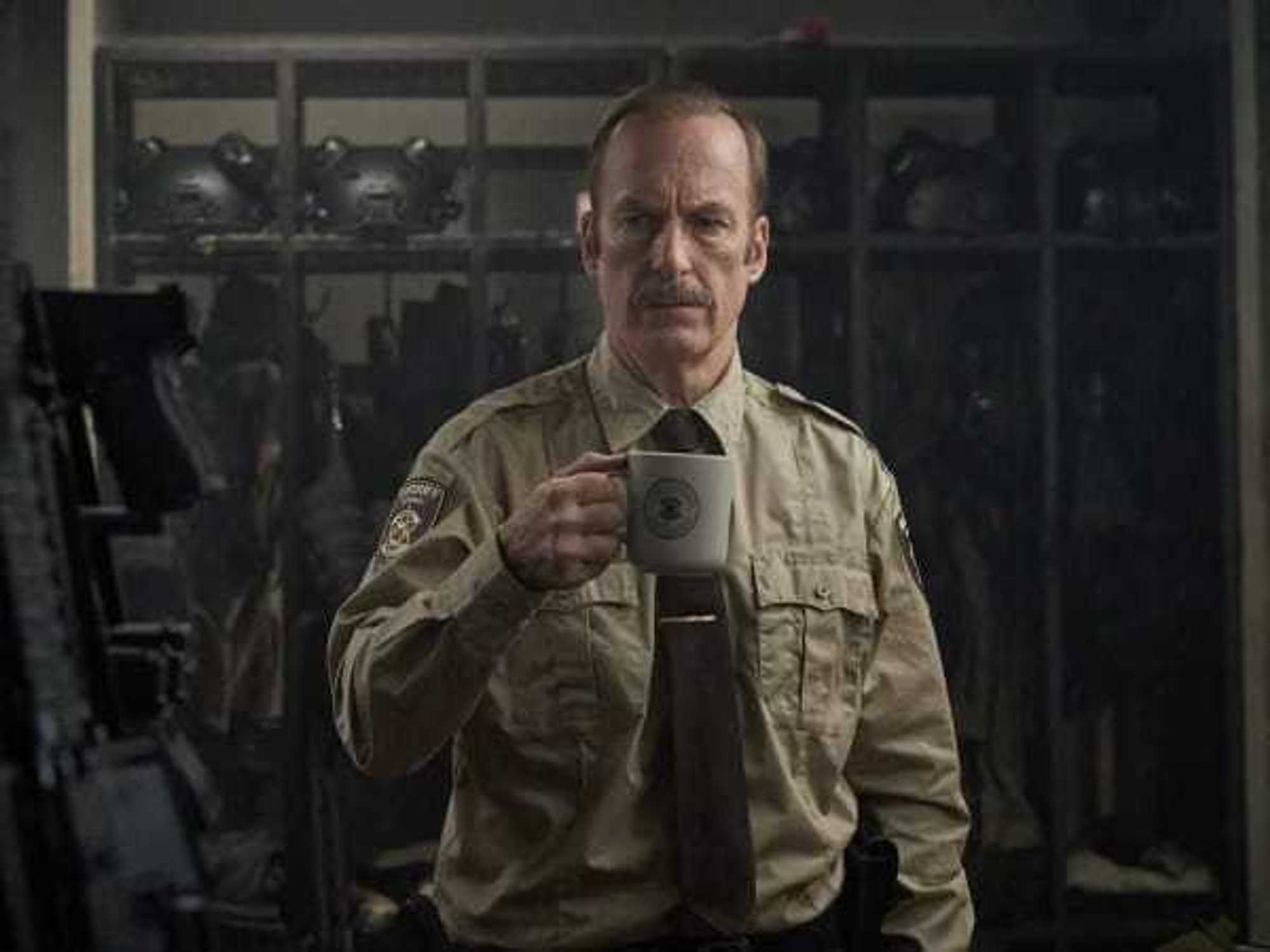
A film that tries to evoke Fargo in multiple ways, Normal finds Ulysses Richardson (Odenkirk) serving as a temporary sheriff for the small town of Normal, Minnesota after the previous sheriff died. Knowing he’s just a steward until a new sheriff is elected, Ulysses takes a live-and-let-live approach to the job, letting the deputies (Ryan Allen and Billy MacLellan) do the grunt work and trying to stay out of everyone’s way, including Mayor Kibner (Henry Winkler).
A bank robbery attempt by two non-citizens upsets his best-laid plans in more ways than he can imagine. Not only is he forced to confront a crime not often seen in a town like Normal, but the robbery uncovers secrets that turn the film into an all-out bloodbath. Soon, almost everyone in town becomes involved in what comes to resemble a war, along with — you guessed it — Yakuza henchmen from Japan.
Directed by Ben Wheatley and written by Kolstad, the film is a slight twist on the everyman-turned-hero character Odenkirk played in the two Nobody films. While Ulysses is in law enforcement, he prefers to use words instead of weapons, and it’s only when he’s pushed to the brink that he crosses that line. Naturally, his skills are beyond what anyone would expect of him, allowing him to match up well with people half his age.
The film is not a comedy in the traditional sense, but instead aims for laughs by catching the audience off-guard with its ultraviolence. Some characters are dispatched in shockingly unexpected ways, with one of the only natural reactions to the jarring nature of their deaths being laughter. That’s not necessarily the case for other killings, which range from blasé to sadistic, and the only reason they count as entertainment is because the filmmakers have primed the audience to accept them as such.
After a relatively solid setup, where Wheatley and Kolstad seem to take their time getting to know the main characters, the second half of the film is pure action that dispenses with good storytelling. Like many action movies, there are double crosses, surprise revelations, and more, but the filmmakers don’t seem to care about making sense of any character arcs. All they care about is delivering mayhem, and they succeed on that front.
Odenkirk has perfected the mild-yet-intimidating nature of his action characters, and it is satisfying to see him get the better of those who have done him wrong. He doesn’t run or jump like fellow 63-year-old Tom Cruise, but — with the help of fast-paced editing — he still makes for a credible action hero. The only other actors of any note in the film are Winkler, who’s a nice presence with his sardonic personality, and Lena Headey, whose small role doesn't match up with her experience.
You have to have a certain mindset to enjoy a film like Normal, but if you can abide its over-the-top bloodiness, it’s a serviceable action film. Few would have expected Odenkirk to take on these kinds of roles at this late stage of his career, but he’s making the most of his opportunities.