• Home
  • popular
  • EVENTS
  • submit-new-event
  • CHARITY GUIDE
  • Children
  • Education
  • Health
  • Veterans
  • Social Services
  • Arts + Culture
  • Animals
  • LGBTQ
  • New Charity
  • TRENDING NEWS
  • News
  • City Life
  • Entertainment
  • Sports
  • Home + Design
  • Travel
  • Real Estate
  • Restaurants + Bars
  • Arts
  • Society
  • Innovation
  • Fashion + Beauty
  • subscribe
  • about
  • series
  • Embracing Your Inner Cowboy
  • Green Living
  • Summer Fun
  • Real Estate Confidential
  • RX In the City
  • State of the Arts
  • Fall For Fashion
  • Cai's Odyssey
  • Comforts of Home
  • Good Eats
  • Holiday Gift Guide 2010
  • Holiday Gift Guide 2
  • Good Eats 2
  • HMNS Pirates
  • The Future of Houston
  • We Heart Hou 2
  • Music Inspires
  • True Grit
  • Hoops City
  • Green Living 2011
  • Cruizin for a Cure
  • Summer Fun 2011
  • Just Beat It
  • Real Estate 2011
  • Shelby on the Seine
  • Rx in the City 2011
  • Entrepreneur Video Series
  • Going Wild Zoo
  • State of the Arts 2011
  • Fall for Fashion 2011
  • Elaine Turner 2011
  • Comforts of Home 2011
  • King Tut
  • Chevy Girls
  • Good Eats 2011
  • Ready to Jingle
  • Houston at 175
  • The Love Month
  • Clifford on The Catwalk Htx
  • Let's Go Rodeo 2012
  • King's Harbor
  • FotoFest 2012
  • City Centre
  • Hidden Houston
  • Green Living 2012
  • Summer Fun 2012
  • Bookmark
  • 1987: The year that changed Houston
  • Best of Everything 2012
  • Real Estate 2012
  • Rx in the City 2012
  • Lost Pines Road Trip Houston
  • London Dreams
  • State of the Arts 2012
  • HTX Fall For Fashion 2012
  • HTX Good Eats 2012
  • HTX Contemporary Arts 2012
  • HCC 2012
  • Dine to Donate
  • Tasting Room
  • HTX Comforts of Home 2012
  • Charming Charlie
  • Asia Society
  • HTX Ready to Jingle 2012
  • HTX Mistletoe on the go
  • HTX Sun and Ski
  • HTX Cars in Lifestyle
  • HTX New Beginnings
  • HTX Wonderful Weddings
  • HTX Clifford on the Catwalk 2013
  • Zadok Sparkle into Spring
  • HTX Let's Go Rodeo 2013
  • HCC Passion for Fashion
  • BCAF 2013
  • HTX Best of 2013
  • HTX City Centre 2013
  • HTX Real Estate 2013
  • HTX France 2013
  • Driving in Style
  • HTX Island Time
  • HTX Super Season 2013
  • HTX Music Scene 2013
  • HTX Clifford on the Catwalk 2013 2
  • HTX Baker Institute
  • HTX Comforts of Home 2013
  • Mothers Day Gift Guide 2021 Houston
  • Staying Ahead of the Game
  • Wrangler Houston
  • First-time Homebuyers Guide Houston 2021
  • Visit Frisco Houston
  • promoted
  • eventdetail
  • Greystar Novel River Oaks
  • Thirdhome Go Houston
  • Dogfish Head Houston
  • LovBe Houston
  • Claire St Amant podcast Houston
  • The Listing Firm Houston
  • South Padre Houston
  • NextGen Real Estate Houston
  • Pioneer Houston
  • Collaborative for Children
  • Decorum
  • Bold Rock Cider
  • Nasher Houston
  • Houston Tastemaker Awards 2021
  • CityNorth
  • Urban Office
  • Villa Cotton
  • Luck Springs Houston
  • EightyTwo
  • Rectanglo.com
  • Silver Eagle Karbach
  • Mirador Group
  • Nirmanz
  • Bandera Houston
  • Milan Laser
  • Lafayette Travel
  • Highland Park Village Houston
  • Proximo Spirits
  • Douglas Elliman Harris Benson
  • Original ChopShop
  • Bordeaux Houston
  • Strike Marketing
  • Rice Village Gift Guide 2021
  • Downtown District
  • Broadstone Memorial Park
  • Gift Guide
  • Music Lane
  • Blue Circle Foods
  • Houston Tastemaker Awards 2022
  • True Rest
  • Lone Star Sports
  • Silver Eagle Hard Soda
  • Modelo recipes
  • Modelo Fighting Spirit
  • Athletic Brewing
  • Rodeo Houston
  • Silver Eagle Bud Light Next
  • Waco CVB
  • EnerGenie
  • HLSR Wine Committee
  • All Hands
  • El Paso
  • Houston First
  • Visit Lubbock Houston
  • JW Marriott San Antonio
  • Silver Eagle Tupps
  • Space Center Houston
  • Central Market Houston
  • Boulevard Realty
  • Travel Texas Houston
  • Alliantgroup
  • Golf Live
  • DC Partners
  • Under the Influencer
  • Blossom Hotel
  • San Marcos Houston
  • Photo Essay: Holiday Gift Guide 2009
  • We Heart Hou
  • Walker House
  • HTX Good Eats 2013
  • HTX Ready to Jingle 2013
  • HTX Culture Motive
  • HTX Auto Awards
  • HTX Ski Magic
  • HTX Wonderful Weddings 2014
  • HTX Texas Traveler
  • HTX Cifford on the Catwalk 2014
  • HTX United Way 2014
  • HTX Up to Speed
  • HTX Rodeo 2014
  • HTX City Centre 2014
  • HTX Dos Equis
  • HTX Tastemakers 2014
  • HTX Reliant
  • HTX Houston Symphony
  • HTX Trailblazers
  • HTX_RealEstateConfidential_2014
  • HTX_IW_Marks_FashionSeries
  • HTX_Green_Street
  • Dating 101
  • HTX_Clifford_on_the_Catwalk_2014
  • FIVE CultureMap 5th Birthday Bash
  • HTX Clifford on the Catwalk 2014 TEST
  • HTX Texans
  • Bergner and Johnson
  • HTX Good Eats 2014
  • United Way 2014-15_Single Promoted Articles
  • Holiday Pop Up Shop Houston
  • Where to Eat Houston
  • Copious Row Single Promoted Articles
  • HTX Ready to Jingle 2014
  • htx woodford reserve manhattans
  • Zadok Swiss Watches
  • HTX Wonderful Weddings 2015
  • HTX Charity Challenge 2015
  • United Way Helpline Promoted Article
  • Boulevard Realty
  • Fusion Academy Promoted Article
  • Clifford on the Catwalk Fall 2015
  • United Way Book Power Promoted Article
  • Jameson HTX
  • Primavera 2015
  • Promenade Place
  • Hotel Galvez
  • Tremont House
  • HTX Tastemakers 2015
  • HTX Digital Graffiti/Alys Beach
  • MD Anderson Breast Cancer Promoted Article
  • HTX RealEstateConfidential 2015
  • HTX Vargos on the Lake
  • Omni Hotel HTX
  • Undies for Everyone
  • Reliant Bright Ideas Houston
  • 2015 Houston Stylemaker
  • HTX Renewable You
  • Urban Flats Builder
  • Urban Flats Builder
  • HTX New York Fashion Week spring 2016
  • Kyrie Massage
  • Red Bull Flying Bach
  • Hotze Health and Wellness
  • ReadFest 2015
  • Alzheimer's Promoted Article
  • Formula 1 Giveaway
  • Professional Skin Treatments by NuMe Express

    Travelin' Man

    The hidden Inca ruins: This fortress adventure takes you far off the regular tourist paths

    Stephan Lorenz
    Stephan Lorenz
    Oct 28, 2013 | 9:44 am

    It was a strange twist. Suddenly we found ourselves at the center of attention, when a group of students, I assumed high school, rushed over to take pictures. They lined up — with us in the middle like trophies — and their classmates took turns hitting shutter buttons. I stood out as at least three heads taller in every picture.

    Of course we played along, but were surprised by how much scrutiny we garnered, given the fact that we all were surrounded by carved stone friezes immense citadels, and nearly 400 structures, some dating back to the 7th century, pre-Incan in other words.

    After posing for a handful of photos, I realized that we were probably the only tourists for miles and definitely the only ones among the few visitors. Nearly one million sightseers from all over the globe trek to the world-famous Inca ruins of Machu Picchu in southern Peru annually.

    We were probably the only tourists for miles and definitely the only ones among the few visitors.

    In contrast, the impressive fortress of Kuelap in the north sees less than 15,000 visitors.

    The day we hiked up to the ruins, spending several hours traipsing about the huge bulwarks and remaining circular walls, we saw only a dozen other visitors in addition to the school group, all of them Peruvian. We definitely had left the well-trodden tourist track. The ruins perch at an airy location, overlooking vast valleys and endless mountains.

    The extensive archeological site offers plenty of space for peaceful wandering and quiet solitude. Much of its history and culture remains unknown.

    The area’s only sizeable city and main transport hub, Chachapoyas, lies two and a half hours by bus to the north. The city’s name stems from the ancient people and culture of the region, which in addition to Kuelap, left numerous ruins and burial sites scattered throughout the precipitous valleys of northern Peru. The Incas gave the name Chachapoyas, meaning warriors of the clouds, to the people who reigned throughout the mountains between the Marañón and Huallaga rivers.

    The distinct civilization of the Chachapoyas flourished between the 8th and 15th century, until it was conquered by the expanding Inca Empire and completely lost after Spanish colonization. The area now lies within the southern part of the Amazonas region of Peru, a land of rugged peaks and deep canyons covered with humid tropical forest.

    Getting There
    By combination of bus and a rattling colectivo (small vans that ply the back roads), we managed to reach the small, dusty town of Nuevo Tingo. The old part of town had apparently been swept away by a flood and a new village was constructed atop a higher bank. From the village center, a few cobblestone streets ran arrow straight in cardinal directions, turning into dirt paths before coming to dead-ends in fallow fields. The main plaza, a tight square of gray stone, was surrounded by colorful, but faded houses.

    A handful of villagers kept busy sweeping dust off storefronts and boardwalks, a seemingly futile task, as sandy gusts blew from the surrounding hills.

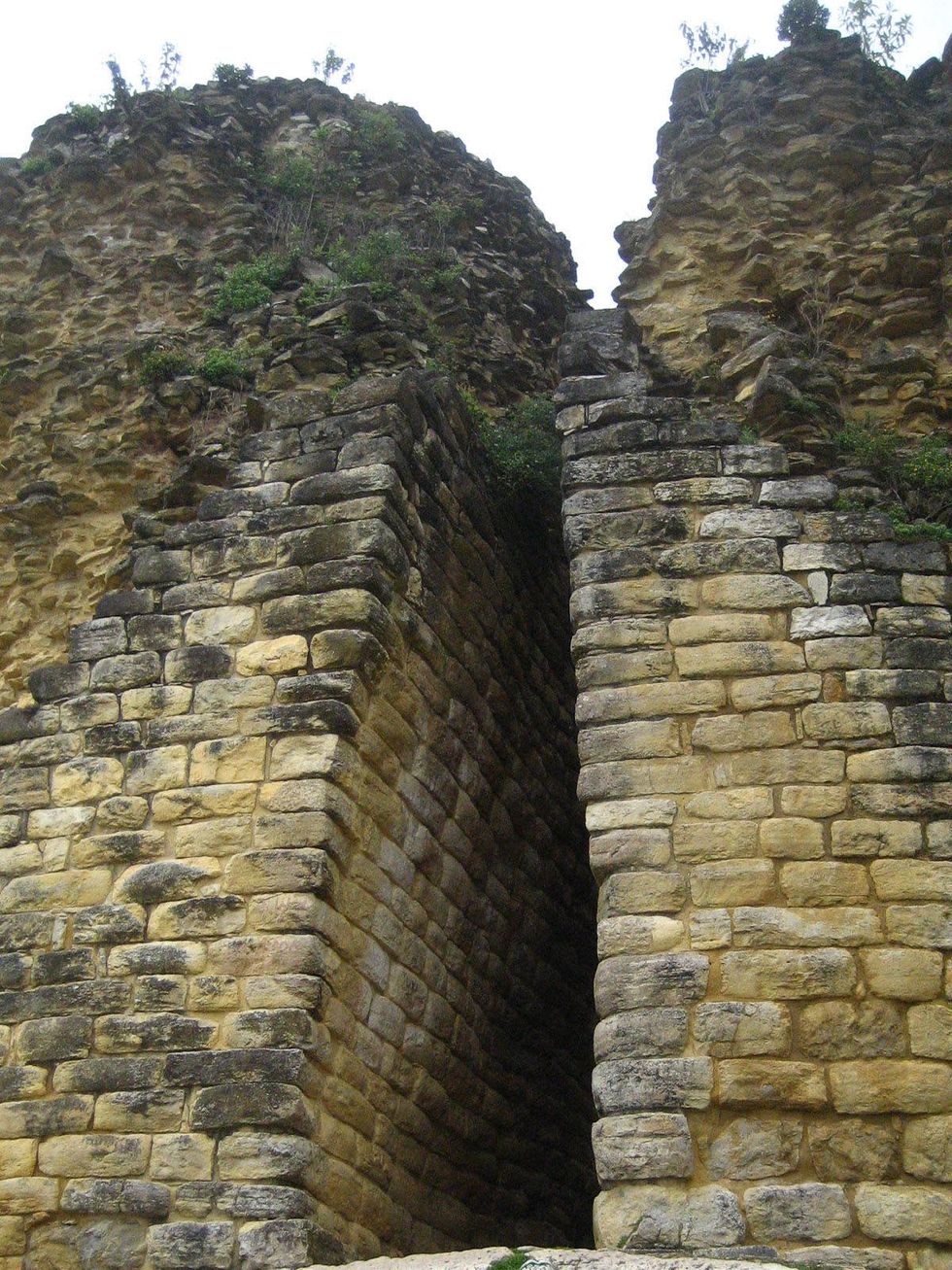
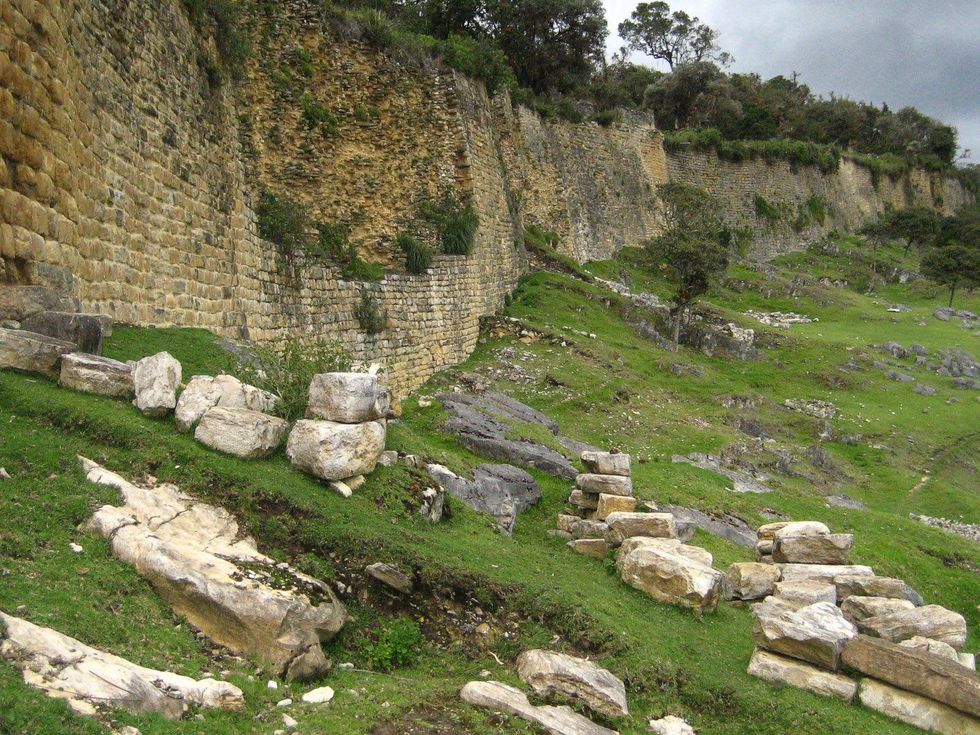
    Massive walls of limestone slabs, reaching 60 feet high, stretched left and right for nearly 1,000 feet in length.

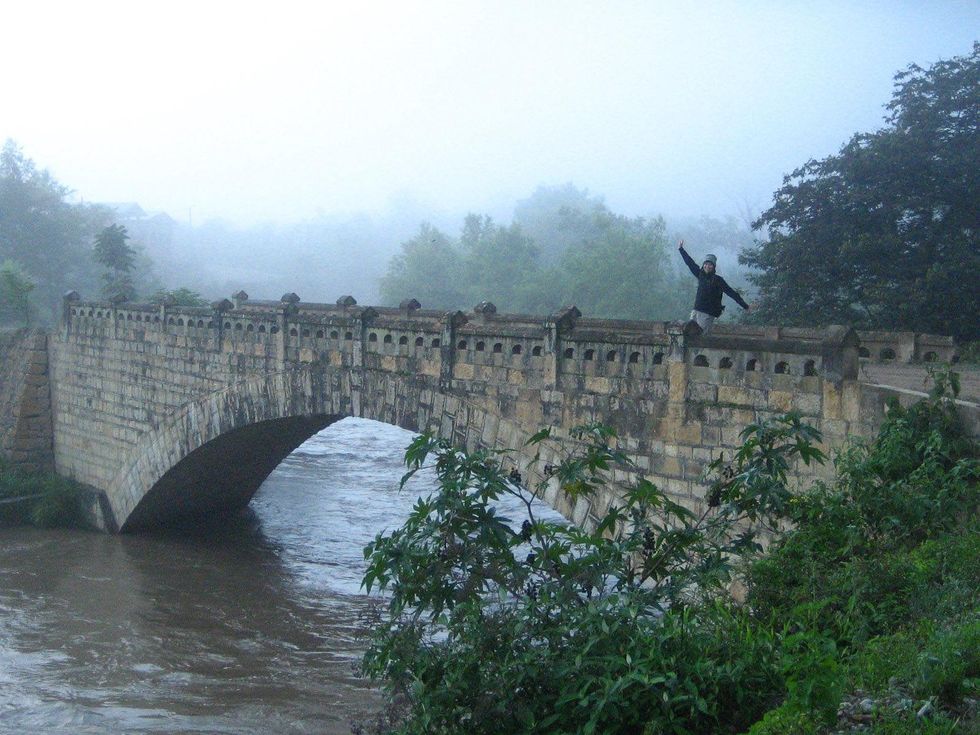
    We spent the night in cramped quarters on the second floor of the only hospedaje in town. Starting at sunrise the following morning, we quickly descended to Old Tingo, where a few buildings remained standing along the torrential Rio Utcubamba. From here, a weathered stone bridge crossed a narrow tributary, the Rio Tingo.

    We spotted a discolored trailside sign, pointing straight up at the steep slope ahead, Kuelap six miles!

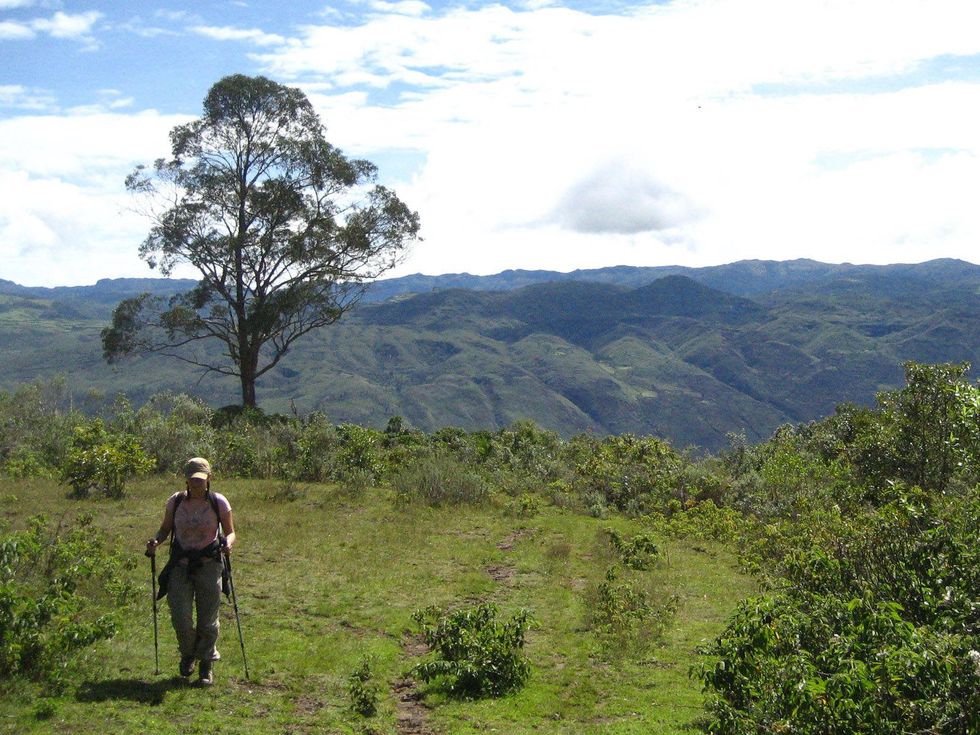
    A rough dirt track climbed out of the verdant valley and swung in arduous switchbacks up the arid mountainside. The rising sun burnt off the last pockets of cool air and we stuffed our sweaters into the backpack. The trail did not conceal the 4,000-foot elevation gain ahead and, along some stretches, ascended stone steps hewn into the incline. By midday our progress slowed, but the path leveled and a half-dozen adobe houses surrounded by low fences indicated we were getting closer.

    Finally, emerging into an open expanse of green grass, cropped close by roaming goats and llamas, we schlepped our tired legs the final stretch to the immense walls of the fortress. After unabashedly restocking on sodas and chocolate at one of several wooden stalls lining the clearing, we sat on rocks in front of the main portal, a narrow, tall hallway shaped like an inverted V. Massive walls of limestone slabs, reaching 60 feet high, stretched left and right for nearly one thousand feet in length.

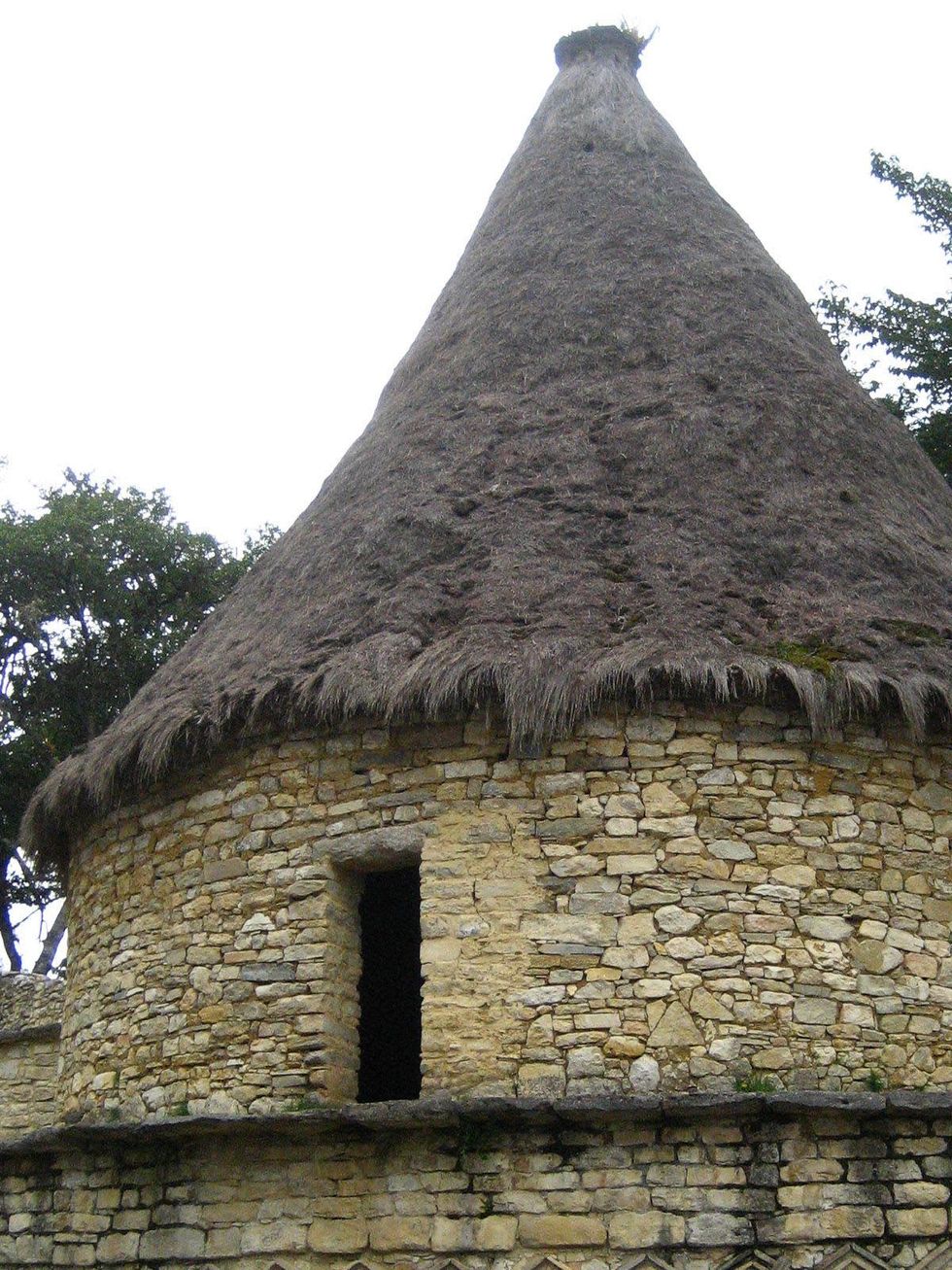
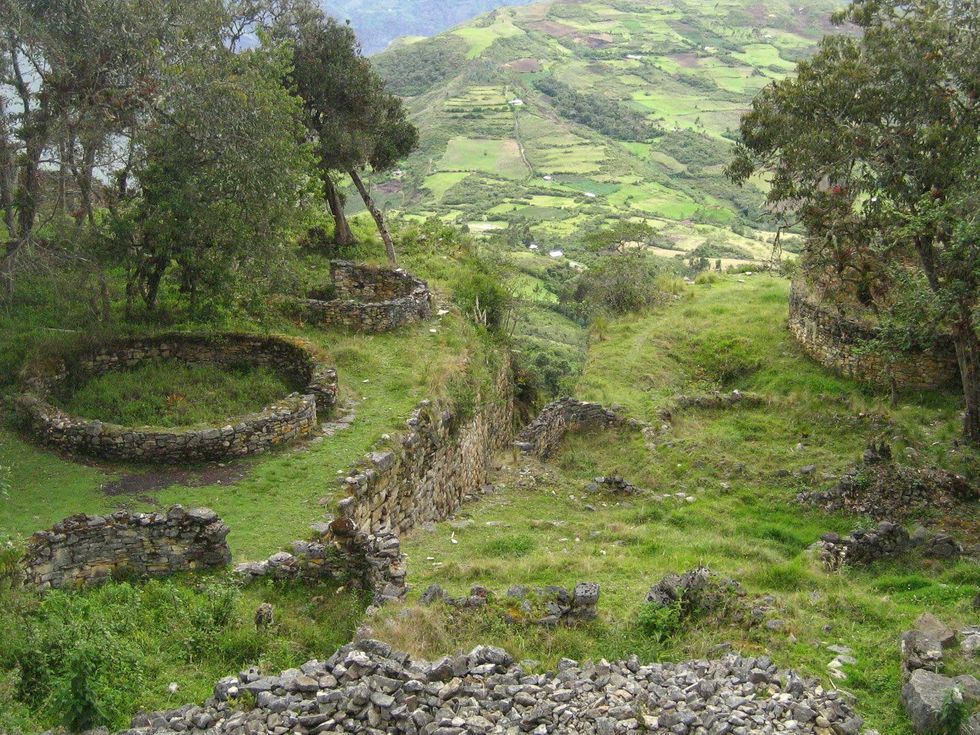
    Much of the ruin site has not been fully excavated, leaving a sense of exploration. Nearly 400 buildings have been identified, many of them small circular structures, which were covered by thatch roofs while the city was occupied and may have served as living quarters. Other distinct structures we saw included El Tintero, or ink well, a funnel-shaped citadel and La Atalaya, a round tower at the northern corner of the site.

    We wandered aimlessly for hours, climbing up and down half-buried stairs, inspecting carved friezes in stone walls, some representing deer and birds, but the most common were snake-like zigzag patterns.

    Along the eastern wall of the ruins, the sheer mountainside dropped into a deep valley below and we perched on a slab, soaking in the sweeping views across the crumpled Andes. Terraced fields and farmsteads of minuscule houses clung to the slopes and strips of white dirt, footpaths, zigzagged through the dun colored landscape. I wondered whether any of these trails had been trodden by Chachapoyan farmers or builders, harvesting maize and potatoes or transporting rocks.

    Looking back across the grounds, we could see the rough outlines of the structures still buried under the rank vegetation. The majority of buildings appeared to be of the same size and construction, a sign of an apparently egalitarian society. The imposing walls and narrow entrances suggested that the site served as a fortification, possibly against rival societies to the west, but anthropologists now believe that it functioned as a religious center.

    Researchers estimate that less than five percent of Chachapoyan city sites, burial grounds, and sarcophagi have been excavated and studied, leaving much to be discovered and learned about this fascinating culture. For example, further south, tombs at the Laguna de los Cóndores, discovered by cattle ranchers in 1996, held more than 200 mummies and thousands of artifacts, now housed in the Museo Leymebambain.

    Similar significant finds surely wait to be discovered. Chachapoyan society harbored elaborate beliefs and had intricate rituals to honor the dead. Even Kuelap holds human remains, some of them buried ceremonially, but others could have been last fatalities of war with the Incas.

    Practical Travel Advice

    In the late afternoon, even though we felt there was much left to be seen, we reluctantly started our return. One glance at the torturous path winding up the valley along dry ridges and slopes strengthened our resolve to hitch a ride down the mountain.

    Researchers estimate that less than five percent of city sites, burial grounds and sarcophagi have been excavated.

    Fortunately we caught up with the school group in the parking lot and they remembered us, sparing two seats in their overcrowded bus. We were exhausted and gladly listened to local pop music blaring at maximum decibels, as the bus lurched down the mountain. In some spots, I looked straight down the window at the side of the bus and did not see an inch of road, just a precipitous 2,000-foot drop, but quickly distracted myself by taking one last peek at the unforgettable ruins of Kuelap, receding from view on the mountaintop above.

    From Peru’s capital, Lima, it is possible to board a bus, preferably first class, for the 22-hour trip to Chachapoyas. Dozens of other buses connect to larger cities to the north and south also, including Chiclayo and Trujillo on the coast. From Chachapoyas, it is possible to book tours to visit Kuelap and other ruin sites or hire a taxi to visit independently.

    For the budget conscious traveler, colectivos are an even cheaper alternative to reach the ruins. The hiking option from Tingo is of course free, but more of an option for the energetic, with food stalls and basic supplies available at Kuelap. Guides are often not directly available at the ruin site, but we met two knowledgeable locals who were also visiting and they explained many details to us.

    Many buildings are small, round structures at Kuelap.
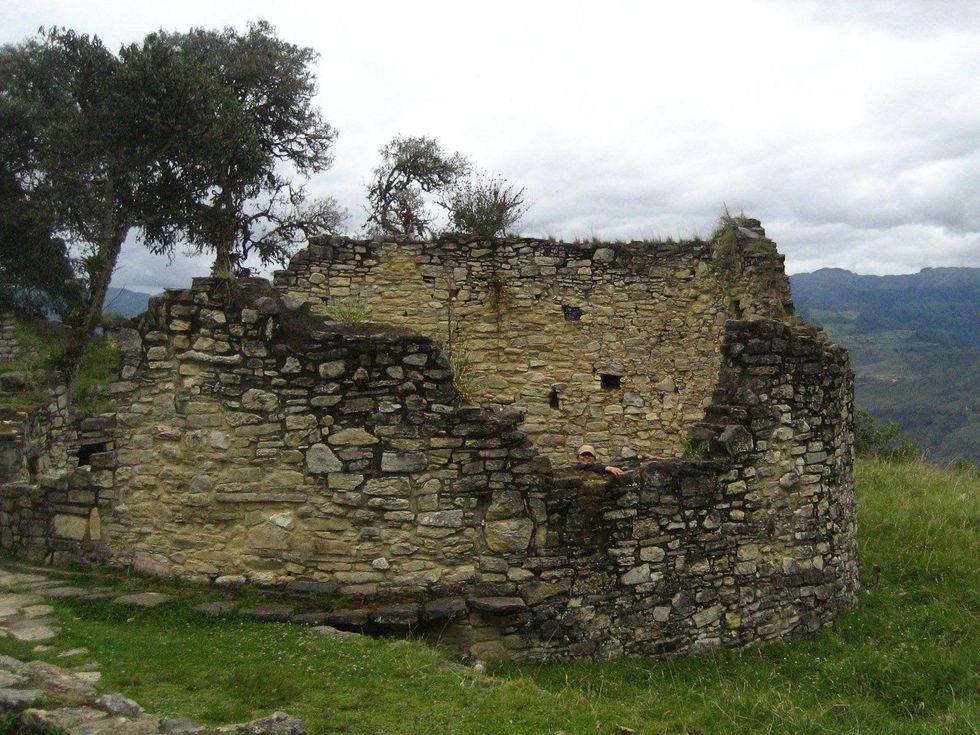
    Stephan Lorenz Travels in Peru October 2013 Many buildings are small round structures at Kuelap
    Photo by Stephan Lorenz
    Many buildings are small, round structures at Kuelap.
    unspecified
    news/travel

    Now hear this

    New Texas museum shines spotlight on Tejano music history

    Edmond Ortiz
    Dec 18, 2025 | 11:30 am
    Totally Tejano Hall of Fame and Museum, San Antonio, tejano music
    Photo by Edmond Ortiz
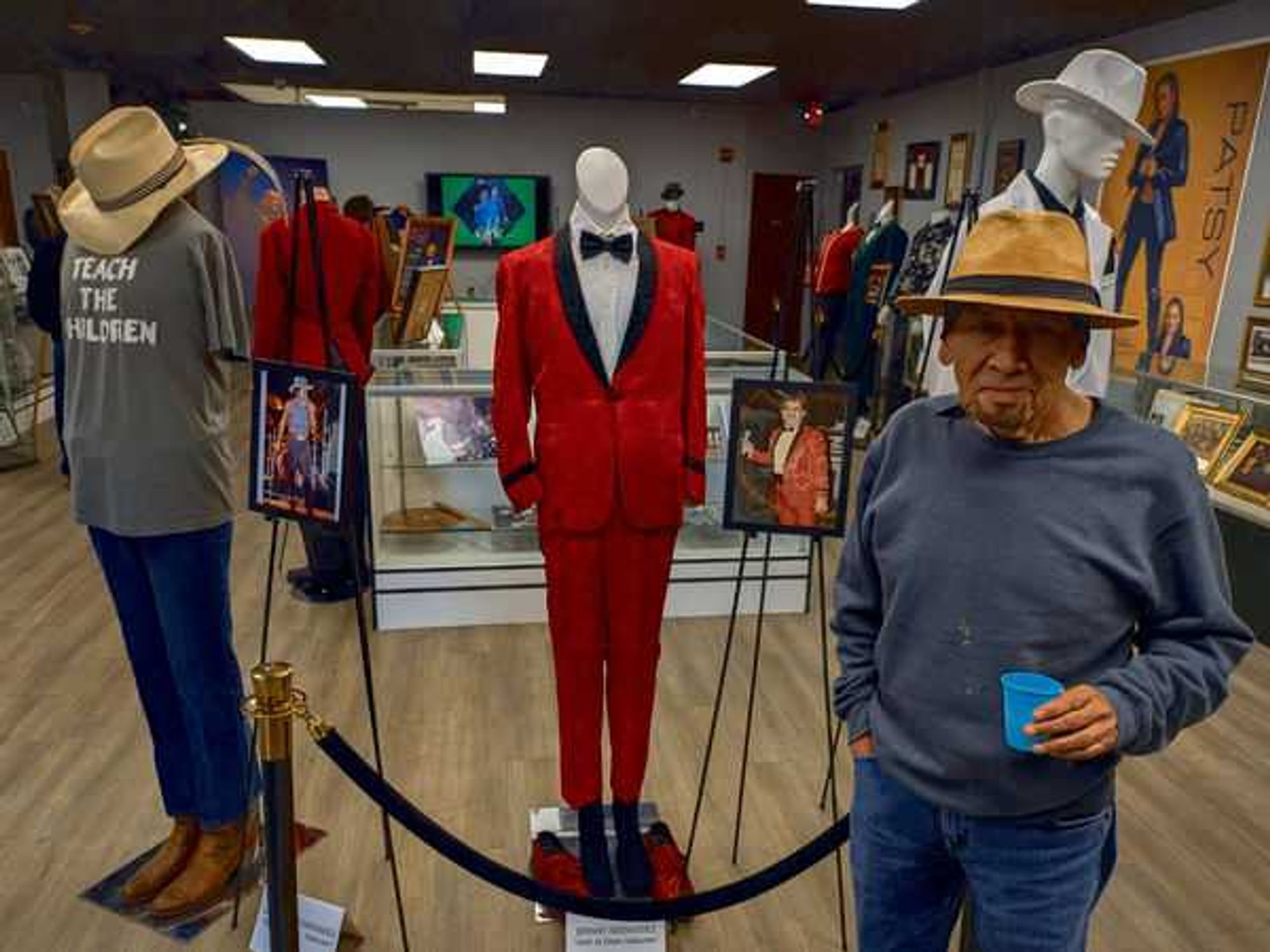
    Roger Hernandez serves as board president of the Totally Tejano Hall of Fame and Museum.

    For a city that proudly calls itself the capital of Tejano music, San Antonio has long been missing a permanent place to honor the genre’s pioneers and preserve its history. That gap officially closed In December with the opening of the Totally Tejano Hall of Fame and Museum at 1414 Fredericksburg Rd.

    The music couldn’t have found a better steward than its founder and board president. Roger Hernandez has had his finger on the pulse of Tejano music for decades. His company, En Caliente Productions, has provided a platform for countless performing artists and songwriters in Tejano, conjunto, and regional Mexican music since 1982.

    Hernandez says his wife, who ran a shop at Market Square years ago, would often get questions from visitors about the location of a physical Tejano music museum, a thing that simply did not exist. In 2022, he banded together with friends, family, and other local Tejano music supporters to make the nonprofit Hall of Fame a reality.

    “I decided I've been in the music scene for over 40 years, it's time to do a museum,” Hernandez recalls.

    Hernandez says a brick-and-mortar Tejano music museum has long been needed to remember musical acts and other individuals who grew the genre across Texas and northern Mexico, especially those who are aging. Recently, the community lost famed Tejano music producer Manny Guerra and Abraham Quintanilla, the renowned Tejano singer/songwriter and father of the late superstar Selena Quintanilla-Perez. Both deaths occurred roughly one week after the Totally Tejano museum opened to the public.

    “They're all dying. They're all getting older, and we need to acknowledge all these people,” Hernandez says.

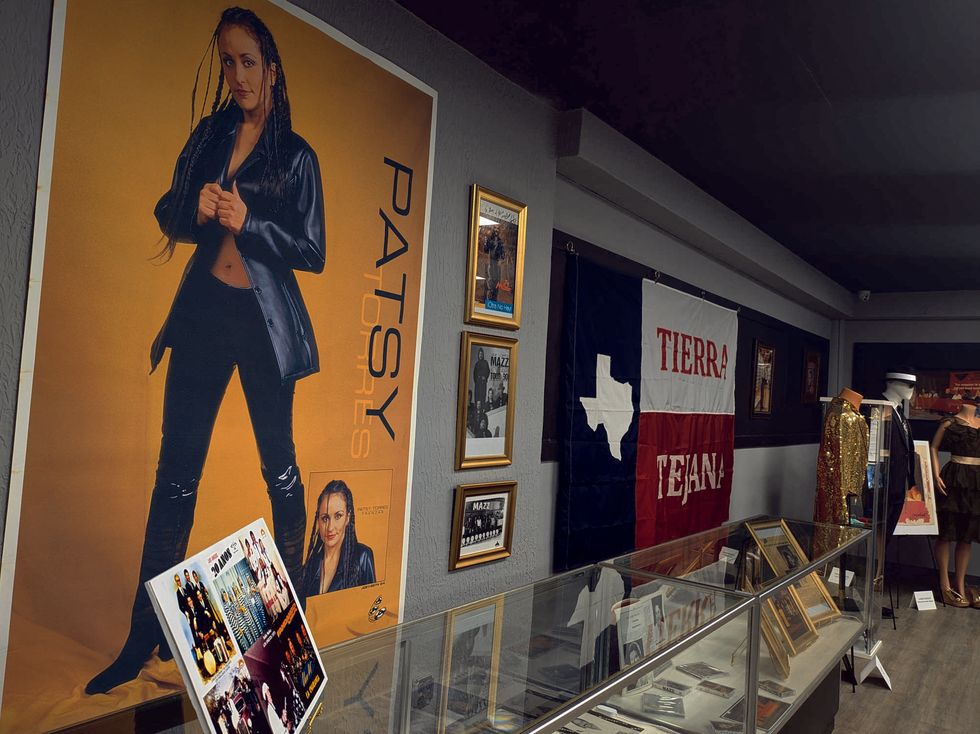
    The Totally Tejano Museum — named after Hernandez’s Totally Tejano Television Roku streaming — has 5,000 square feet of space packed with plaques, photos, promotional posters, musical instruments, and other memorabilia honoring the pioneers and stars of the beloved genre. Mannequins wear stage outfits from icons like Laura Canales and Flaco Jimenez, and a wall of photos remembers late greats. Totally Tejano Television plays legendary performances on a loop, bringing the exhibits to life.

    Totally Tejano Hall of Fame and Museum, San Antonio, Tejano music The newly opened Totally Tejano Hall of Fame and Museum includes a growing collection of memorabilia. Photo by Edmond Ortiz

    Hernandez says the museum will soon welcome permanent and rotating exhibits, including traveling shows, a Hall of Fame section, and an area paying homage to Chicano music crossovers, such as the late Johnny Rodriguez, the South Texas singer-songwriter who blended country with Tex-Mex music. Plans call for the organization to hold its inaugural Hall of Fame induction in February 2026.

    Eventually, a 2,000 square feet back room will be converted into additional display space and host industry gatherings, community symposiums, and record and video release parties. The museum also plans to add a gift and record shop and a music learning room where visitors can listen to early Tejano music and browse archival photos. Hernandez is already talking with local school districts about educational field trips.

    Much like Tejano itself, the museum is a grassroots production. Hernandez and fellow board members have used their own money to rent, renovate, develop, and maintain the museum space. The board also leads the selection of the Hall of Fame honorees and curates the exhibits.

    Hernandez has been heartened by the museum’s reception, both from media outlets and music fans around Texas and beyond.

    “We had a radio station come in this morning from Houston to interview us,” he says. “People have come in from Lubbock, Texas. We have had people from Midland, Texas. We have another person who emailed us who’s coming in from New York. People are learning all about us.”

    That includes many of the musicians who helped shape the genre. Johnny Hernandez, Sunny Ozuna, Elida Reyna, and Danny Martinez from Danny and The Tejanos are among the luminaries who have already graced the halls.

    The Totally Tejano Hall of Fame and Museum is now open 10 am-6 pm, Tuesday-Sunday, and closed Monday. Admission is free, but donations are encouraged. Fans can call 210-314-1310 for more information.


    san antoniotejano musicmuseumshall of famemusicopenings
    news/travel

    most read posts

    Family-friendly Houston restaurant picks Missouri City for 6th location

    Beyoncé-loved Houston brunch spot expands and more popular stories

    $150 million, 12,500-seat entertainment venue coming to Houston in 2027

    Loading...