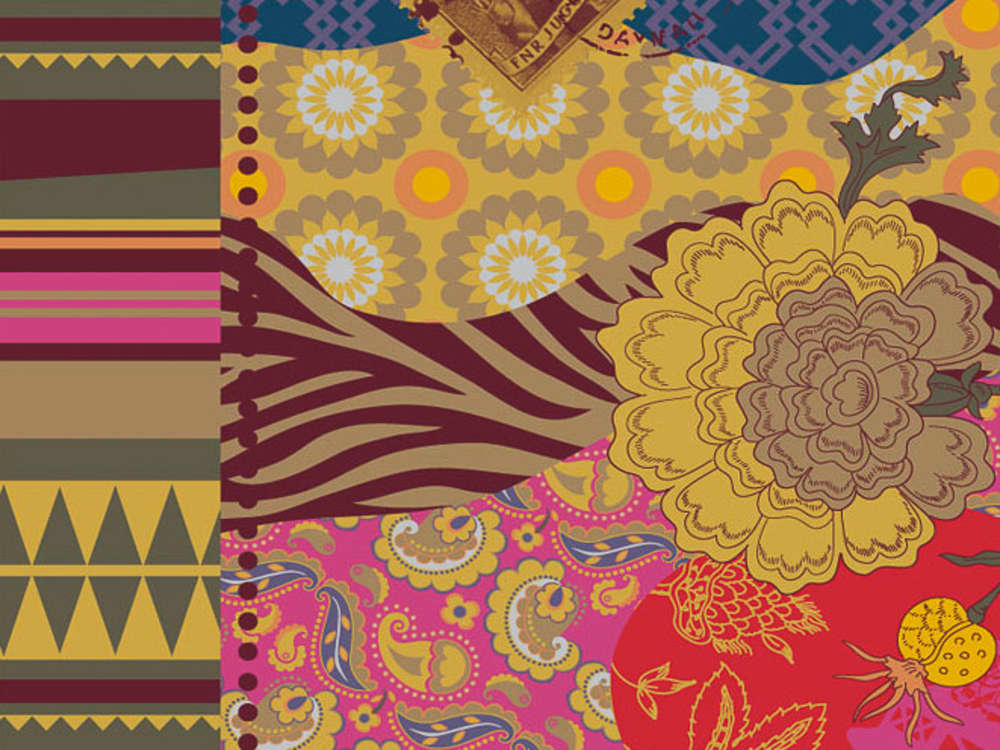
 From Sherwin-Williams' ColorMix 2011, "Restless Nomad." Colors wander all overthe palette, from dusky darks, to hot vibrant pinks and reds, to earthyfood-influenced hues that evoke eggplants and cabbages.
 The name of this color: Rice Paddy
 ColorMix 2011, "Purely Refined." Pared down is the new upscale, and its colorpalette demonstrates similar restraint, filled with understated neutrals, yetwith nuances and undertones that interact in intriguing ways.
 ColorMix 2011, "Gentle Medley," with hues innocent without being sweet; flirty,yet not feminine. They reflect not just a yearning for youthful innocence andgentler times, but also a refreshing honesty and lack of pretension that arethoroughly modern.
 ColorMix 2011, "Bold Intervention." Neon-bright, graffiti-bold and digitallyenhanced to 3-D luminosity, they’re the colors of technology, of avant-garde artand of the entrepreneurial spirit.

The second installment of the Untitled Art Fair opened to quite the fanfare on Thursday, October 1. VIP guests and members of the press looked on as Houston Mayor John Whitmire sliced through the ceremonial ribbon, allowing eager contemporary art enthusiasts to be the first to see what the show has in store over the weekend.
For anyone unfamiliar, Untitled Art serves as a curatorial platform for discovering contemporary art, spotlighting both emerging and established voices. Exhibitors are selected based on the strength of their programs and artistic vision, under the leadership of founder Jeffrey Lawson, executive director Clara Andrade, and Houston director Michael Slenske. This year, 98 galleries from over 20 countries and territories are participating.
This year, Untitled Art offers hourly guided tours organized by advisory partner The Agency Art House. These intimate tours offer an insider’s perspective on key highlights, providing context, market insights, and acquisition strategies. Tours will be held hourly and can be booked in Booth A3.
In addition, a podcast lounge where the audience can be seated to watch the Untitled Art Fair podcast sessions live has been carved out in an intimate corner of the show. Presented in partnership with Soho House Cities Without Houses, the Podcast Lounge will feature 28 panelists across seven discussions. This year’s program includes artists, collectors, curators, writers, institutional leaders, gallerists, and voices from the hospitality industry.
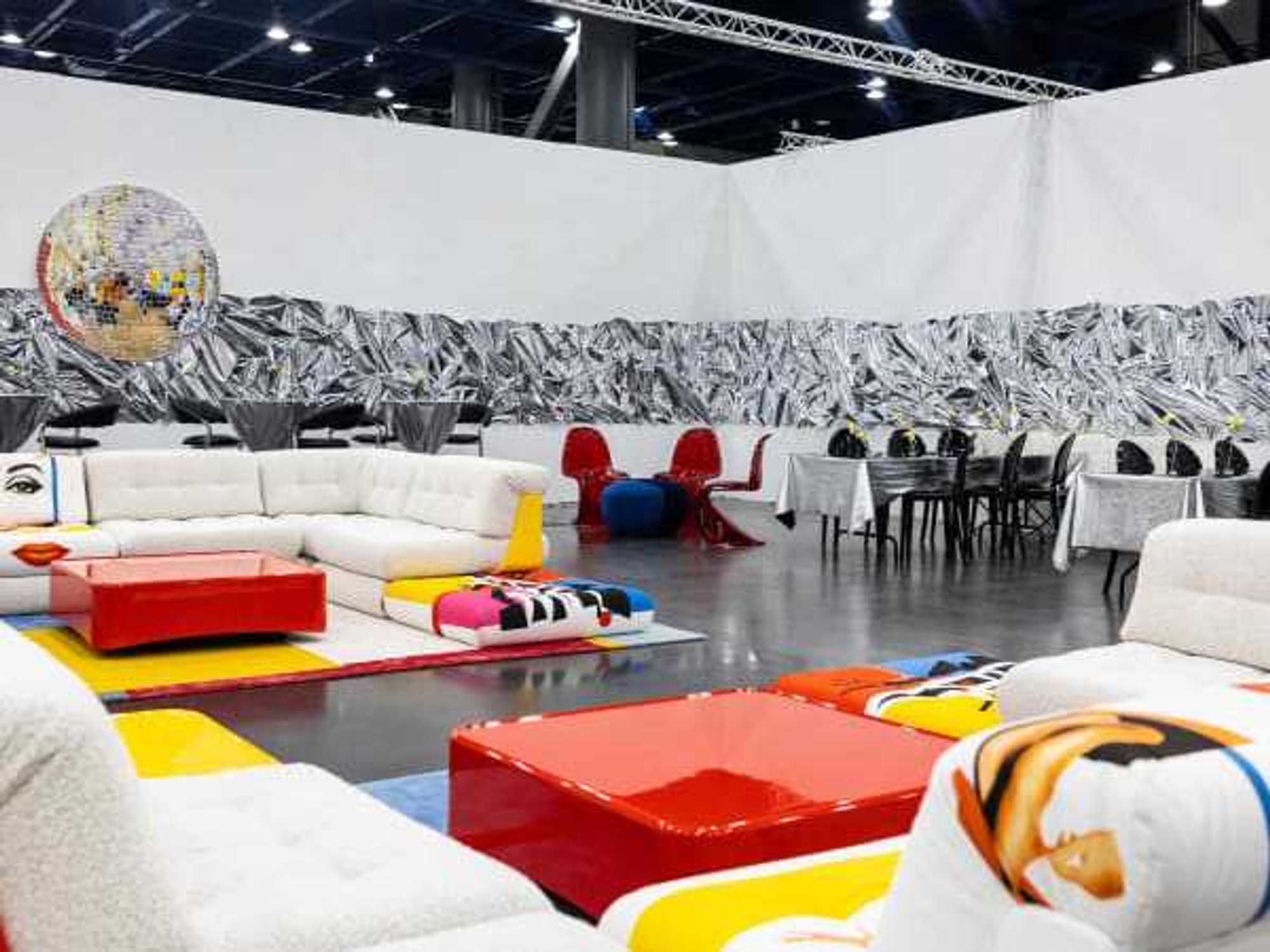
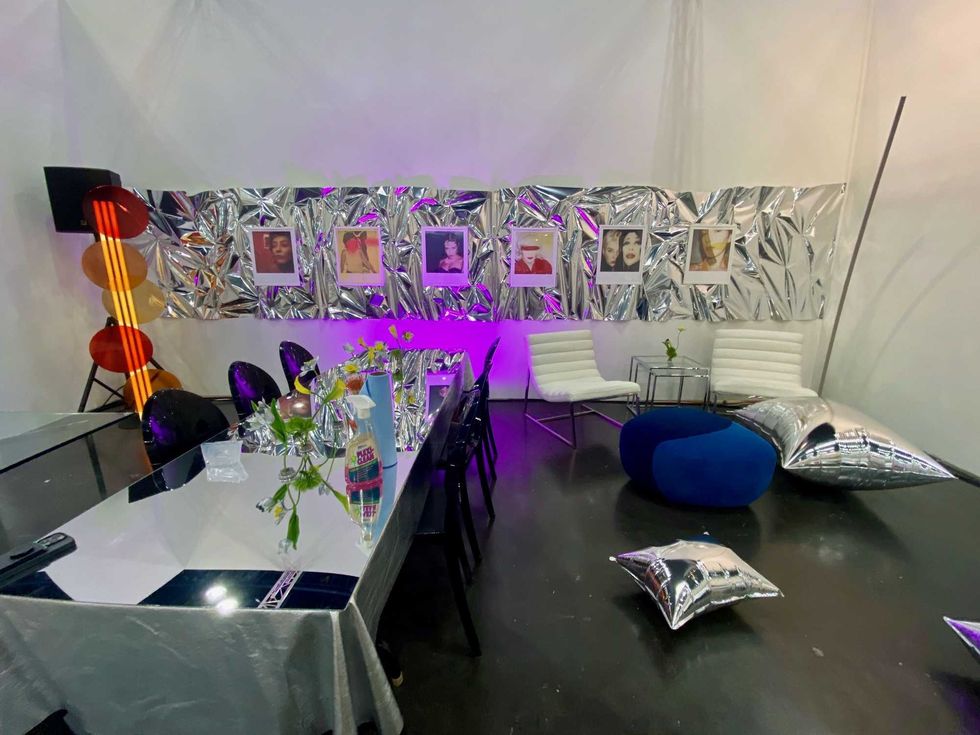
Untitled tapped Houston-based hospitality designer Gin Braverman of the acclaimed Gin Design Group (Kirkwood, ChòpnBlọk, etc.) to design what have become “Public Lounge” and “Silver Party,” the Andy Warhol-inspired VIP lounge. In Public Lounge, Braverman conceived a gathering place anchored by a large-scale overhead installation — a visual marker within the fair’s landscape of tall partition walls.
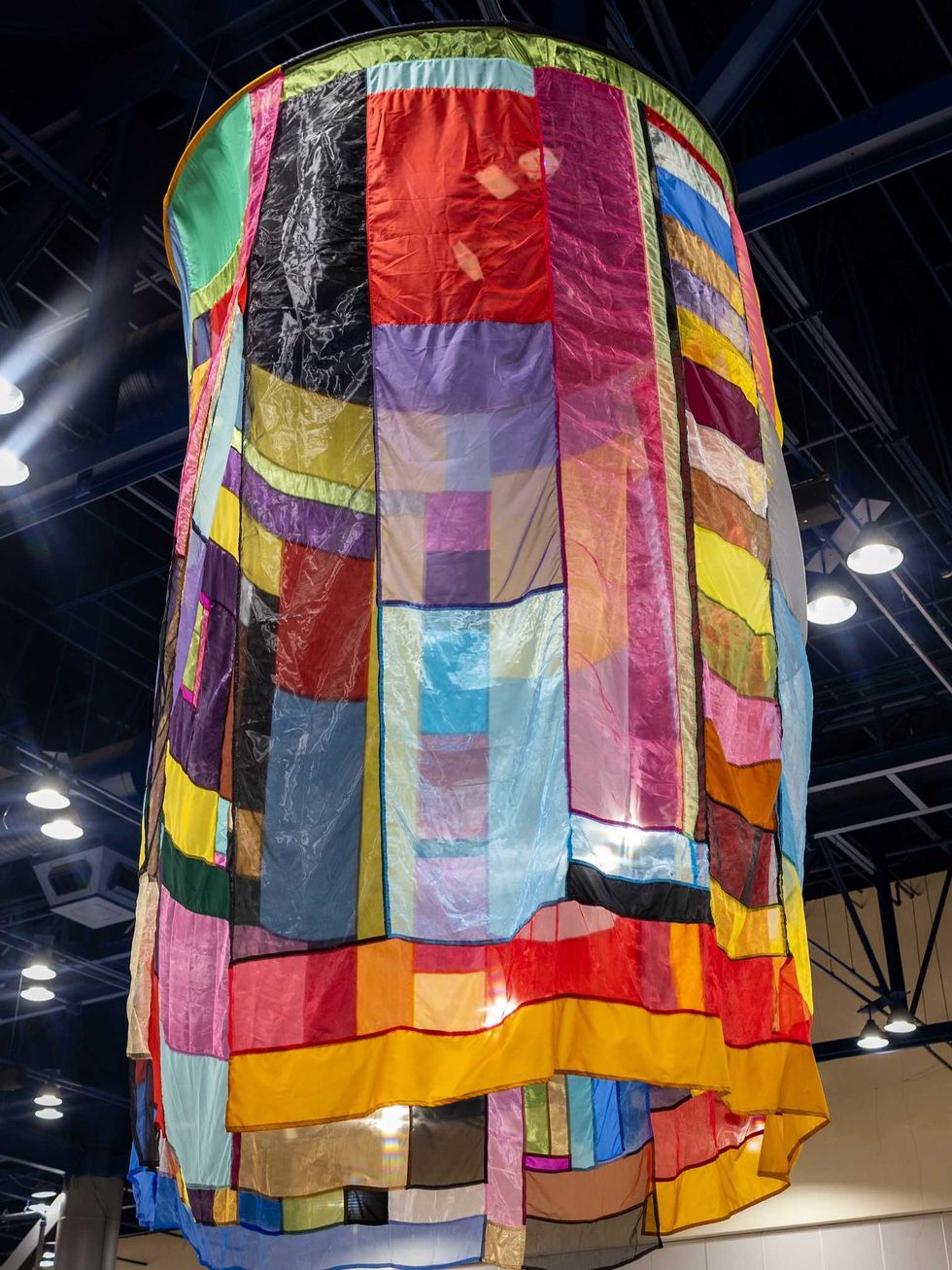
Braverman enlisted Rachel Hayes — textile artist and collaborator to brands such as Armani and Missoni, as well as musical acts Bon Iver and Olivia Rodrigo — to develop the artistic direction for the piece, resulting in True North, a new site-specific textile installation created specifically for Untitled Art Houston. The lounge is designed around the work, with its color and textile language extending into the space below, even the tablecloths have received the colorful Hayes treatment.
“We knew pretty quickly that the lounge needed something with real scale. You’re surrounded by these tall white walls, and I wanted something overhead that would pull your eye up and give you a sense of where you were,” explains Braverman. “I’ve always loved Rachel’s work and the way it lives somewhere between art, architecture, craft, and fashion, so she immediately came to mind. We gave her the form and let her run with it. Then True North became our north star for everything happening underneath it—the color, the textiles, the way people move through the space. I love that you can sit under this enormous piece of art and actually live with it for a minute.”
Hayes was immediately intrigued when approached for the commission. While the Tulsa, Oklahoma-based artist is no stranger to public art installations, the opportunity to weave her way into the hospitality realm seemed like a fresh and inspiring new avenue.
“I’ve never done anything quite like this before. It’s fun to try something new and to have someone to try it with because it makes it a little less scary,” says Hayes. “These are my people — this art audience and art crowd — so I was really excited to get asked to do this. As someone who works on a lot of public art projects, the audience isn’t necessarily art-goers. I like that my work can ride the line between design, art, fashion, public art, and architecture.”
Standing 16-feet-tall and spanning 10 feet in diameter, True North is a cylindrical textile installation composed of machine-sewn synthetic organza, nylon, lamé, and thread, including elements repurposed from Hayes’ previous works — every seam sewn by Hayes. The work draws on references ranging from grain silos and chandeliers to Mondrian’s grids and the pieced logic of quilts. On-site, Houston-based artist Matt Freis assisted Hayes with installation armature and lighting.
Raised high above the show floor, True North can be anything the viewer desires it to be. Much like Joseph and the Amazing Technicolor Dreamcoat, a patchwork of translucent planes of color, intersecting seams, and shifting layers create a monumental volume that moves between art, design, architecture, and placemaking.
“Something like this is a very contained form. The space is big enough that we could think big, but not have it be a total explosion or takeover of my art,” explains Hayes. “The fair is not about me. This is just one little moment in some breathing space and it’s cool to be a part of Gin’s world that she’s building. I’m really excited to see what people think. In textiles, different people bring different things to the table. It might remind them of quilts, or glass vessels, or sculptures — it’s fun to try something like that in fabric.”
CultureMap Show Stoppers:
Regardless of whether one attends as an admirer or a collector, Untitled Art offers so much to see. To best serve show-goers, CultureMap compiled a list of 10 do-not-miss galleries, artists, and a helpful guide to price points within the galleries themselves. From Houston and other Texas locals holding it down, to the international “big fish,” here are the top 10 standouts from the show…“in no particular order.”
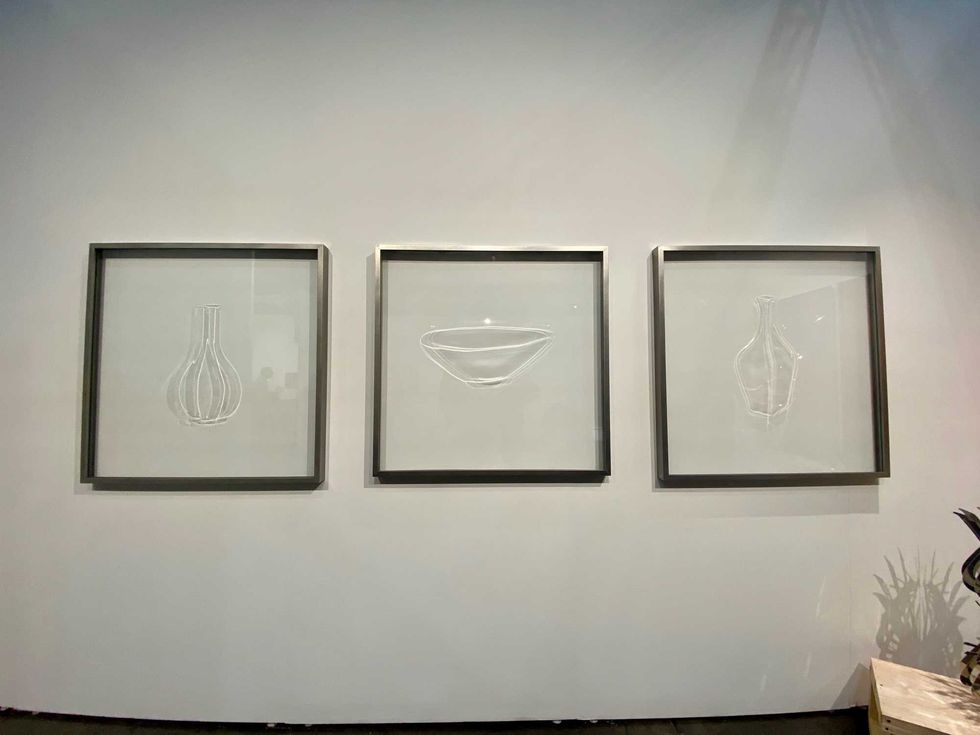
Gallery: LEE & BAE | New York/Busan, KR
Artist: Sangmin Lee
Price: $25,000
Location: B30
CultureMap’s Take: Inspired by Korean pottery, this artist carves vessel shapes into plate glass, then shadow box framing them to allow light to reflect the shapes into pottery formations in the background. Stunning.
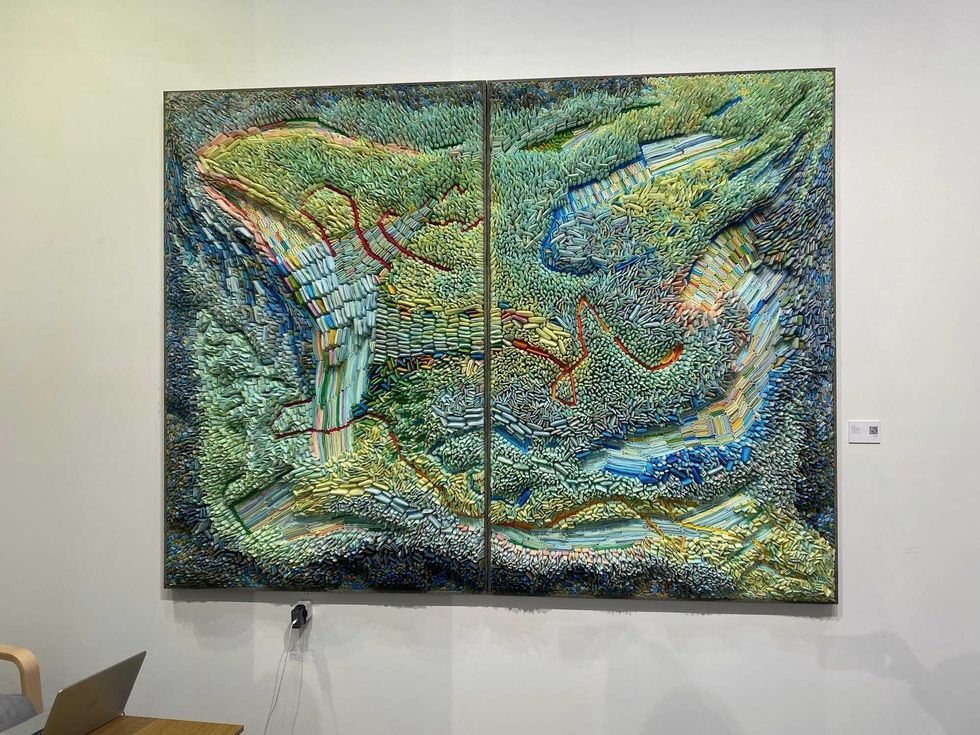
Gallery: HOFA | London
Artist: Iljwa Kim
Price: Starting, $32,500; Shown, $162,000
Location: B31
CultureMap’s Take: Working with hand-dyed Hanji paper, this artist creates surreal landscapes with stunning tactile qualities.
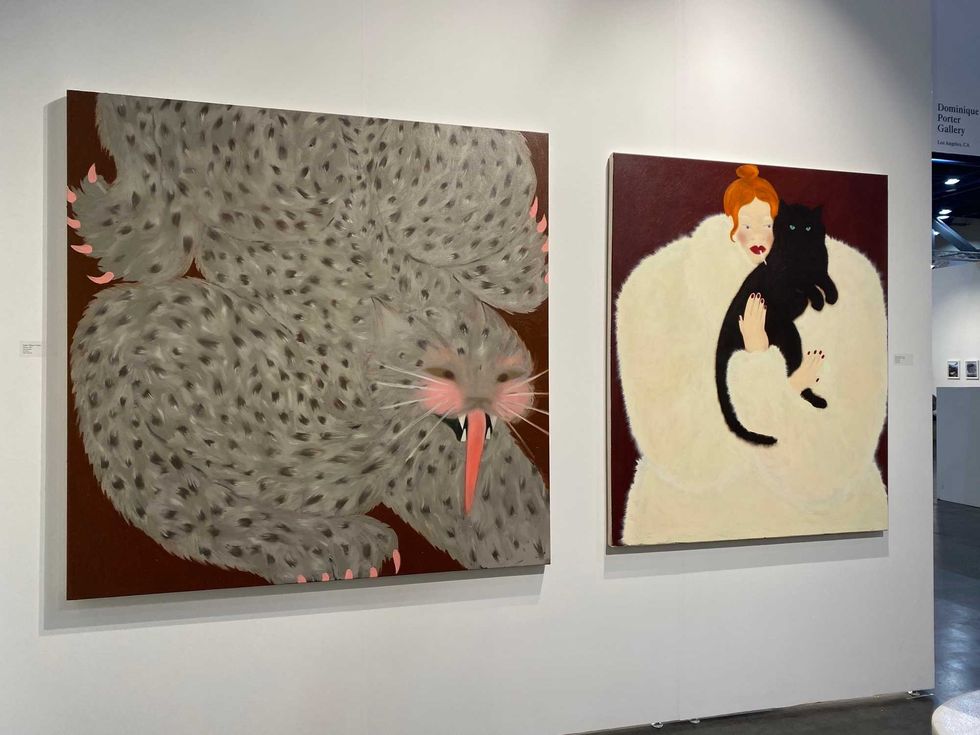
Gallery: Dominique Porter Gallery | Los Angeles
Artist: Sophie Vallance Cantor
Price: Starting, $4,000; Shown, $12,600
Location: C24
CultureMap’s Take: This British portraiture artist and her fantastically-imagined self-portraits, shown with her cats, is sure to put a smile on every face.
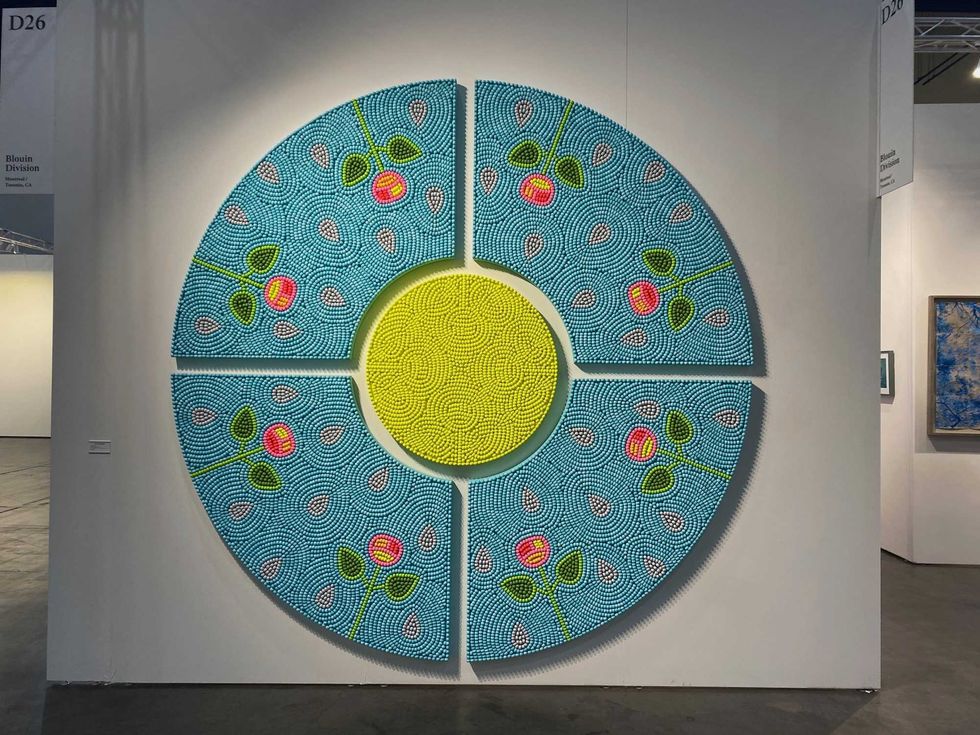
Gallery: Blouin Division | Montréal/Toronto, CA
Artist: Renée Condo
Price: $61,500
Location: D26
CultureMap’s Take: With a striking diameter of 108-inches, this wooden bead work by an indigenous artist puts bright colors and a contemporary twist on the natural world front-and-center.
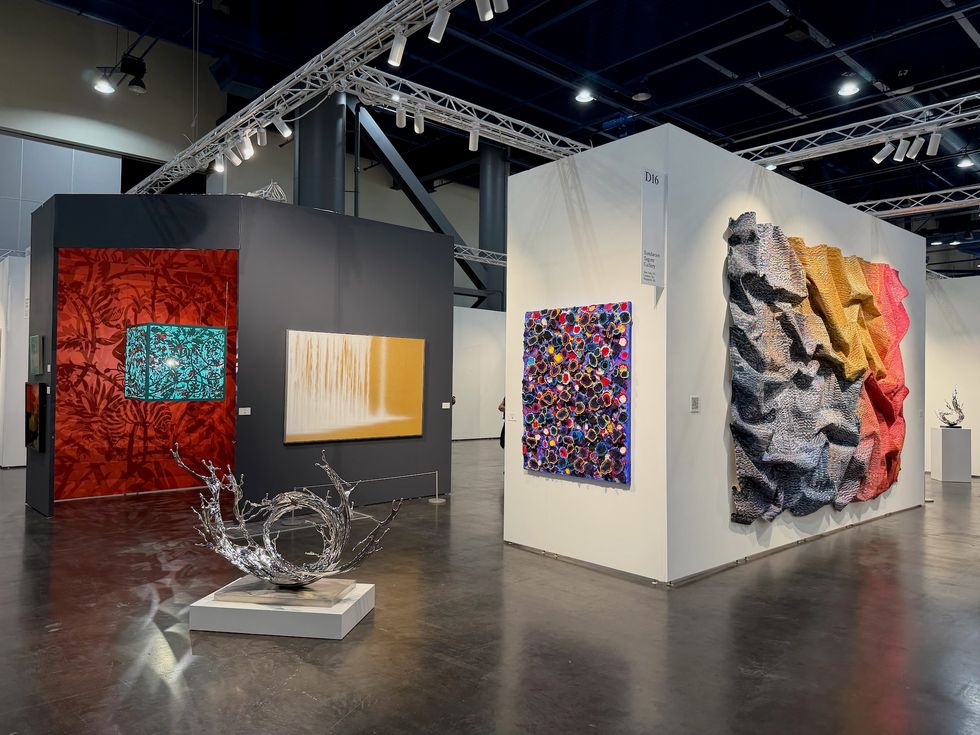
Gallery: Sundaram Tagore Gallery | New York/Singapore/London
Artist: Anila Quayyum Agha* & more
Price: Starting at $20,000
Location: D16
CultureMap’s Take: This gallery came to play. With multiple show-stopping works from various artists and mediums, steel sculptures, larger-than-life textiles works, and a lacquered steel light box display, this gallery is sure to pop up all over social media.
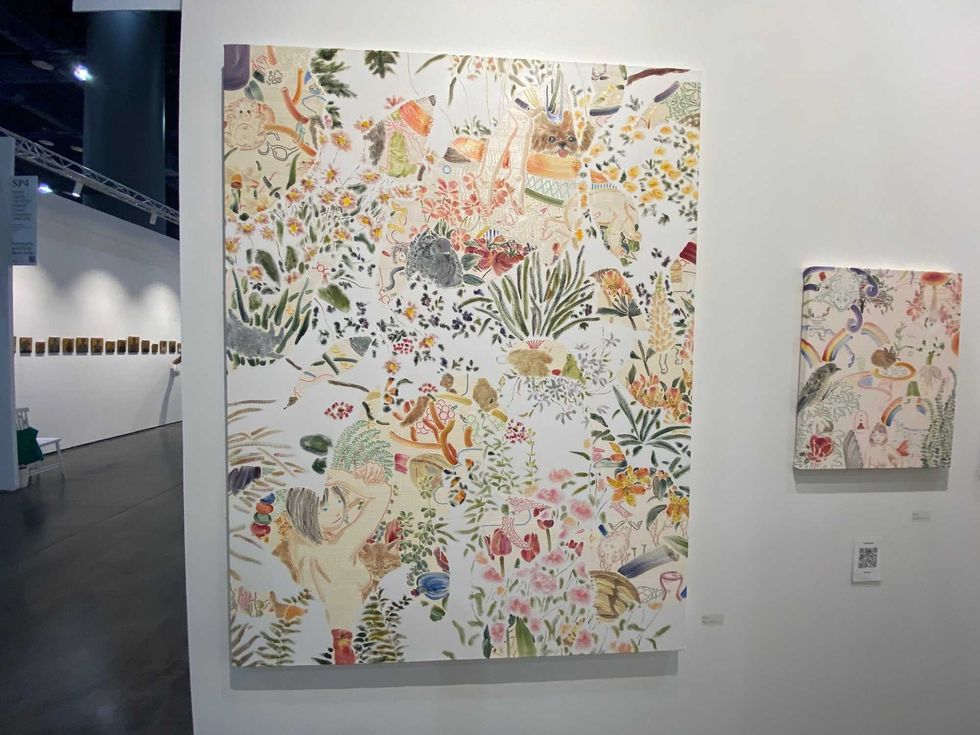
Gallery: YOD Gallery + Zaza Galerie | Osaka/Kyoto/Tokyo, JP
Artist: Kanaria Sur l’herbe
Price: $8,000
Location: D12
CultureMap’s Take: Intrigued by the idea of complete utopia, this artist works in acrylic and colored pencil to create ethereal dreamscapes where bunnies, birds, and other creatures exist in nature as one.
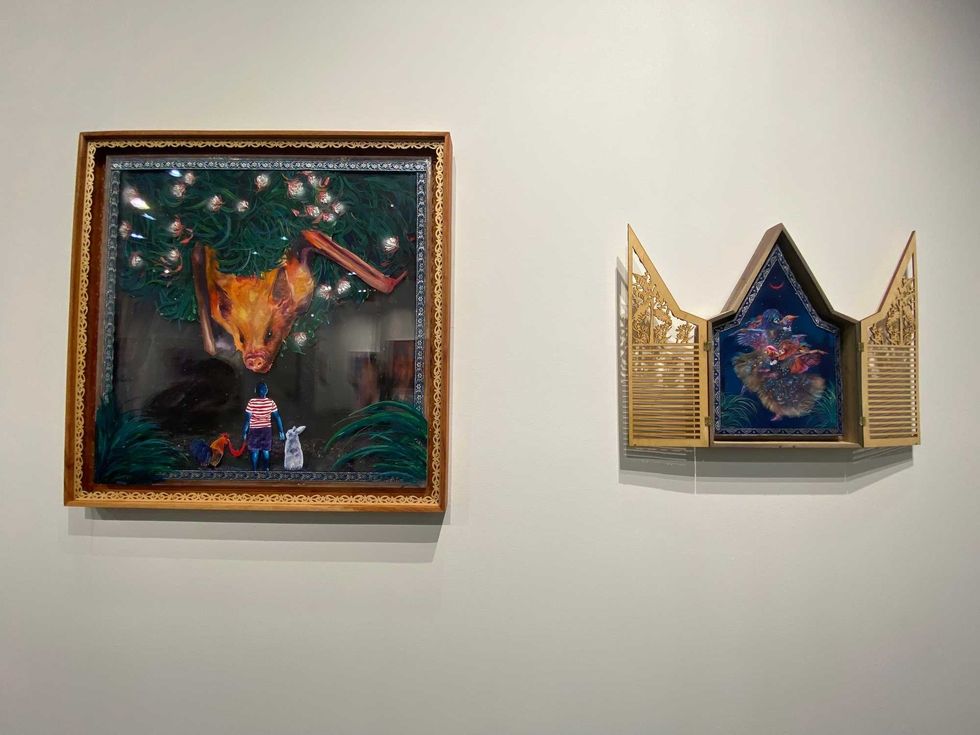
Gallery: TERN Gallery | Nassau, BS
Artist: Richard Nattoo
Price: Alter pieces, 3,500-4,250; “Bat,” $7,500
Location: C6
CultureMap’s Take: This Jamaican storyteller (and trained architect) leans into tradition and deep connections to nature in his episodic storytelling through a series of Jonkonoo festival-based pieces, bringing a full sensory experience through fragrant hand-framed alter pieces sourced from local Jamaican timber. Do not miss this.
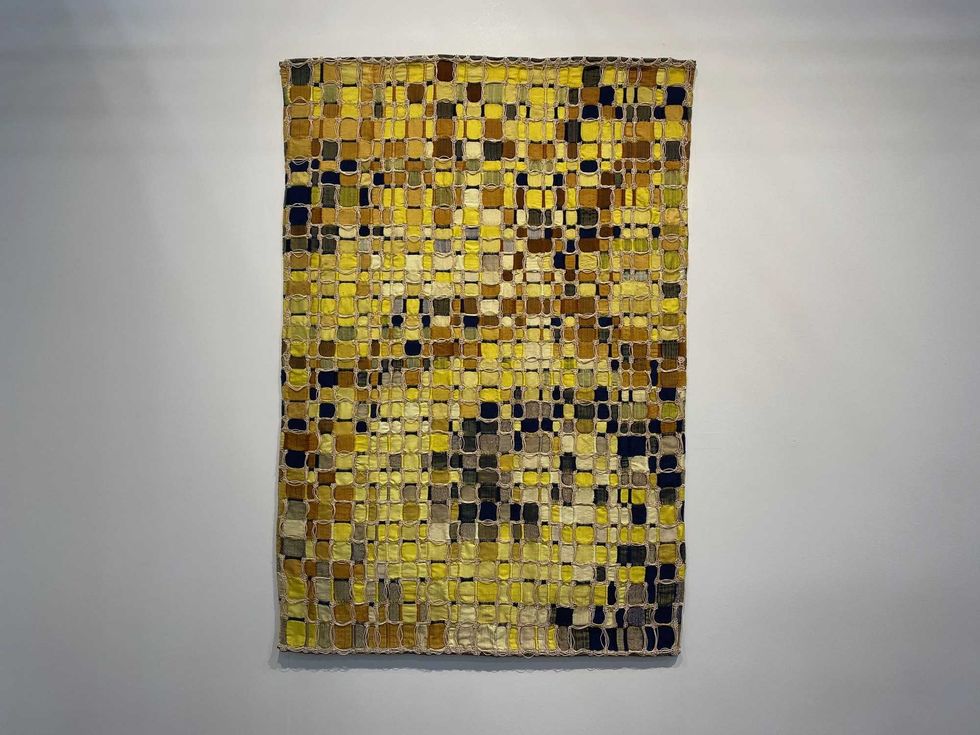
Gallery: Nara Roesler | Sāo Paulo/Rio De Janeiro, BR/New York
Artist(s): Maria Dávila & Eduardo Portillo
Price: $39,000
Location: A2
CultureMap’s Take: This large scale work in silk and Moriche fibers weaves a serene blanket of soothing autumnal hues guaranteed to bring all the cozy feels.
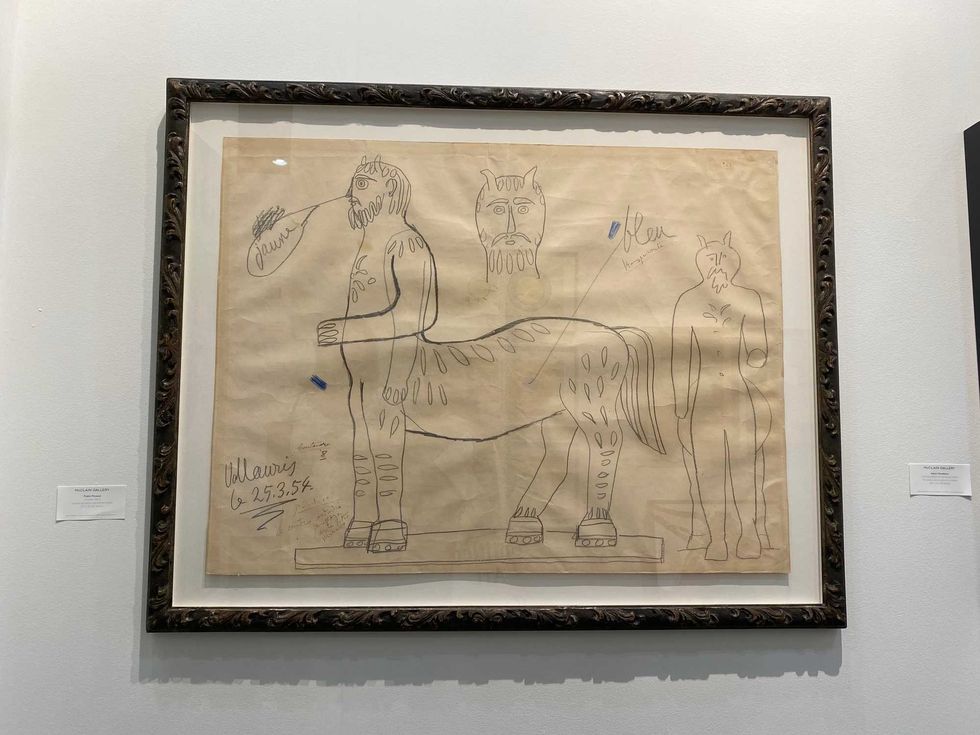
Gallery: McClain Gallery | Houston, TX
Artist: Pablo Picasso
Price: Price upon request
Location: A1
CultureMap’s Take: Perhaps an obvious choice, there is always something magical about a slightly unhinged 1950s era Picasso in crayon, graphite, and ink on paper.
Gallery: Silver Party VIP Lounge
Artist: Maripol
Price: Not for sale
CultureMap’s Take: While not available to view by all Untitled ticket holders, the six Maripol works on display in Silver Party are quite incredible. Shot on an SX70 and printed on Canson satin paper, this collection of mostly selfies shot between 1977 and 1981 really are something to see.
Check out Untitled Art Fair from Friday, October 2—Sunday, October 4 in Hall A3 at George R. Brown Convention Center.
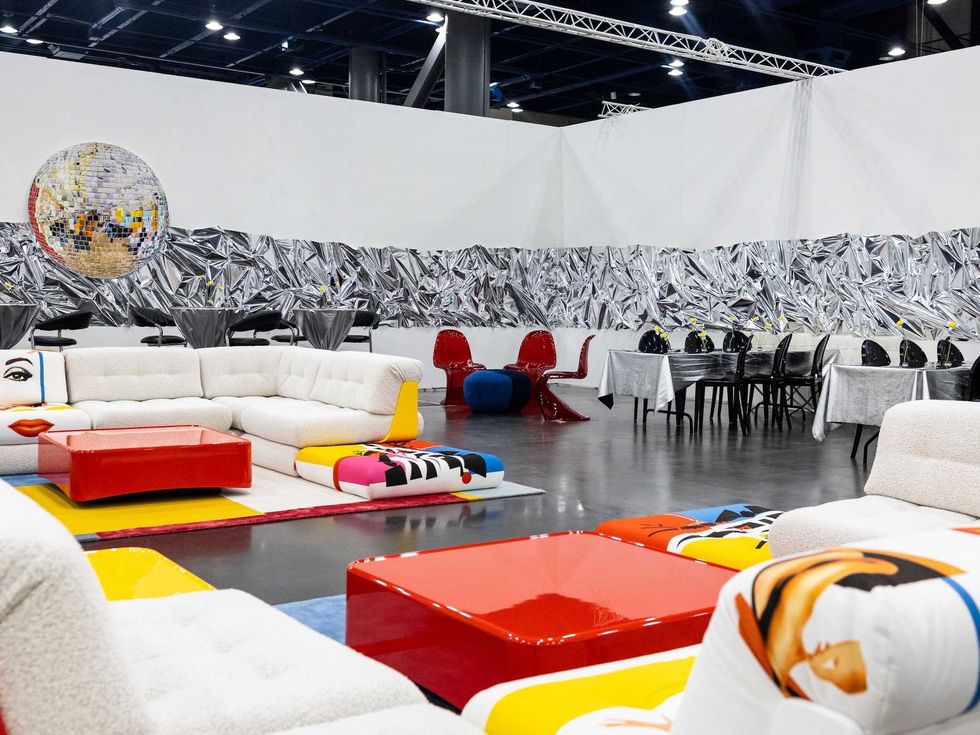
Photo by Emily Jaschke
Silver Party, the VIP lounge designed by Gin Braverman.
Loading...