The Diamondbacks are finding it's not so easy to be connected to Arizona.
When nobody comes already is it really a protest?
Protests over Arizona's harsh new anti-immigrant bill have spread far beyond its borders, and are hitting the Grand Canyon state through an unexpected source: Baseball.
Following Saturday's march of 7,000 people in Houston protesting the law, the League of United Latin American Citizens along with 13 other groups is calling for a boycott of the Astros game on Wednesday versus the Arizona Diamondbacks. Whether protestors outside Minute Maid Park will accompany the boycott is unclear.
If attendance falls, the cause may well be a slumping Astros team (has the United Latin American Citizens noticed how few souls are going to Astros games anyway?) and Cinco de Mayo festivities as much as the boycott.
But Houston baseball fans won't be the first to express their opinion on Arizona's law. Demonstrators have already greeted the Diamondbacks at Denver's Coors Field and at Wrigley Field in Chicago.
“We kind of expected it,” Arizona manager A. J. Hinch told The New York Times. “Major League Baseball has a highly visible national profile, and we travel, so as far as representing the state goes, we’re a pretty obvious target.”
With 30 percent of Major League players identifying as Latino, there may be other negative fallout for Arizona. There has been talk of some teams moving their spring training bases from the state, and officials from San Francisco and New York are already urging the league to move the 2011 All-Star Game out of Phoenix.
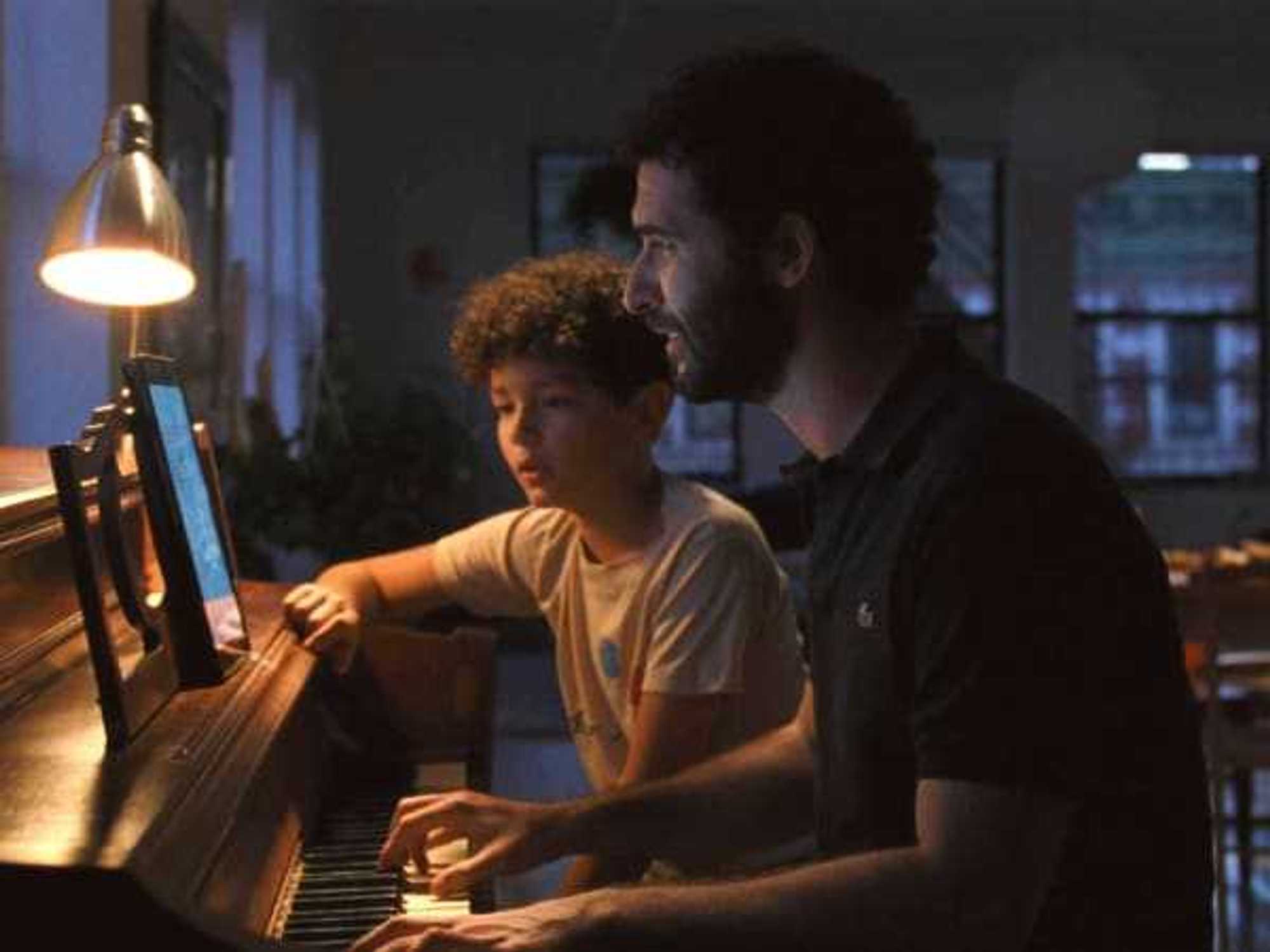
As movies featuring gay characters who have full lives have become more numerous in the 21st century, so too have those characters’ experiences. One of the few things that has not been shown regularly, however, is gay parenthood, an idea that is explored in a unique way in the new film, Club Kid.
Peter (Jordan Firstman) is a party hard kind of person, both in his personal and professional life as a party planner. The crowd and scene he runs with in New York also leans heavily into drugs of all kinds, which gets Peter into trouble in 2016 when he inadvertently has a threesome with a straight British woman. Ten years later, that woman’s friend shows up on his doorstep with his son, Arlo (Reggie Absolom), and leaves him in Peter’s custody.
Peter must quickly learn not only how to take care of a child, but also adjust his life, which is not exactly kid-friendly. He excises his free-loading roommate, Nicky (Eldar Isgandarov); distances himself from his messy friend, Sophie (Cara Delevigne); and tries to stop doing and selling drugs. Some things prove easier to accomplish than others, especially because Peter’s friendly-but-chaotic friend group continues to come around and encourage bad behavior.
Written and directed by first-time feature filmmaker Firstman, the film depicts a lifestyle and characters that most other movies would use as colorful side events to the main story. Peter keeps company with drag queens, transgender women, and all manner of gay men who don’t have their own lives figured out. But because queer people are the focus of the film, not the others, everyone in his life is treated with respect, even if they still bring some tumult to Peter and Arlo’s new life together.
Peter goes through a degree of trial-and-error in figuring out how to handle Arlo, including what he likes to eat, how he likes to dress, and what kind of music he likes. Those scenes accomplish the goal of bonding the two of them with relatively minimal effort, but the film could have used a bit more friction. The situation through which Arlo comes into Peter’s life is dramatic, but Firstman never treats it that seriously, choosing instead to minimize any strong feelings either of the characters have.
This light touch continues for the majority of the film, as Firstman elides questions that would naturally arise if this were a real-life scenario. A third-act revelation finally brings some heft to the story, but it’s almost too little, too late in order to access the emotions that the filmmaker seems to be asking of the audience. He wants to show that Peter has changed in significant ways, but there’s not enough evidence on-screen to sell that idea.
Firstman, who’s been featured in TV shows like English Teacher and I Love LA, makes a good impression in a role he wrote for himself. He’s helped tremendously by Absolom, who puts in a great performance that actually feels like a real kid. Peter’s group of friends, played by Delevigne and a mixture of actors and non-actors, all bring an authenticity to the film that makes the story come alive even more.
Club Kid is a solid first effort by Firstman, who should be applauded for broaching a subject not often addressed in movies and for showcasing types of people who don’t get seen much in mainstream films. If the storytelling had been a little stronger, though, it might have been even more memorable.
---
Club Kid is now playing in select theaters; it opens wide on November 25,

 The Diamondbacks are finding it's not so easy to be connected to Arizona.
 When nobody comes already is it really a protest?