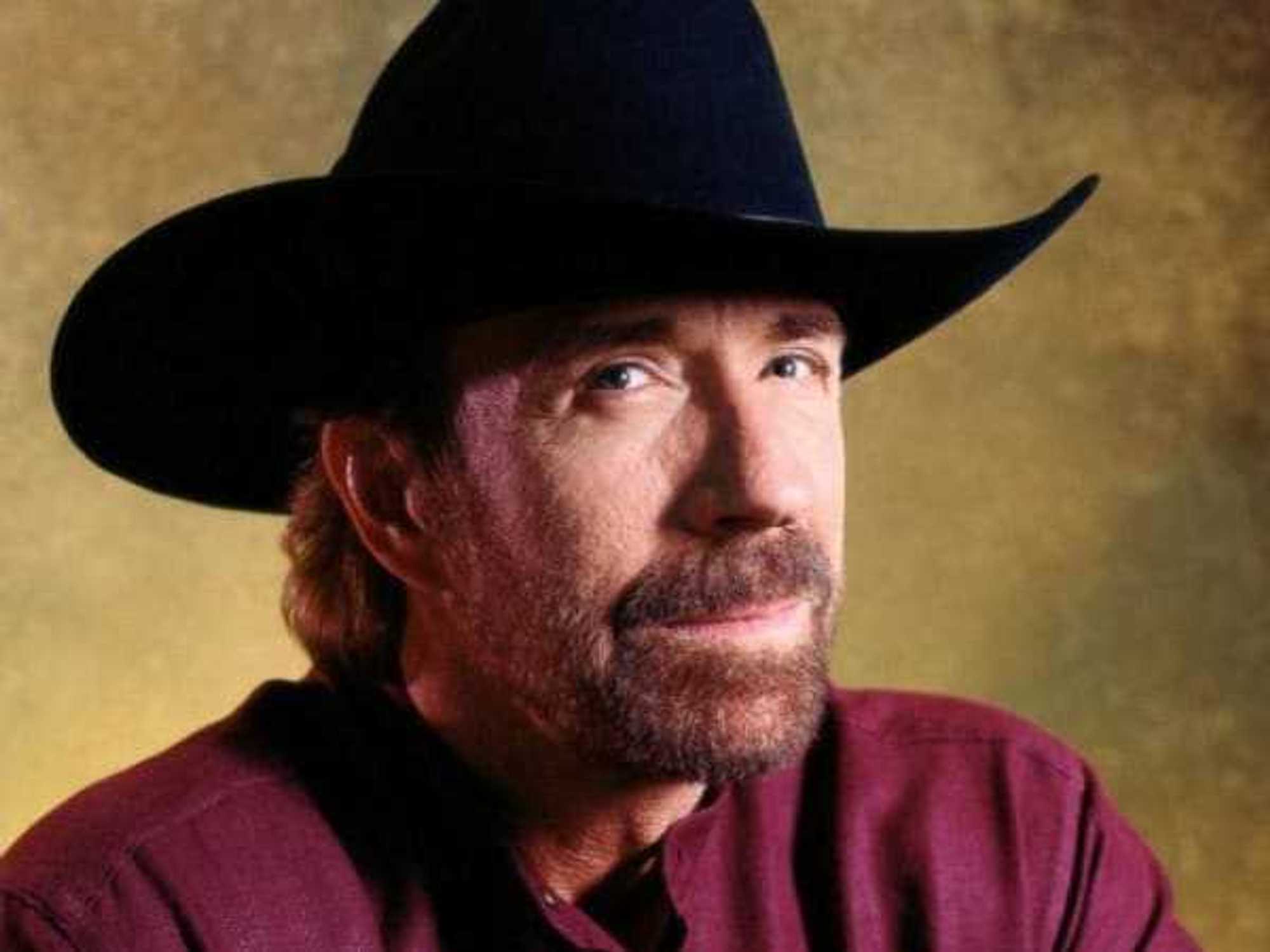
Chuck Norris, the martial arts grandmaster and action star whose roles in “Walker, Texas Ranger” and other television shows and movies made him an iconic tough guy — sparking internet parodies and adoration from presidents — has died at 86.
Norris died Thursday, in what his family described as a “sudden passing.”
“While we would like to keep the circumstances private, please know that he was surrounded by his family and was at peace,” the family said in a statement posted to social media.
Before he would become a star in movies and on TV, Norris was wildly successful in competitive martial arts. He was a six-time undefeated World Professional Middleweight Karate champion. He also founded his own Korean-based American hard style of karate, known sometimes as Chun Kuk Do, and the United Fighting Arts Federation, which has awarded more than 3,300 Chuck Norris System black belts worldwide. Black Belt magazine ultimately credited Norris in its hall of fame with holding a 10th degree black belt, the highest possible honor.
Born Carlos Ray Norris in Ryan, Oklahoma, on March 10, 1940, he grew up poor. At age 12, he moved with his family to Torrance, California, and joined the U.S. Air Force after high school, in 1958. It was during a deployment to Korea that he started training in martial arts, including judo and Tang Soo Do.
“I went out for gymnastics and football at North Torrance high,” he told The Associated Press in 1982. “I played some football, but I also spent a lot of time on the bench. I was never really athletic until I was in the service in Korea.”
After he was honorably discharged in 1962, he worked as a file clerk for Northrop Aircraft and applied to be a police officer, but was put on a waitlist. Meanwhile, he opened a martial arts studio, which expanded to a chain, with students including such stars as Bob Barker, Priscilla Presley, Donnie and Marie Osmond, and Steve McQueen, whom he later credited with encouraging him to get into acting.
From one studio to another
Norris made his film debut as an uncredited bodyguard in the 1968 movie “The Wrecking Crew,” which included a fight with Dean Martin. He had also crossed paths with Bruce Lee in martial arts circles. Their friendship — sometimes, as sparring partners — led to an iconic faceoff in the 1972 movie “Return of the Dragon,” in which Lee fights and kills Norris' character in Rome's Colosseum.
He went on to act in more than 20 movies, such as “Missing in Action,” “The Delta Force” and “Sidekicks.”
“I wanted to project a certain image on the screen of a hero. I had seen a lot of anti-hero movies in which the lead was neither good nor bad. There was no one to root for,” Norris said in 1982.
In 1993, he took on his most famed role, as a crime-fighting lawman in TV's “Walker, Texas Ranger.” The show ran for nine seasons, and in 2010, then-Gov. Rick Perry awarded him the title of honorary Texas Ranger. The Texas Senate later named him an honorary Texan.
“It’s not violence for violence’s sake, with no moral structure,” Norris told the AP in 1996, speaking about the show. “You try to portray the proper meaning of what it’s about — fighting injustice with justice, good vs. bad. … It’s entertaining for the whole family.”
Norris also made a surprise comedic appearance as a decisive judge in the final match of the 2004 movie “Dodgeball.” He only on occasion has taken acting roles in recent years, including 2012's “The Expendables 2” and the 2024 sci-fi action movie “Agent Recon.” He's due to appear in “Zombie Plane,” an upcoming film starring Vanilla Ice.
Chuck Norris: the man, the meme, the legend
It was around the time of “Dodgeball” that his toughman image became the stuff of legend, literally: “Chuck Norris Facts” went viral online with such wildly hyperbolic statements as, “Chuck Norris had a staring contest with the sun -- and won,” and, “They wanted to put Chuck Norris on Mt. Rushmore, but the granite wasn’t tough enough for his beard.”
Norris ultimately embraced the absurdity of the meme craze, putting together “The Official Chuck Norris Fact Book,” which combined his favorites with supposedly true stories and the codes he aimed to live by. He would also write books on martial arts instruction, a memoir, political takes, Civil War-era historical fiction and more.
“To some who know little of my martial arts or film careers but perhaps grew up with 'Walker, Texas Ranger,' it seems that I have become a somewhat mythical superhero icon,” Norris wrote in the forward to the fact book. “I am flattered and humbled.”
That book raised money for a nonprofit he founded with President George H.W. Bush that promoted martial arts instruction for kids.
The intentionally outlandish statements featured in the 2008 Republican presidential primary, when Norris endorsed Arkansas Gov. Mike Huckabee and shot an ad playing on the “Chuck Norris facts.”
President Donald Trump's supporters later promoted Trump Facts in the same vein, and political pundits tried it as well, describing the commander-in-chief's decision to seize Venezuela's sitting president, Nicolas Maduro, as a “Chuck Norris Moment,” and its initial effect on oil prices a “Chuck Norris Premium.”
Norris was outspoken about his Christian beliefs and his support for gun rights, and backed political candidates for years — he even went skydiving with Bush for the former president's 80th birthday. As for Trump, Norris endorsed him in the 2016 general election and wrote guest columns praising him without explicitly endorsing him the in the days before the 2020 and 2024 elections.
Norris has five surviving children: stunt performers Mike and Eric with his late ex-wife Dianne Holechek, twins Dakota and Danilee with his wife Gena Norris, and Dina, the result of an early 1960s “one-night stand” revealed in his autobiography.
Norris celebrated his birthday just over a week before his death, posting a sparring video on Instagram.
“I don't age. I level up,” he wrote.