Along the live-oak-shaded-street of West Alabama, mere steps away from The University of Saint Thomas and Menil Collection campuses, sits a charming design boutique lovingly converted from an old home and adjoining bodega.
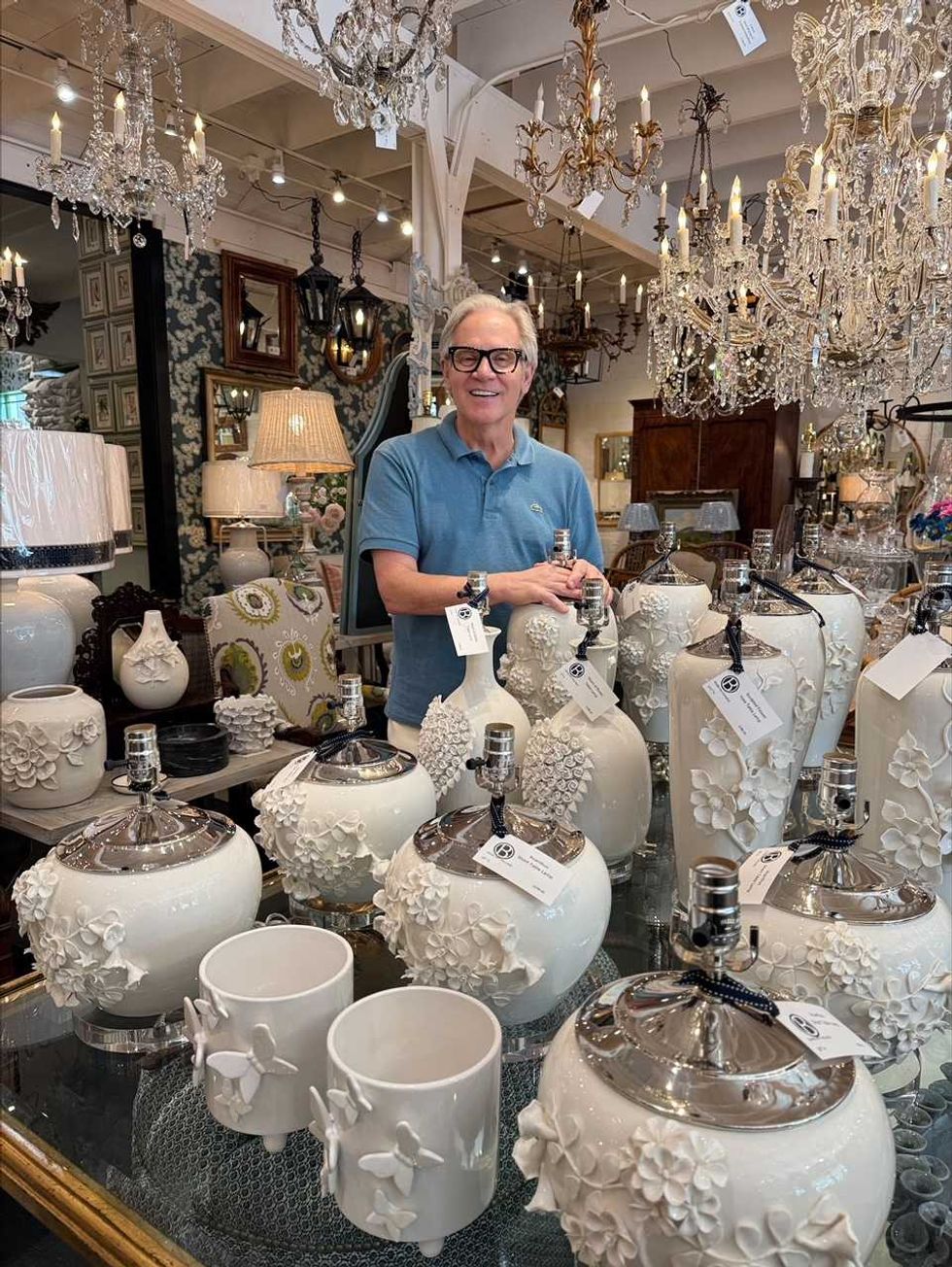
Since 2007, interior designer Bret Duhon’s Boxwood Interiors has held an irrefragable steadfastness to the old guard. There are full-time, in-house specialists in multiple crafts: seamstresses, upholsterers, welders, woodworkers, painters, and specialists in lamp and chandelier fashioning. What’s more, Boxwood Interiors runs a repair shop as well.
“This store is a full service design store. We can do anything that you need done. I mean, it’s that simple,” says Duhon. “If you need lampshades made, we’ll get the lampshades made. If you need a lamp to be wired or rewired, or if you need a chandelier restrung, we’ll restring it in that department. If you need it, I can do it or I can find it.”
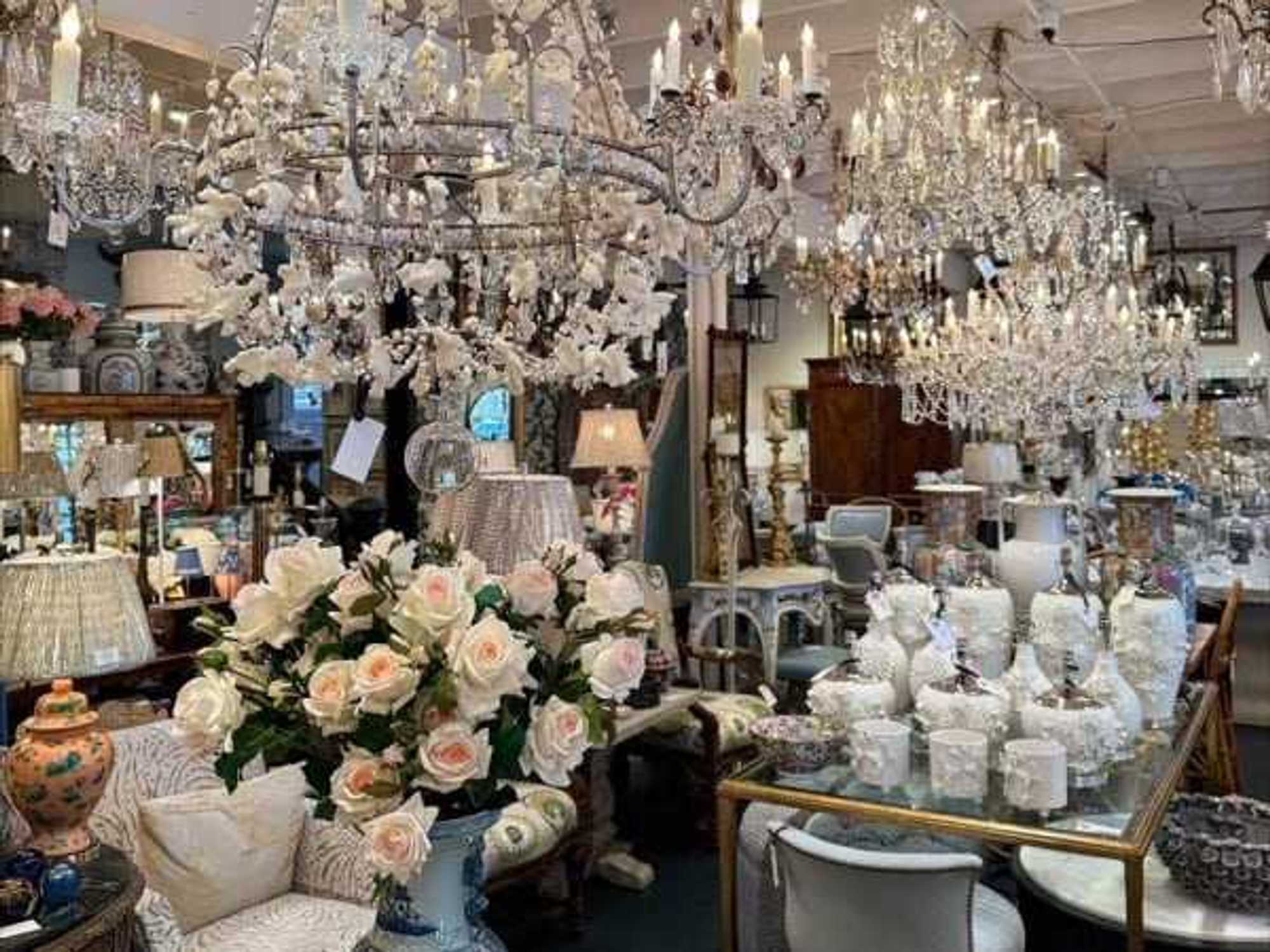
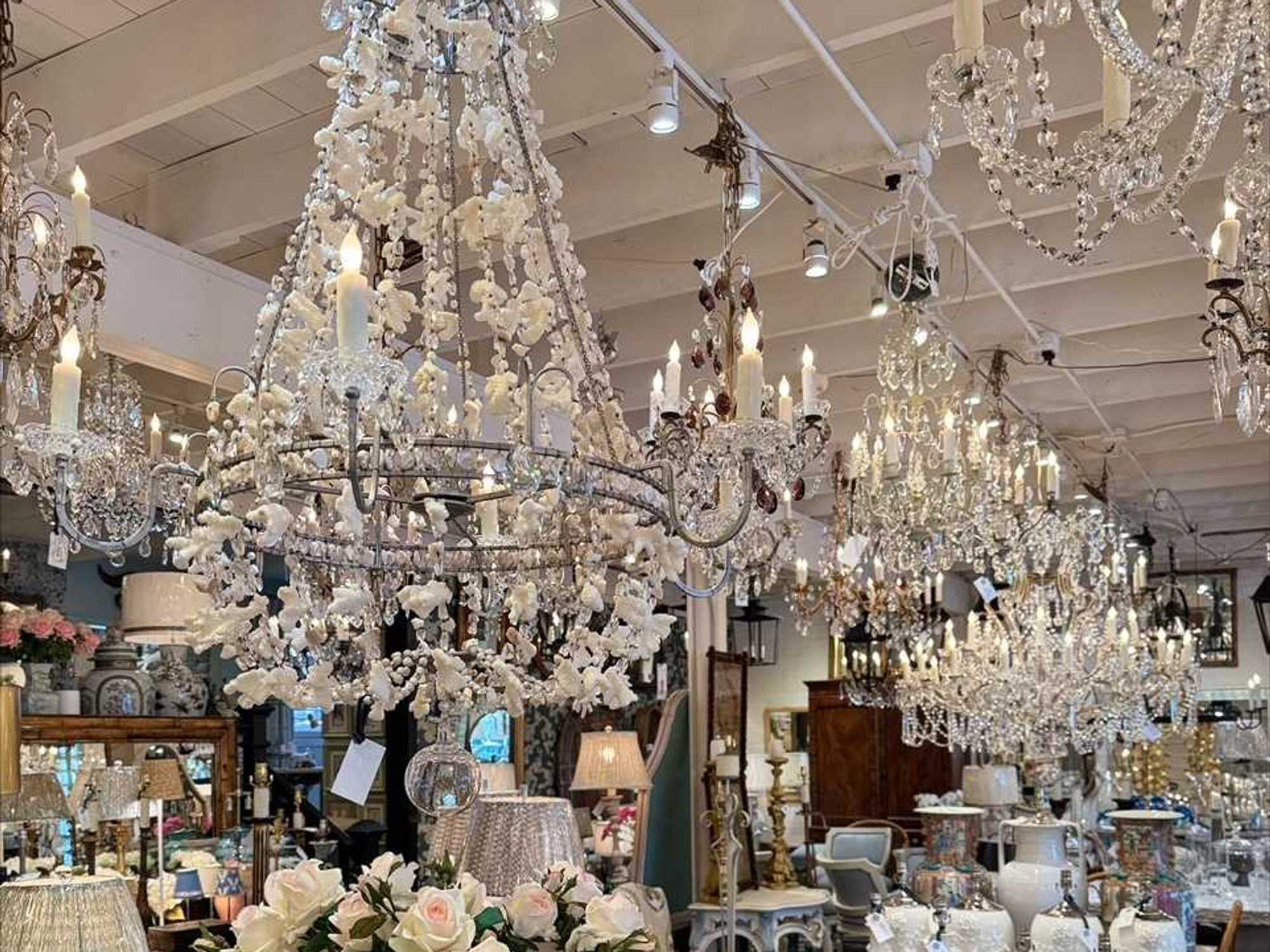
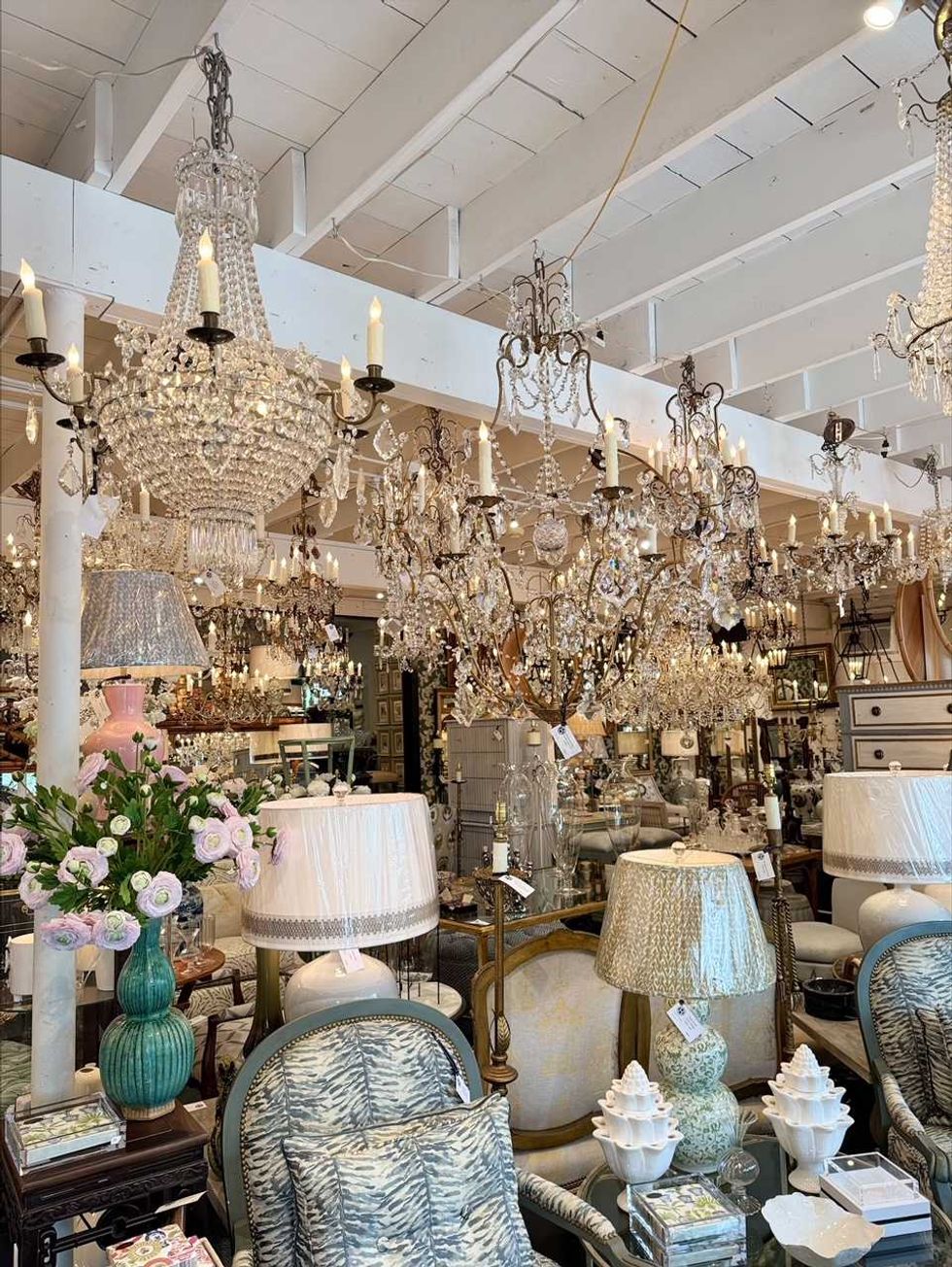
Once inside, visitors are greeted by candy-filled dishes and apothecary jars, offering a sugar rush to go along with the dopamine hit that comes from engrossing oneself in the shop’s wares. A canopy of shimmering chandeliers — either handcrafted in the shop or plucked from Europe on a shopping jaunt — hang above a sea of bespoke upholstered chairs, ottomans, hand-painted dressers, nightstands, commodes, and more.
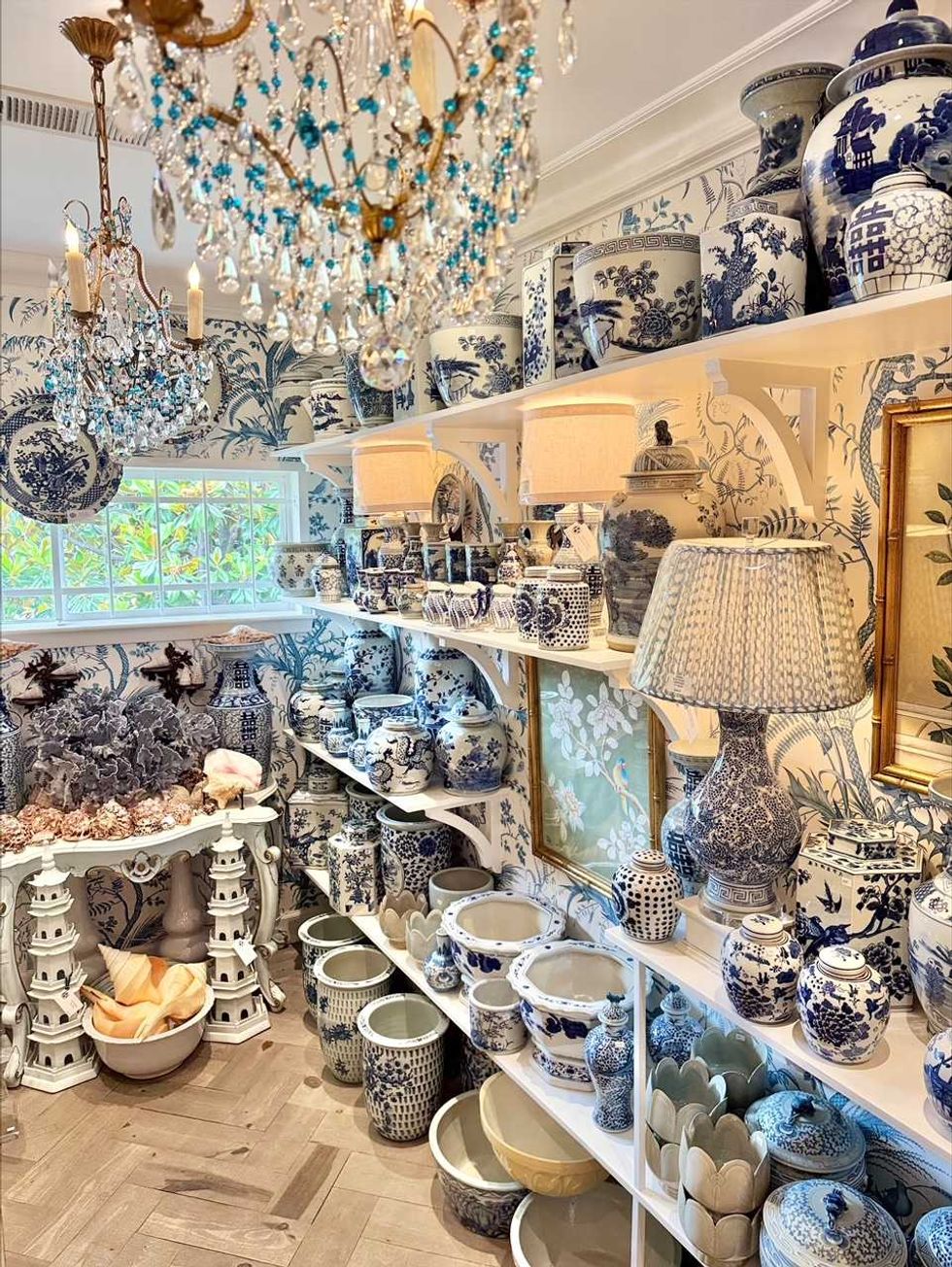
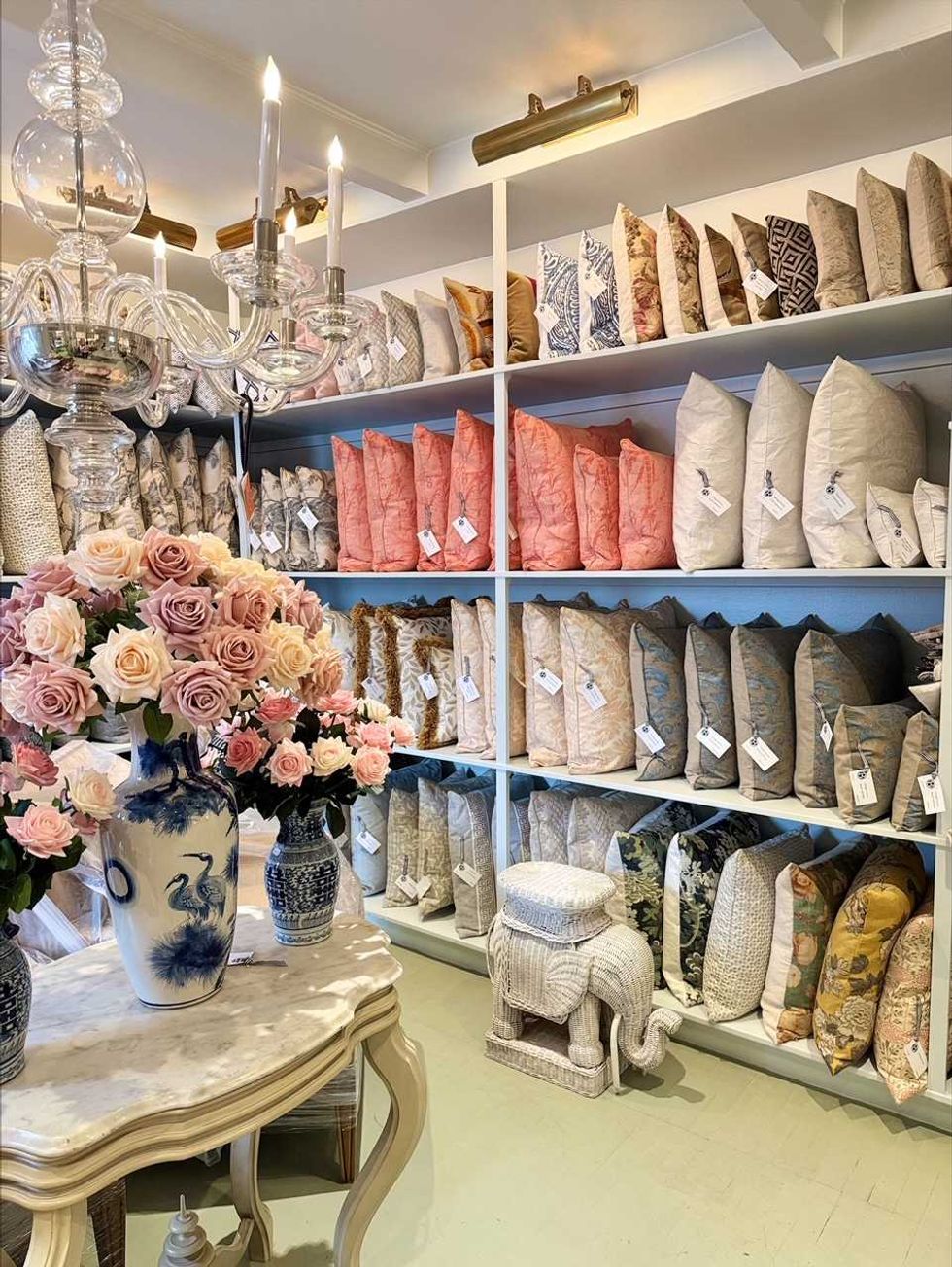
The building’s origins allow for dedicated spaces perfect for browsing. Individual rooms are devoted to bespoke pillows, lampshades and replacement parts, and a dedicated fabric and wallpaper library that includes vintage and deadstock options. Fans of a classic blue-and-white aesthetic will be thrilled to learn of a room dedicated entirely to ginger jars and other ceramic arts in the timeless colorway.
As Duhon slowly steps back from interior design, he’s thrilled with how the new era of DIY interiors is shaping up. There will always be a need for bespoke pieces and one-of-a-kind finds, or someone needing one over-the-top signature piece. However, social media has made it increasingly painless for people to put together a room themselves — which is fine by Duhon.
“Since I’m an interior designer, I try to make things or buy things that I think interior designers would like,” he says. “What’s happened is, people say, ‘I can do this,’ or ‘I can design this, I can go to Instagram.’ Then they go out shopping and looking for it. So I’ll help them with just a sofa maybe, or a sofa and two chairs, and then they’ll do the rest.”
Boxwood Interiors also sells collections of candles, home fragrances, and the like. Find luxurious scents by Antica Farmacista and Big Ass Candles, plus elegant tabletop decor and linen collections by Caspari. A newly-acquired candle collection mimics fruit and flowers in an impressively-naturalistic way, while lifelike orchids, tulips, black cherries and more will be sure to keep dinner guests on their toes.
“I try to keep things in the design realm,” says Duhon. “I may veer off a little bit, but I stay in the center lane.”
Boxwood Interiors also provides unique and creative lighting solutions. From beloved family heirlooms and ceramic crafts lovingly-made by client’s children and grandchildren, to sculptures and architectural pieces, there is seemingly nothing too complicated for Duhon and his team to transform into a lamp: “We’ve started this phrase, ‘lamp it!’ We can make anything into a lamp.”
Chandeliers and sconces receive special attention as well, even if all there is to work from is a derelict frame. Lighting is entirely customizable, stringing everything from traditional crystals to sea shells and pearls.
“I love lighting, so I think that’s where my heart and passion is,” says Duhon of his soft spot for forgotten or neglected fixtures. “I’ll say we saved its life. We buy something dirty, filthy, in a box with nicotine all over it. Then I bring it home and fix it.”
All of Duhon’s lighting fixtures pair well with any number of his custom mirrors. Whether it’s a powder room mirror paired with whimsical sconces, or something of a larger scale, complete with antique mirror glass to compliment a chandelier over the dining table — the possibilities are endless.
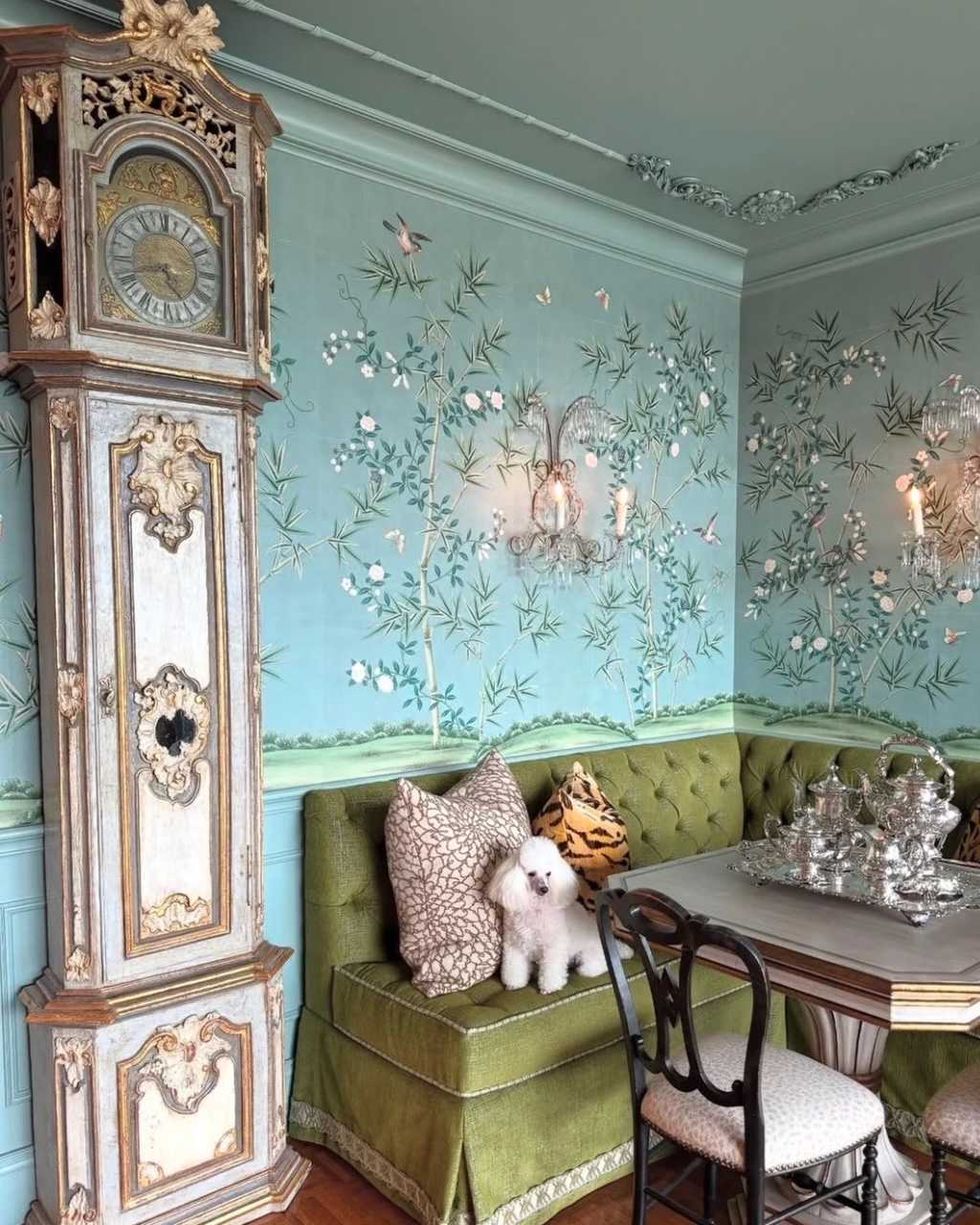
Color is no stranger to Boxwood Interiors. The store offers the entire line of paints and wallpapers from the English outfit Farrow & Ball. Beloved by designers and color purists alike, customers appreciate being able to see each color in person. Nearly every surface of the store has been kissed by playful pastels and papers. In some places, even the original wooden floors have received the Farrow & Ball treatment. In other rooms, Duhon personally installed herringbone patterns using fence boards for a more Old World feel.
“It’s a beautiful paint. It’s a luxury paint and it’s moody and really romantic. They make some beautiful colors. It’s something like 9-12 pigments per gallon as opposed to 2-3, so there’s depth,” explains Duhon. “I love it. We will do paint consultations for a house and that’s it. If they don’t need me as a designer and just want me to pick paint, I’ll do that, too.”
Many of the nearly 45,000 eagle-eyed Boxwood Interiors Instagram followers ask about the wall of bright blue Foo dogs on the occasion that a reel is filmed in Duhon’s office. Each perched upon its own individual gilded acanthus leaf wall shelf, the collection makes quite an impressive display.
“I have so many collections. I just started buying them, and buying them, and buying them,” explains Duhon. “So now I don’t buy them as much as I used to. I sold some recently, and then I have three or four times as many at home in display cabinets. They just bring me happiness. A lot of people think they’re ugly, but I think they’re sweet.”
Boxwood Interiors can be shopped online as well as in-store, and they will ship anywhere. Recently, Duhon hosted his first live sale on Instagram, which was a great success, even selling a chandelier to a viewer in Alabama. If someone wants something pictured in an Instagram post, they can just contact the store and they’ll be happy to ship it.
While there are antiques in the store, there are also too many other things going on to be pigeon holed into one label. Also, it’s so much more than a store. Boxwood Interiors operates under the time-honored and disappearing tradition of true craftsmanship and service. It is always chic to be the person who “knows a guy” when a friend needs something accomplished that is truly niche. Whether Houstonians realize it or not — we’ve got a guy, too.
“I’m not an antiques store. I call myself a design center. You may not need many things, just some new pillows for the sofa, and then we will make them for you,” says Duhon. “I have a great staff; I really do. We are very helpful. If you want it done, we try to get it done — I will say that about us. If you need brain surgery by Friday, just show me a video. I can do it. I never can say no. That’s my problem. I think I can do anything. I don’t mean that to sound conceited. I just mean, if you want a purple sofa, we’ll do it. I just don’t want to tell people no.”
Boxwood Interiors is located at 1320 West Alabama Street in Montrose. Follow its Instagram account for tips, tricks, and live sales.