• Home
  • popular
  • EVENTS
  • submit-new-event
  • CHARITY GUIDE
  • Children
  • Education
  • Health
  • Veterans
  • Social Services
  • Arts + Culture
  • Animals
  • LGBTQ
  • New Charity
  • TRENDING NEWS
  • News
  • City Life
  • Entertainment
  • Sports
  • Home + Design
  • Travel
  • Real Estate
  • Restaurants + Bars
  • Arts
  • Society
  • Innovation
  • Fashion + Beauty
  • subscribe
  • about
  • series
  • Embracing Your Inner Cowboy
  • Green Living
  • Summer Fun
  • Real Estate Confidential
  • RX In the City
  • State of the Arts
  • Fall For Fashion
  • Cai's Odyssey
  • Comforts of Home
  • Good Eats
  • Holiday Gift Guide 2010
  • Holiday Gift Guide 2
  • Good Eats 2
  • HMNS Pirates
  • The Future of Houston
  • We Heart Hou 2
  • Music Inspires
  • True Grit
  • Hoops City
  • Green Living 2011
  • Cruizin for a Cure
  • Summer Fun 2011
  • Just Beat It
  • Real Estate 2011
  • Shelby on the Seine
  • Rx in the City 2011
  • Entrepreneur Video Series
  • Going Wild Zoo
  • State of the Arts 2011
  • Fall for Fashion 2011
  • Elaine Turner 2011
  • Comforts of Home 2011
  • King Tut
  • Chevy Girls
  • Good Eats 2011
  • Ready to Jingle
  • Houston at 175
  • The Love Month
  • Clifford on The Catwalk Htx
  • Let's Go Rodeo 2012
  • King's Harbor
  • FotoFest 2012
  • City Centre
  • Hidden Houston
  • Green Living 2012
  • Summer Fun 2012
  • Bookmark
  • 1987: The year that changed Houston
  • Best of Everything 2012
  • Real Estate 2012
  • Rx in the City 2012
  • Lost Pines Road Trip Houston
  • London Dreams
  • State of the Arts 2012
  • HTX Fall For Fashion 2012
  • HTX Good Eats 2012
  • HTX Contemporary Arts 2012
  • HCC 2012
  • Dine to Donate
  • Tasting Room
  • HTX Comforts of Home 2012
  • Charming Charlie
  • Asia Society
  • HTX Ready to Jingle 2012
  • HTX Mistletoe on the go
  • HTX Sun and Ski
  • HTX Cars in Lifestyle
  • HTX New Beginnings
  • HTX Wonderful Weddings
  • HTX Clifford on the Catwalk 2013
  • Zadok Sparkle into Spring
  • HTX Let's Go Rodeo 2013
  • HCC Passion for Fashion
  • BCAF 2013
  • HTX Best of 2013
  • HTX City Centre 2013
  • HTX Real Estate 2013
  • HTX France 2013
  • Driving in Style
  • HTX Island Time
  • HTX Super Season 2013
  • HTX Music Scene 2013
  • HTX Clifford on the Catwalk 2013 2
  • HTX Baker Institute
  • HTX Comforts of Home 2013
  • Mothers Day Gift Guide 2021 Houston
  • Staying Ahead of the Game
  • Wrangler Houston
  • First-time Homebuyers Guide Houston 2021
  • Visit Frisco Houston
  • promoted
  • eventdetail
  • Greystar Novel River Oaks
  • Thirdhome Go Houston
  • Dogfish Head Houston
  • LovBe Houston
  • Claire St Amant podcast Houston
  • The Listing Firm Houston
  • South Padre Houston
  • NextGen Real Estate Houston
  • Pioneer Houston
  • Collaborative for Children
  • Decorum
  • Bold Rock Cider
  • Nasher Houston
  • Houston Tastemaker Awards 2021
  • CityNorth
  • Urban Office
  • Villa Cotton
  • Luck Springs Houston
  • EightyTwo
  • Rectanglo.com
  • Silver Eagle Karbach
  • Mirador Group
  • Nirmanz
  • Bandera Houston
  • Milan Laser
  • Lafayette Travel
  • Highland Park Village Houston
  • Proximo Spirits
  • Douglas Elliman Harris Benson
  • Original ChopShop
  • Bordeaux Houston
  • Strike Marketing
  • Rice Village Gift Guide 2021
  • Downtown District
  • Broadstone Memorial Park
  • Gift Guide
  • Music Lane
  • Blue Circle Foods
  • Houston Tastemaker Awards 2022
  • True Rest
  • Lone Star Sports
  • Silver Eagle Hard Soda
  • Modelo recipes
  • Modelo Fighting Spirit
  • Athletic Brewing
  • Rodeo Houston
  • Silver Eagle Bud Light Next
  • Waco CVB
  • EnerGenie
  • HLSR Wine Committee
  • All Hands
  • El Paso
  • Houston First
  • Visit Lubbock Houston
  • JW Marriott San Antonio
  • Silver Eagle Tupps
  • Space Center Houston
  • Central Market Houston
  • Boulevard Realty
  • Travel Texas Houston
  • Alliantgroup
  • Golf Live
  • DC Partners
  • Under the Influencer
  • Blossom Hotel
  • San Marcos Houston
  • Photo Essay: Holiday Gift Guide 2009
  • We Heart Hou
  • Walker House
  • HTX Good Eats 2013
  • HTX Ready to Jingle 2013
  • HTX Culture Motive
  • HTX Auto Awards
  • HTX Ski Magic
  • HTX Wonderful Weddings 2014
  • HTX Texas Traveler
  • HTX Cifford on the Catwalk 2014
  • HTX United Way 2014
  • HTX Up to Speed
  • HTX Rodeo 2014
  • HTX City Centre 2014
  • HTX Dos Equis
  • HTX Tastemakers 2014
  • HTX Reliant
  • HTX Houston Symphony
  • HTX Trailblazers
  • HTX_RealEstateConfidential_2014
  • HTX_IW_Marks_FashionSeries
  • HTX_Green_Street
  • Dating 101
  • HTX_Clifford_on_the_Catwalk_2014
  • FIVE CultureMap 5th Birthday Bash
  • HTX Clifford on the Catwalk 2014 TEST
  • HTX Texans
  • Bergner and Johnson
  • HTX Good Eats 2014
  • United Way 2014-15_Single Promoted Articles
  • Holiday Pop Up Shop Houston
  • Where to Eat Houston
  • Copious Row Single Promoted Articles
  • HTX Ready to Jingle 2014
  • htx woodford reserve manhattans
  • Zadok Swiss Watches
  • HTX Wonderful Weddings 2015
  • HTX Charity Challenge 2015
  • United Way Helpline Promoted Article
  • Boulevard Realty
  • Fusion Academy Promoted Article
  • Clifford on the Catwalk Fall 2015
  • United Way Book Power Promoted Article
  • Jameson HTX
  • Primavera 2015
  • Promenade Place
  • Hotel Galvez
  • Tremont House
  • HTX Tastemakers 2015
  • HTX Digital Graffiti/Alys Beach
  • MD Anderson Breast Cancer Promoted Article
  • HTX RealEstateConfidential 2015
  • HTX Vargos on the Lake
  • Omni Hotel HTX
  • Undies for Everyone
  • Reliant Bright Ideas Houston
  • 2015 Houston Stylemaker
  • HTX Renewable You
  • Urban Flats Builder
  • Urban Flats Builder
  • HTX New York Fashion Week spring 2016
  • Kyrie Massage
  • Red Bull Flying Bach
  • Hotze Health and Wellness
  • ReadFest 2015
  • Alzheimer's Promoted Article
  • Formula 1 Giveaway
  • Professional Skin Treatments by NuMe Express

    $700 per month apartments

    New study proposes converting Houston offices into dorm-style apartments

    Emily Cotton
    Feb 7, 2025 | 2:36 pm
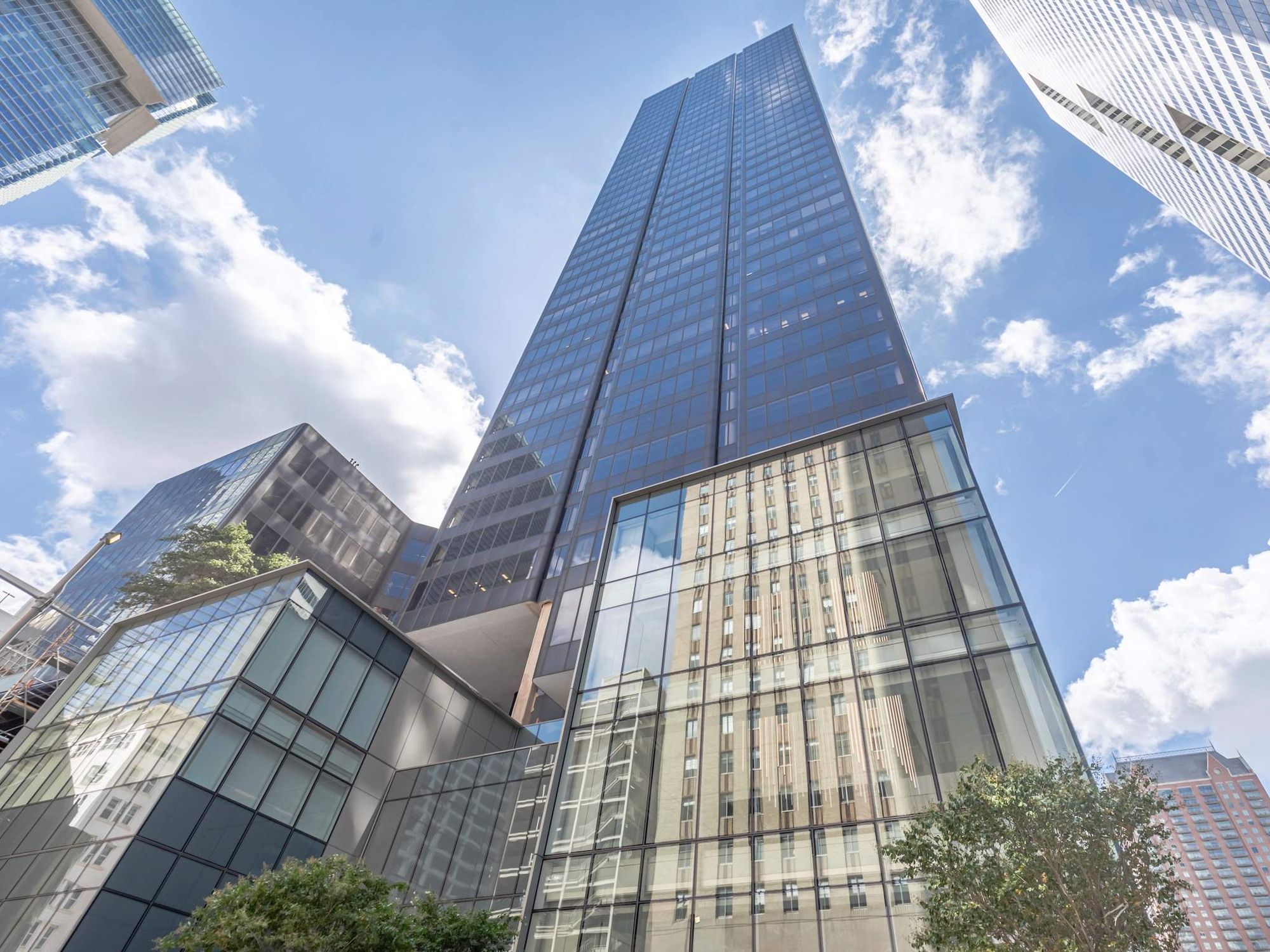
    Downtown Houston high-rise office building

    The study contemplates converting office buildings into apartments.

    Courtesy of Gensler

    Downtown Houston has been fortunate to benefit from a transformation over the last couple of decades. Beautiful green spaces, luxury high-rises and hotels, restaurants, and updated arts and entertainment facilities are home to impressive art installations, farmers markets, major national and international professional sporting events, and everything in between. On the flip side of this, Houston’s central business district has seen a steep decline in commercial occupancy, struggling to bounce back to pre-Covid levels.

    Houston is not alone in experiencing this situation. Nationwide, commercial vacancies are becoming increasingly noteworthy as the gulf between residential rental rates and stagnant wages widens. Low-income earners, folks making between $20,000 and $30,000 annually (typically minimum wage employees, students and seniors living on Social Security), have been joining the ranks of the unhoused at an alarming rate due to the scarcity of affordable housing. Armchair economists and the like have been arguing for years that cities should repurpose these untapped resources into an opportunity to create dignified affordable housing that would keep those at risk off the streets and close to public transit options.

    Pew Charitable Trust, along with international architectural firm Gensler, recently released their findings from a study on the subject — with Houston being one of two markets studied. The “Flexible Co-Living Housing Feasibility Study” found that converting Houston’s empty office buildings to communities of micro-apartments is, well, feasible!

    “In the current climate of high construction costs, interest rates, building expenses, and rising rents, this project looks at the conventional office-to-residential conversion in a different way by leveraging the existing building infrastructure to reduce costs on a per unit basis,” Brooks Howell, principal architect at Gensler, tells CultureMap. “The result is a new housing typology, a co-living concept, that can provide affordable housing to the large and growing number of lower income single-person households in an urban context.”

    The numbers

    HUD reported that in 2024 homelessness was at an all-time high of 770,000 persons, up a staggering 18 percent from the prior year. Houston is on the low end of the national average, with a reported 3,270 homeless persons (4/10,000 Houstonians). CoStar data shows that Houston’s central business district contains 88 office buildings of over 50,000 square feet, 19 of which show reported vacancy rates of over 30 percent. As of November 2024, the median rent in Houston for an apartment was $1,297. The proposed rental rate for a furnished micro-apartment in a converted office building in downtown Houston is $700 — all inclusive, with zero move-in costs, since the units are fully furnished.

    “The U.S. has a housing shortage of 4-7 million homes, which has driven rents to an all-time high and made it hard to save to buy a home,” Alex Horowitz, a project director for Pew Charitable Trust and a co-author of the study, adds. “Houston has one of the highest office vacancy rates in the U.S., but office layouts often don't work well for apartment conversions and carry high costs. This study finds that converting offices to dorm-style housing is cost-effective and can enable low rents — about $700 per month to live downtown. That could make a real difference for people struggling with high housing costs while revitalizing downtown.”

    Co-living explained

    Co-living is hardly a new concept. “Single room occupancy” dwellings, or SROs, were extremely common up until about 1950. It’s worth noting that during the height of its popularity, homelessness was rare. The co-living model allows for a private furnished space, while bathrooms, kitchens, and laundry are shared facilities — much like a college dormitory. With 40 percent of renters being single occupants, this model promotes socialization and community, something that has been trending downward since the pandemic.

    Wesley LeBlanc, principal analytics director for Gensler Chicago, adds that this elevated dorm situation is a “Jumping off point for a number of models,” noting that there are six variations from the one in the study. LeBlanc encourages people to “Think beyond the conventional. A whole world of housing solutions come out of this.”
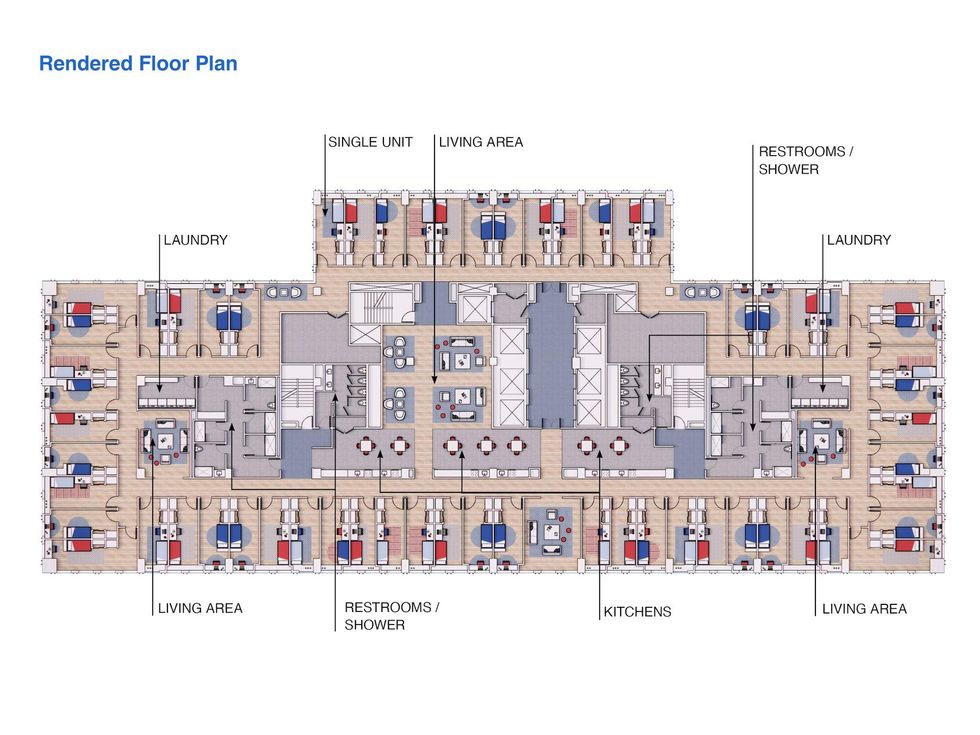
    Office building apartment converstion floorplan rendering genslerIndividual rooms share amenities such as larger living rooms, bathrooms, and kitchens.Courtesy of Gensler

    What to expect in a typical converted building

    The Pew/Gensler report proposes a prototypical building standard of 24 floors, 19 of which are residential, with 60 micro-apartments per floor, or 1,140 residential units per building. Each floor will offer six shared kitchen areas, five larger shared living spaces, two smaller shared living spaces tucked into interior hallways, two central shower areas with five private shower rooms each — 2 shower rooms will include toilets and sinks, plus two additional toilet rooms with four toilets and two sinks. The total comes to 10 showers, 12 toilets, and 14 sinks per floor. Two laundry rooms, each with three washers and dryers are also available per floor.

    The high cost of converting office buildings into fully-plumbed, individual studio apartments can be cost prohibitive, leading a pragmatic Howell to ask: “What if we didn’t demo everything?” The utilization of existing centralized plumbing on each floor saves an average of 25-35 percent in construction costs that would arise from running new plumbing to each unit.

    The ground floor would consist of a main lobby, management office, and 10,000 square feet of retail space. Floors two through floor are reserved for parking, while the fifth floor would offer 10,000 square feet of Class B office space as well as amenities like the gym.

    While subsidies will be required for the conversion, the same will not be true once the development is out of the construction phase. The co-living model is projected to cost around one-third of the cost of converting an office building to individual studio apartments or constructing new affordable housing.
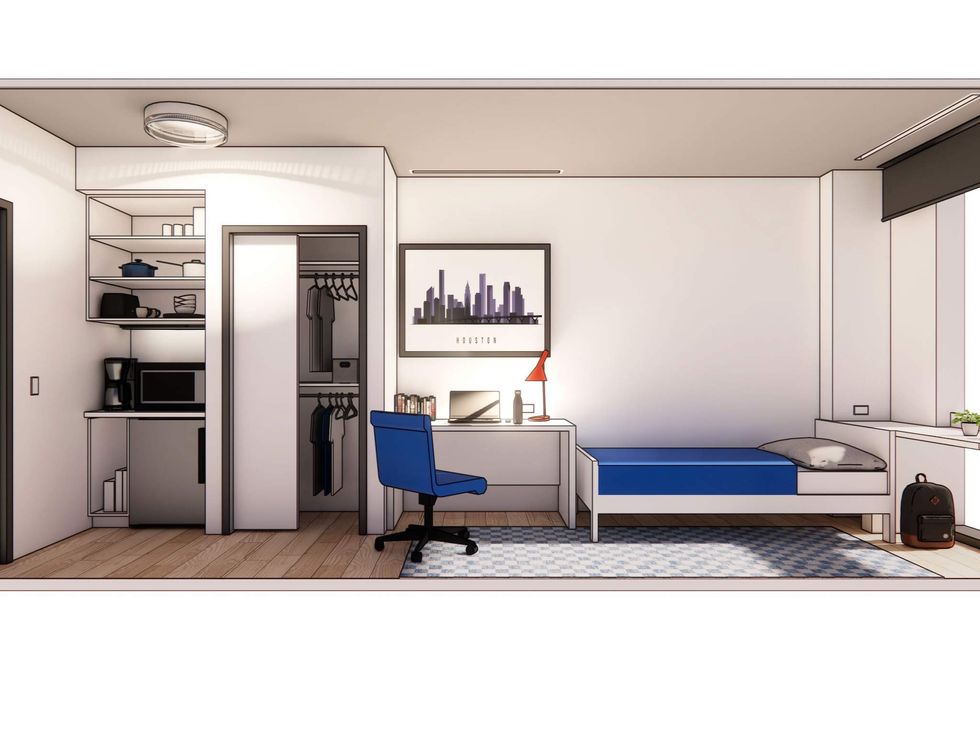
    Office building apartment converstion unit rendering genslerAn illustration of what a bedroom would look like.Courtesy of Gensler

    Micro-apartments details

    Each individual unit is designed to be 151 square feet, approximately the size of a modest hotel room. Furnishings include one extra-long twin bed (bedding included), a desk, chair, nightstand, standard-depth half-sized fridge, storage shelf, and cabinet. Units will have solid-core wooden doors and appropriate sound insulation — all for a tidy $700 per month.

    Pricing has been a key factor in determining this configuration for affordable, urban housing. “Lowering the cost of housing to manageable levels enables residents to spend more on the other financial needs of their lives, which has broad implications for quality of life and well being,” LeBlanc explains.


    news/home-design
    popular

    they're durable, too

    3D-printed Houston housing project cements a more affordable future

    Emily Cotton
    Nov 21, 2025 | 4:00 pm
    Zuri Gardens rendering
    Courtesy of Cole Klein Builders
    Homes in Zuri Gardens are a hybrid of 3D concrete and traditional wood construction.

    Houston is putting itself front-and-center to help make sustainable, affordable housing a reality for 80 lucky homeowners in a scalable housing community that will hopefully catch on nationwide. Recently, developer Cole Klein Builders partnered with HiveASMBLD to pioneer what’s touted as the world’s first large-scale, one-of-a-kind, affordable housing development using 3-D printing technology, merging robotics, design, and sustainability.

    Located across from Sterling Aviation High School, near Hobby Airport, Zuri Gardens will offer 80 two-bedroom, two-bathroom homes of approximately 1,360 square feet situated in a park-like setting, including walking trails and a community green space.

    Homes in Zuri Gardens will hit the market in early summer of 2026. Final pricing has yet to be determined, but Cole Klein Builders expects it to be in the mid-to-high 200s.

    Interestingly, none of the homes will offer garages or driveways, which the developer tells CultureMap will provide a savings of roughly $25,000 - $40,000 per home.

    Instead of parking for individual units, 140 parking spaces will be provided. Ideally, this small-town-inspired design will provide opportunities for neighbors to meet, connect, and build community.

    Each two-story home is comprised of a ground floor printed by HiveASMBLD, using a proprietary low-carbon cement alternative by Eco Material Technologies that promises to enhance strength and reduce CO2 emissions. The hybrid homes will have a second floor built using engineered wood building products by LP Building Solutions. Overall, the homes are designed to be flood, fire, and possibly even tornado-proof.

    The Zuri in Zuri Gardens is the Swahili word for “beautiful,” a choice that is fitting considering that the parks department will be introducing a five acre park to the project — with 3-D printed pavilions and benches — plus, a three acre farm is located right across the street. The Garver Heights area, where Zuri Gardens is located, is in what’s classified as a food desert, which means that access to fresh food is limited. Residents will have access to the farm’s fresh produce, plus opportunities to participate in gardening and nutrition workshops—that’s a win for everyone.

    With the novelty of Zuri Gardens, it’s no surprise that the neighborhood already has an 800 person waitlist, but with stringent buyer requirements, it’s unclear how many of those 800 will qualify. Developer Cole Klein Builders created Zuri Gardens in partnership with the Houston Housing Community Development Department, who provided infrastructure reimbursements for the roads, sewer lines, and water lines. In return, CKB agreed to push the purchase prices for the homes as low as possible.

    Zuri Gardens also received $1.8 million dollars from the Uptown Tourism Bond, 34 percent of which must be used with minority owned small businesses. Qualified buyers must fit a certain area of median income according to HUD guidelines, and must be owner occupied at all times — so no property investors or short term vacation rentals will be allowed.

    “They’re trying to bridge that gap to make sure there is a community for the homebuyers who need it — educators, law enforcement, civil workers, etc.,” Cole Klein Builders’ co-principal Vanessa Cole tells CultureMap. “You have to go through a certification process with the housing department to make sure that your income is in alignment for this community. It has been great, and everyone has been really receptive.”

    Cole has also brought insurance underwriters to visit the site and to help drive premiums below regular rates for Houston homeowners since homes in Zuri Gardens are not built to traditional standards — claim risks for one of the 3-D homes are extremely low. Tim Lankau, principal at HiveASMBLD, notes that the 3-D hybrid design allows for a more traditional appearance, while having the benefits of a concrete structure: “That’s where the floodwaters would go, that’s where you can hide when there’s a tornado, and that’s where termites would eat. So you get the advantages of it while having a traditionally-framed second floor.”

    It’s important to note that Zuri Gardens is not located in a flood prone area, nor did it flood during Hurricane Harvey — being flood proof is merely a perk of a cement house. The concrete that Eco Material Technologies developed is impervious. The walls are printed into hollow forms, which house rebar, plumbing, and accessible conduits for things like electrical lines and smart house features. Those walls are then filled with a foamcrete product that expands to form a “monolithic concrete wall.”

    David McNitt, of Eco Material Technologies, explains that his proprietary concrete is made of PCV, and contains zero Portland cement. Instead, McNitt’s cement is made from coal ash and is 99 percent green (there are a few chemicals added to the ash). Regardless, it’s made from 100 percent waste products.

    “This is a product that has really been landfilled before,” says McNitt. “It’s coal ash, and it’ll set within 8-10 minutes. It’s all monolithic, and one continuous pour — it’s literally all one piece.”

    Eco Material Technologies’ concrete product is impressively durable. A traditional cinderblock wall will crush at around 800 psi, while this material crushes at about 8,000 psi.

    “It’s ten times stronger than a cinderblock wall that can withstand hurricanes,” claims McNitt. “I don’t think you’d even notice a hurricane. It’ll be really quiet inside, too — so you won’t get interrupted during your hurricane party. It’s way over-engineered, it really is.”

    The second story is built using weatherproof and eco-friendly products by LP Building Solutions. Their treated, engineered wood products come with a 50 year warranty, and their radiant barrier roof decking product blocks 97% of UV rays, and keeps attic temperatures 30° cooler than traditional building materials. These materials, combined with the concrete first floor, will keep heating and cooling costs low — something the folks at HiveASMBLD refer to as “thermal mass performance.”

    Zuri Gardens rendering

    Courtesy of Cole Klein Builders

    Homes in Zuri Gardens are a hybrid of 3D concrete and traditional wood construction.

    news/home-design
    popular
    Loading...