Midcentury modern continues to be one of the buzziest eras in interior design. As with most of the country, Houstonians cannot seem to get enough.
That includes members of Gen Z, whose growing love of all things analog and contemporarily-anachronistic is, quite frankly, refreshing in an increasingly digital and disposable world. Flocking to thrift stores, antique shops, estate sales, fairs, and pop-ups seems to be the trendiest weekend morning activity of the moment.
Traditional vendors range from enthusiastically-mustachioed-millennials to certified Boomers. Now, however, the Zoomers are getting in on the action.
Houstonian Brianna Byrd is one member of this new crop of Gen Z vintage enthusiasts. The “green by day, green by night” mechanical engineer works on green energy projects for a geothermal company, while moonlighting as an MCM restoration outfit — with a twist. All of the profits from her Taaffe Vintage online store go to her real passion, horse rescue.
Like most vintage furniture folks, Byrd came into her business the old-fashioned way — by pure accident. Browsing the thrift with her mother one afternoon, Byrd fell in love with a neglected piece of furniture that turned out to be worth a pretty penny.
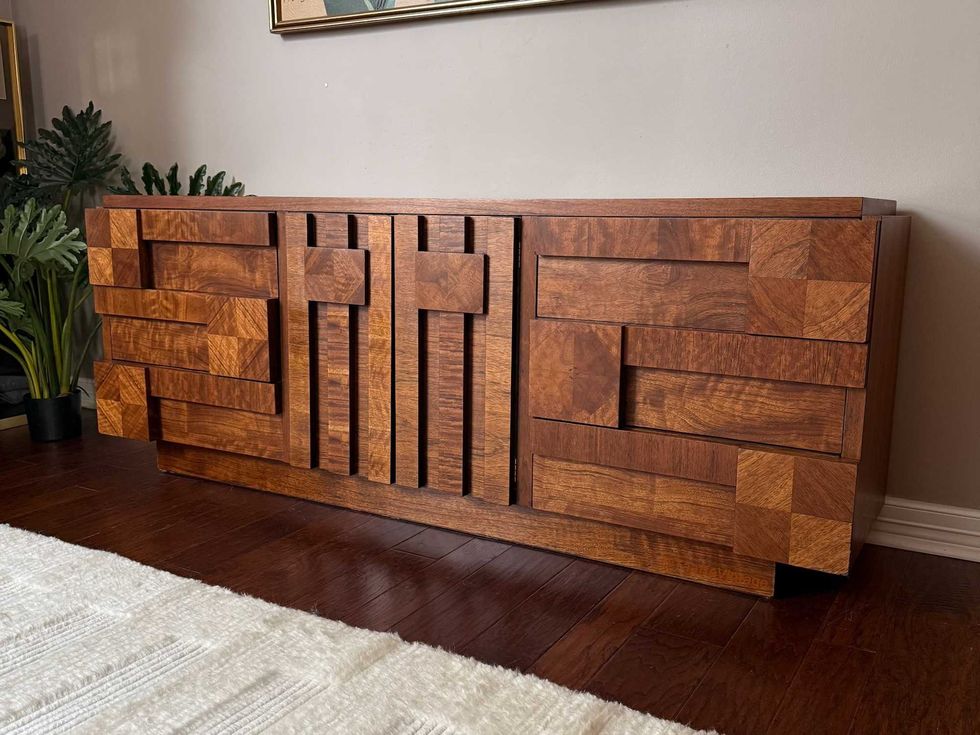
“I came across this dresser and thought, ‘This is such a cool dresser,’” explains Byrd. “I saw it had a label, so I started doing some Googling; turns out it was a 1952 Milo Baughman-designed Drexel Perspective piece that sells for $2,000 to $4,000 — holy crap! I showed my mom what it was, and she grabbed the tag and said, ‘Are you ready to check out?’”
What followed was an astronomical quote from a furniture restoration company that was decidedly cost prohibitive — a relatable situation for anyone who shops vintage furniture. Instead, Byrd procured practice pieces and set out on perfecting her restoration skills herself.
Little-by-little, these lovingly-restored practice pieces replaced previously-purchased items from IKEA. Eventually, she wound up with a surplus. What’s a gal to do? Sell them, of course.
“I still have that dresser that I thrifted, but I enjoyed flipping furniture,” says Byrd. “Now that I know how to do it, I realize there is a need for it. It seems to be a dying profession, so now that’s what I do in my spare time. I get pieces from anywhere I can find them. I’ve gotten pieces from friends and family, neighbors, even other resellers, and sometimes even pieces off the curb.”
Byrd relied upon Google and YouTube for her education in restoration, especially Dashner Design Restoration whom she refers to as “the Bob Ross of furniture refinishing,” for his relaxing tone and encouraging demeanor. It was during this research process, plus coming up with a name for her business, that Byrd learned that she hails from a long line of craftsmen.
Her family immigrated from Sweden, and she discovered that her great-grandfather worked for none other than John Wayne. That’s right, all the floors, cabinetry, and some furniture in “The Duke’s” California homestead were all crafted by her family. Not wanting to be too on-the-nose with her company, Byrd pulled the name “Taaffe” from that same lineage.
More than anything, Byrd’s goal is to keep rescuing furniture from the imminent threat of a future in a landfill, while supporting her rescue horses. She likes to call this practice “rescue to rescue.” That doesn’t mean that a real business in furniture design isn’t somewhere in the future.
“I know how it works, I know how it’s put together functionally. I know them mechanically as well as aesthetically, so I’ve thought of a couple of designs in my head and I’ve thought of going into furniture design,” explains Byrd. “That’s when I’d be making the switch, if I ever have the guts to do that.”
There are currently six rescue horses — plus a rescue donkey named Ellie — that Byrd keeps at her family's 45-acre ranch near Nacogdoches. Aged between 12 and 26, Nova, Dante, Whinny, Colator, Pezz, and Brody will live out the rest of their days peacefully grazing the land without any risk of further harm or neglect.
“I noticed that once they get old and injured they don’t have a place to go,” says Byrd. “So that’s what I’m trying to do, give them a place to go. Many of them are still ridable, but they may not be capable of what they were once capable of. I put some of the money into buying other pieces, but all of it goes to them — 100 percent of the profits. I find these pieces wherever I find them and fix them up. They’re in rough shape before — hidden gems. I sell them and now they’re someone’s favorite piece in their house, and the same kind of goes for the horses.”
Byrd stresses that it’s not the furniture business keeping the rescues housed and fed, but it certainly helps. At the end of the day, she just wants everyone to win: “I want people to buy my furniture because they fell in love with the furniture itself. I don’t want them to feel like they’re just buying it for charity work, if that makes sense.”
Tips for rescuing MCM furniture
1. Start with a piece you love, just in love with it. Then you’re going to want to take care of it and do the best for it, and you’re going to want to do the research to make sure that you don’t mess it up. Just keep buying pieces you love. All of my inventory I’m in love with, because you have to be able to be okay with keeping it. Not everything will sell.
2. With vintage furniture, anything from the 50s is going to be good quality. The same goes for the 60s and even some of the 70s. Furniture back then was just made so much better. Back then, even Broyhill Brazilia was considered low-end furniture, which is crazy because it was particle board and wood veneer, versus solid wood, but it’s so high quality compared to almost anything nowadays.
3. Look for brands like Broyhill and Drexler. Any big designer name and whatever they’re associated with is probably going to be quality—Adrian Pearsall, Merton Gershun, of course Herman Miller. Anyone like that is going to be associated with a good brand.
4. There are certain qualities to look out for. If a piece is heavy, it’s more than likely well made. Look for dovetailing on the drawers. Go by those two things and over time you can just tell based on how the piece feels, how it looks, you’ll get a good feel for it. But it always goes back to getting pieces you love.
Hot take: Thoughts on painting vintage furniture
I like pieces to look how they did coming from the manufacturers. Designers designed them to be a certain way and I want to respect their wishes and keep the furniture the way they designed it. It’s also heart breaking for me to cover up walnut or whatever.
I understand though how sometimes it’s necessary depending on how bad the piece has gotten. But I also have this mentality that everything is fixable. If the veneer is bad, replace the veneer. If there are chips, then fill the chips. You really don’t have to paint the whole thing. I know there is a market for it, but it’s not my market.
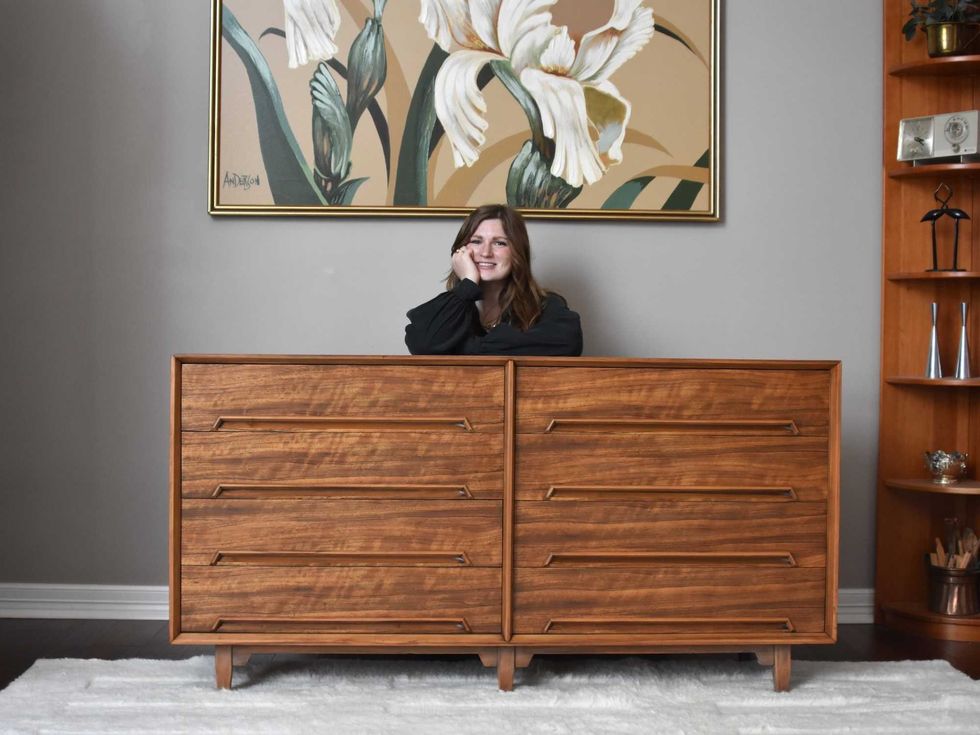
Courtesy of Brianna Byrd
Brianna Byrd with her “gateway piece,” a 1952 Milo Baughman-designed dresser for Drexel Heritage.