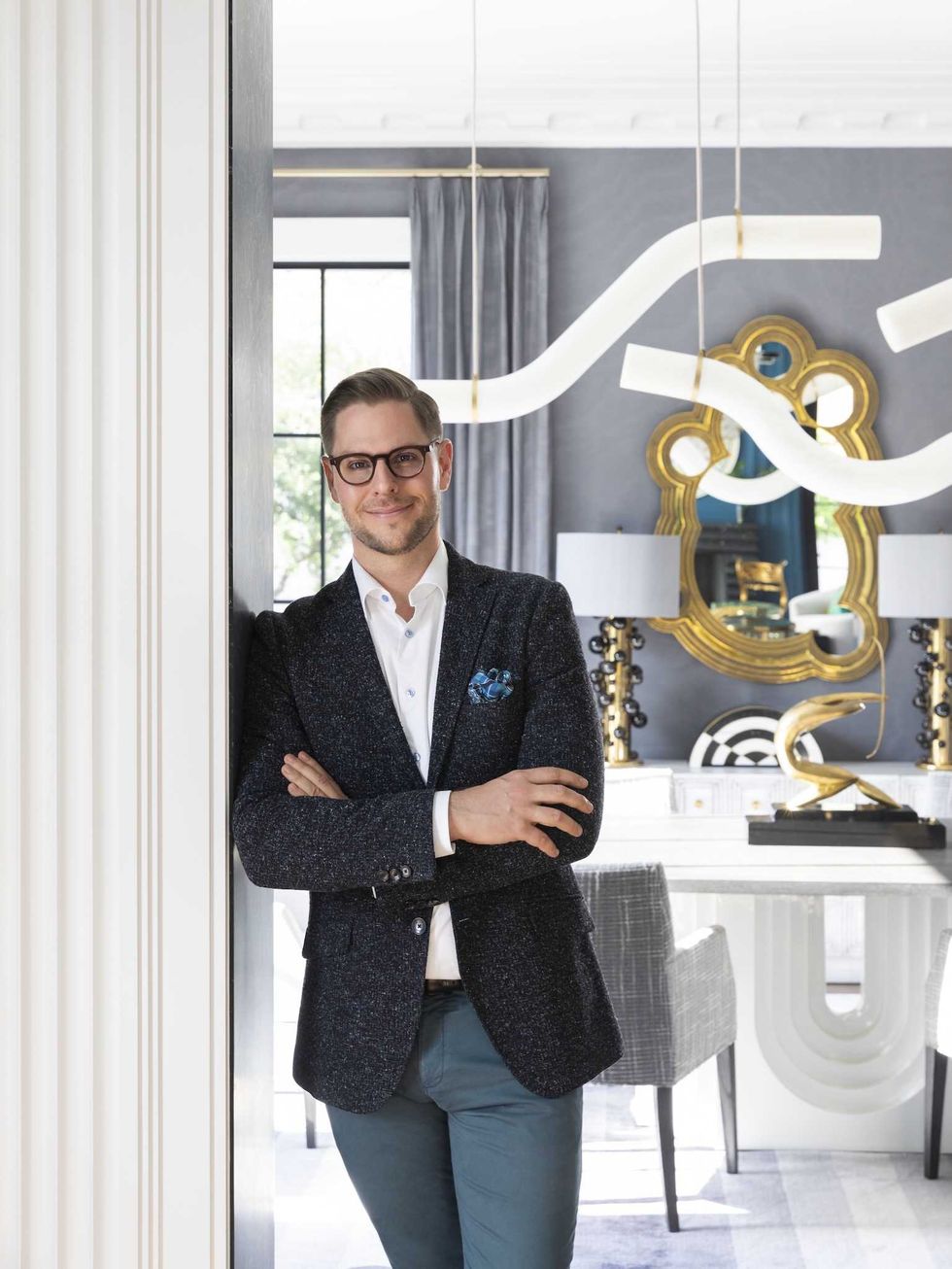
Interior designer and architect Benjamin Johnston is having quite the moment, or, perhaps more precisely, decade. The proud Houstonian’s eponymous firm Benjamin Johnston Design continuously produces interiors that draw accolades from near and far. As the firm marks its 10-year anniversary, Johnston has a lot of reasons to celebrate.
The anniversary provides Johnston with the opportunity to reflect upon the last 10 years and to discuss the journey from being the first Aggie accepted into the graduate program at The University of Texas to becoming the modern day renaissance man that he is today. Johnston has managed to lead his 25-member firm and their 40-50 simultaneous projects, all while writing a book for Rizzoli, building the breathtaking “House of No,” creating the popular “Behind the Build” series, multiple design collaborations, continuously designing hundreds of unique items covering licensing agreements with four major brands, plus, purchasing and renovating the new Benjamin Johnston Design offices.
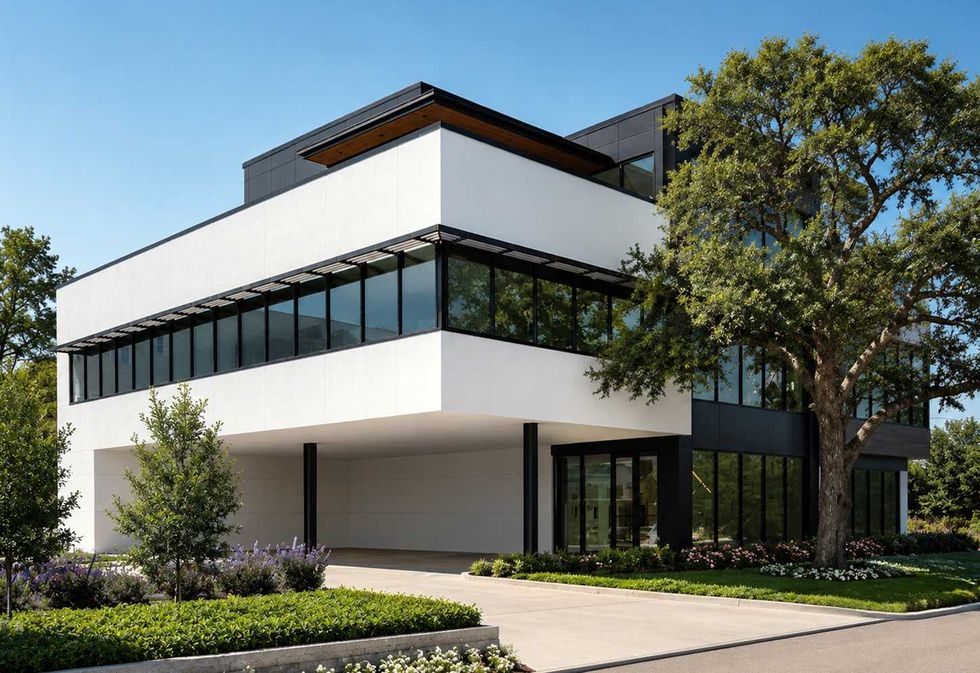
Johnston Design’s new office
Neatly nestled behind a few of the city’s famed live oak trees, Johnston’s new three-story office building in Rice Military has been 22 years in the making. Previous iterations of the firm combined interior projects with graphic design and bespoke furniture, followed by a venture specializing solely in residential interior design, to now, celebrating the 10th anniversary of Benjamin Johnston Design, a full-scale design and architecture firm on Detering Street.
“We are going to have a creative lab on the other side of our offices, and it’s meant to be the space that our team can explore design with, can create interesting combinations and interesting design choices,” Johnston tells CultureMap. “It’s really meant to be a collaboration space as well, not just with ourselves internally, but also with our clients. I’m really excited about it.”
Johnston’s “Creative Lab” will be a state-of-the art space that will allow his team, as well as their collaborators, to benefit from the abundance of natural lighting in the space, as well as utilizing new Ketra lighting technology. The high definition spectrum of 16.7 million colors creates precise color temperatures to mimic the lighting conditions of any space, meaning that materials selections for projects can be accurately represented offsite. With each project having multiple team members working on the design, this technology will allow for swifter real time collaboration.
“We are a big team, and everything that we do is a collaboration,” shares Johnston. “Every project has an architect lead, an interior design lead, and the leadership team guiding the process and meetings with clients and the general direction of the project. There is not a single project in this office that does not have four or five people assigned to it.”
Johnston signs off on every creative decision, noting that it would be extraordinarily expensive for him to do every single thing on each project himself. Utilizing the junior members of the team keeps projects moving and is cost effective for clients. Johnston highlights this as a win-win, as clients benefit from having the experience of the senior leadership weighing in on their projects, while the junior team are the ones pushing the project uphill.
“For me, the thing is, they’re coming to this company because of the work that we’ve done, the legacy that’s there, and that legacy is built on the human experience that each one of our team members has,” he explains. “In my mind, any notion of legacy is really just thinking about the relationships that were built along the way. I love that.”
In a twist of fate, as well as a healthy dose of irony, Johnston finds it amusing that he’s come to embrace teamwork. Referring to himself as a former “lone wolf,” his new favorite thing in both his career and in his life has become the idea that, at the end of the day, good design is all about the experience itself: “What we try really hard to do is, even in awards and article submissions, we list all of the collaborators. None of us are doing this in a vacuum — none of us.”
A colorful legacy
While not exclusively a color factory, Benjamin Johnston Design has built a reputation for masterful use of color. Where many try, and oftentimes fail, Johnston creates vibrant, immersive spaces that retain their sense of elegance, eschewing even the slightest hint of gaudiness. While there is no substitute for good old-fashioned experience, Johnston explains his process for those looking to try their hand at creating a Benjamin Johnston Design of their own:
“To me, in all aspects of design, to make it feel intentional and grounded, I call it ‘painting with color.’ If you think through a space and choreographing color, and having an opportunity for a particular color in a painting — relating to a painting — there is a thread. That thread can be a very powerful thing to help the project have an identity all to its own. So I do think about the repetition of color, and the rhythm, and almost like a pentameter that the color can give to a project," he says.
“If there is a color in a painting, you’ll always find that color somewhere else in the room. You can kind of play it like Where’s Waldo — ‘Where else is this color repeated?’ And I will find ways again, whether through art, through sculpture, any form of art, I should say. But also accessories, fabrics, materials, textiles, wall color, wall coverings — you’ll find that element repeated more than once. I just think that really lends itself to a more grounded project that will stand the test of time.”
Johnston likens this process to creating an outfit. Choosing a belt that picks up the color of a shoe or bag; a shirt, blouse, or blazer that hints at a chosen pant. The care that goes into sartorial selections is not unlike the care that should be taken in dressing a room.
“You’ll find yourself picking up on nuances that are literally threading the project together without you even realizing it. In our philosophy as an office, that’s done with great care and great attention, and great intention as well,” he says.
Refined Interiors
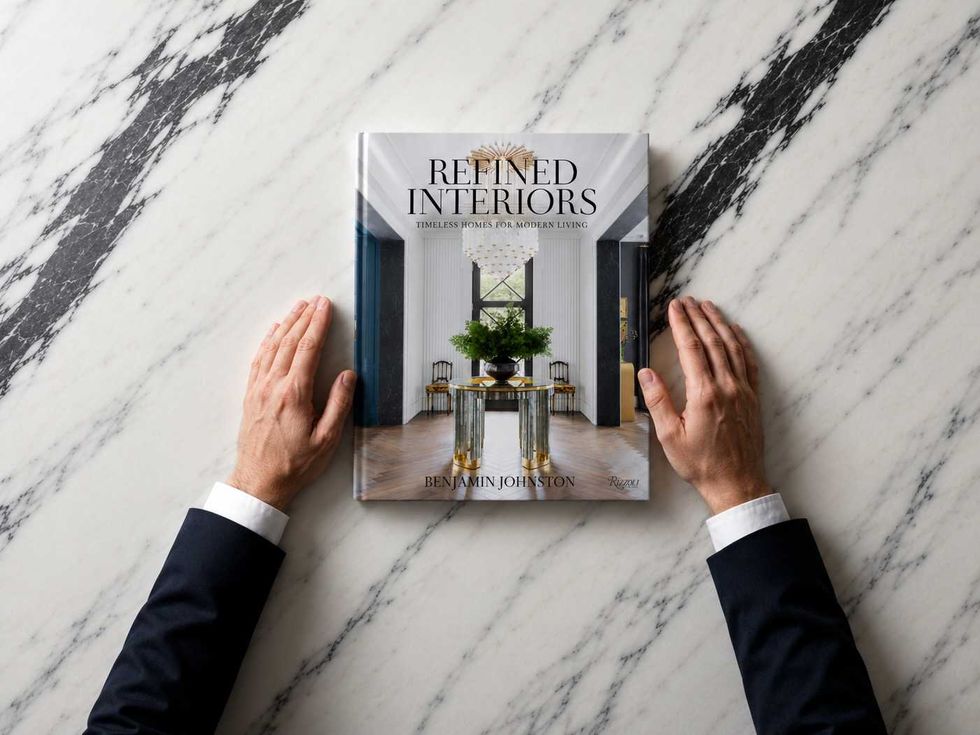
The best examples of this can be found in Johnston’s new book Refined Interiors: Timeless Homes for Modern Living. Showcasing Johnston’s personal residence alongside eight rarely-before-seen homes, Refined Interiors offers an intimate look into the philosophies that have shaped his work over the past two decades, from the unexpected parallels between design and theatre to the embrace of imperfection, and his belief that homes should blend history, artistry, and modern comfort.
Released in February after a five-year writing process, Johnston intended to publish the book to coincide with his firm’s 10-year anniversary. He embarked on a robust, multi-city tour to share the book with his fans.
“It’s kind of fun for us because, first and foremost, the thought and the goal behind the book is that it was meant to be a love letter. Not a love letter just to our clients for helping us to create these works, and it’s not just a love letter about the design work featured in it, but it’s also about all the collaborators that made the work happen,” says Johnston. “We are so blessed in Houston with the incredible craftsmen, incredible artisans, and builders and makers that we have here in Houston. The thought was, being that it’s our 10 year anniversary, we really wanted to celebrate our work in a meaningful way.”
The “House of No”
As previously mentioned, Johnston’s personal home is a point of focus in the book. Remarkably, the home was very experimental — a culmination of somewhat avant-garde ideas, notions, and specifications Johnston created for his clients’ projects, but were ultimately, for one reason or another, relegated to the discard pile.
“I call it ‘The House of No.’ Over my career, I’ve had clients or collaborators say ‘oh, I don’t want to do that, it’s too risky,’ or ‘I don’t want to do that, it’s too expensive,’ or ‘it’s too difficult to pull off,’” he says. “So, what I did was really create a house that was pushing me to allow myself to try out all the things that clients had told me ‘no’ on. It was really a fun experience. We really methodically went through and said ‘what are the things we get pushback on,’ and we put everything in the house.”
The result is an architectural delight that modernizes all the prominent features of the Neoclassical, Art Deco, Art Moderne, and Hollywood Regency periods. Found in the “Regency Remix” chapter of Refined Interiors, Johnston’s signature bold color schemes, dynamic pattern play, and eye for architectural elements like fluted plasterwork and artisanal carved stonework set the stage for his collection of artworks, fine antiques, and elaborate bespoke furniture.
“It was meant to be sort of our Field of Dreams, the ‘if you build it, they will come.’ If we can show clients in a very authentic, very experiential way, that we’ve done it ourselves and we have these lessons to learn from…it really wasn’t that big of a risk,” explains Johnston.
“If we could do that, then we could convert them to saying ‘let’s take more risk with projects, let’s push the envelope of what craft can do. Let’s push the envelope of what our collaborators think we are capable of.’ Let’s do all those things and make for a more exciting experience, not just for homeowners or clients, but for any guest that might be able to have the opportunity to be in those spaces. So, that was the thought and intention behind that project. These have been small nos and big nos, and we’ve really had fun making them all yeses.”
Behind the Build
The popularity of “The House of No” led to the creation of the “Behind the Build” web series with Johnston’s friend and luxury home builder Erin Stetzer. The pair take viewers behind the scenes, offering an in-depth look at how the project came to life. The series, and the breezy rapport of its hosts, has become popular among designers, architects, and everyday design enthusiasts alike.
“We said ‘we went down this path together, we developed all these cool details; and you built them and you made them a reality.’ We have really enjoyed being able to share the lessons learned through that process on our social media,” says Johnston.
Courtesy of Benjamin Johnston Design
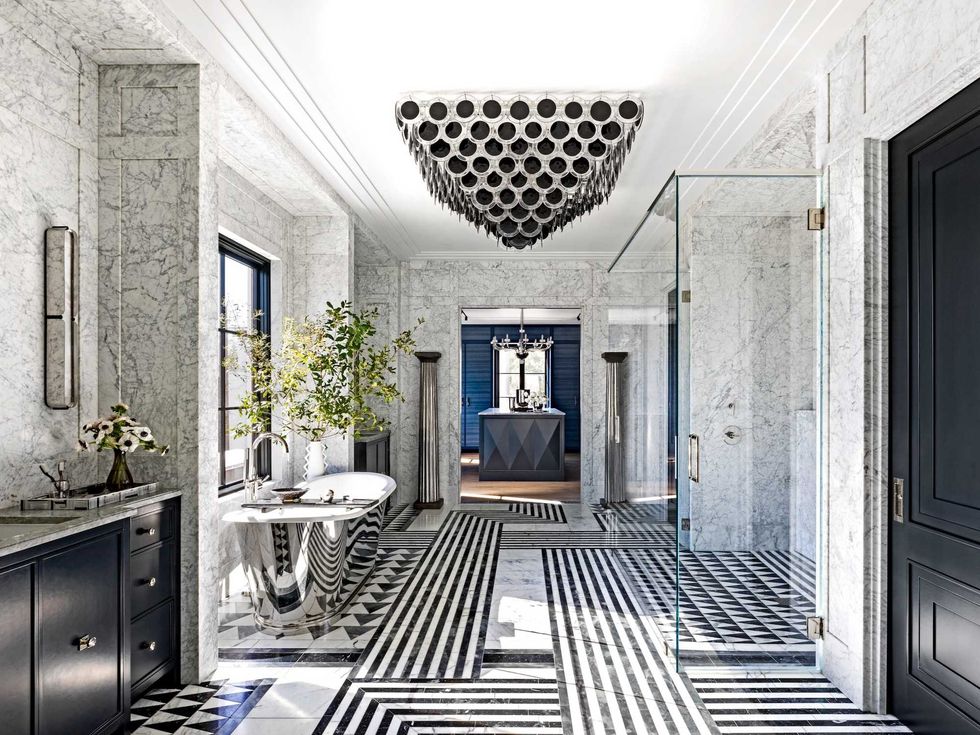
Johnston creates striking scenes through bold pattern play.
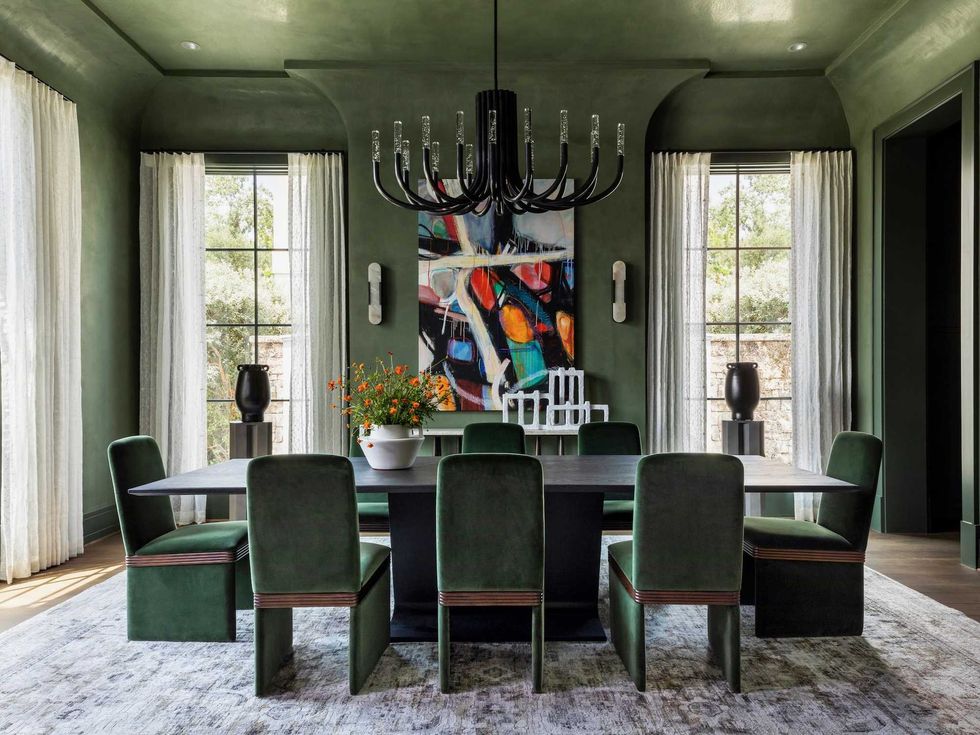
In recent years, the firm has expanded into a full-service, whole-home practice with the launch of its architecture division in 2023, earning significant recognition, including the John Staub Award from the Institute of Classical Architecture and Art, the Palladio Award for Residential Architecture, an Architectural Digest home tour (August 2025), and cover features in Traditional Home and LUXE Interiors + Design Houston (Fall 2025).
Collaborations galore
Johnston’s professional admiration of fellow architect Peter Pennoyer’s collaborative approach with his wife and interior designer Katie Ridder inspired Johnston to open his studio to collaborations with fellow designers such as Marie Flanagan, Katie Davis, and others.
“Much within that same spirit, we wanted to be open to becoming the choice for interior designers who want to have a high level of architecture and that wanted to be involved in an excellent way. We really wanted to do that for this community,” says Johnston. “What I always tell these designers is that I’ve spent my career making bad architecture look good. So, the thing that I impress upon them is that we’re here to make your interiors look better than they’ve ever looked. We want to bring that awareness to what we do on an architectural level and the amount of thought and detail that goes into every last aspect of the architecture, to make their projects really sing.”
Along with collaborating with designers, Johnston has created lines with multiple international brands. There are three collections of hand-knotted silk and wool rugs with Madison Lily Rugs; a 130-plus piece series of collections with North Carolina-based Chaddock Furniture; a fabric, trim, and wallpaper line with Fabricut/S. Harris; and forthcoming fireplace surrounds and mosaic collections with MATERIAL Bespoke Tile + Stone, all of which continue to grow. Johnston’s collection with Chaddock is the number-one-selling collection throughout its licensed brands.
“All of the collections we have will continue to evolve and grow,” explains Johnston. “It’s super fun for us. We get to be a bit of a chameleon in the things that we can offer and the things that we can do for clients and for collaborators.”
Additionally, Johnston continues to shape the industry through leadership roles, serving as chair of the High Point Market Authority’s Diversity Advocacy Alliance and as a board member for the High Point Market Authority.
Currently, Benjamin Johnston Design offices are undergoing a three-phase renovation. Updates to the design have reached the halfway point, and clients and visitors will be impressed by how the spaces are evolving into an art gallery, displaying works by Jaco Roux, Christian Eckart, Tommy Fitzpatrick, David Aylsworth, Paul Corrio, Aaron Glasson, and an enormous 18’x 7’ work by Heather Bause Rubinstein.
As they say in show business, “if you want to know more, buy the book.”