Waddle We Have Here
3 endangered penguin chicks just hatched at Galveston's Moody Gardens
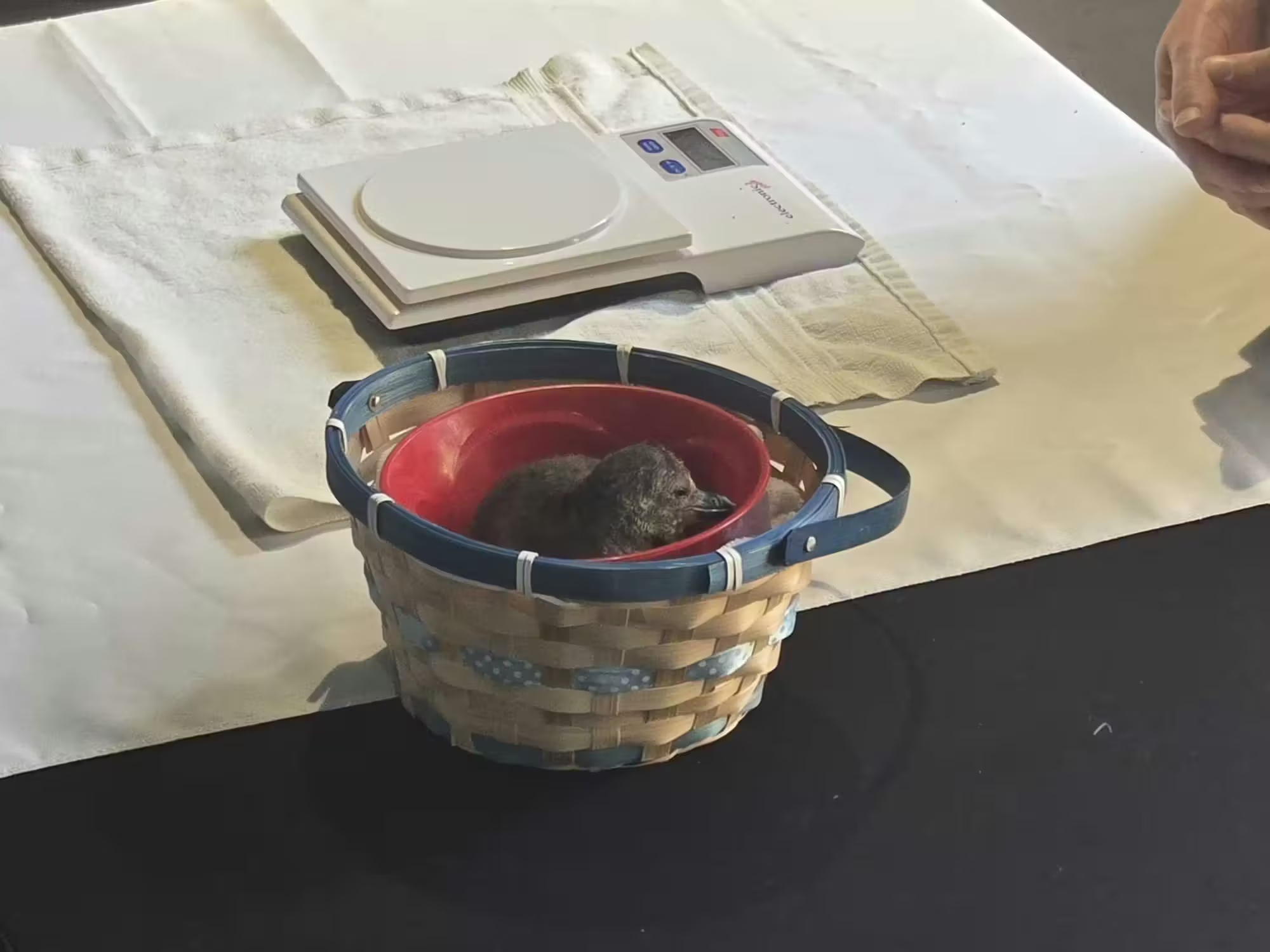
Look what showed up in an Easter Basket!
Galveston's Moody Gardens announced this week that it has successfully hatched three Humboldt penguin chicks in the Aquarium Pyramid, the first time the facility has done so.
“This is our first ever time having Humboldt penguin chicks, so we’re very excited,” said Amy Jones, a biologist who works with the penguins and seals at Moody Gardens.
Two chicks were born to penguins Yolanda and Cusco, and another to Marcona and Ballesta, all between March 15 and 18. Aquarium staff has been monitoring the chicks and their parents, and all seem to be thriving.
Humboldt penguins are warm weather penguins that naturally inhabit the coasts of Peru and Chile. Moody Gardens introduced Humboldt penguins to its aquarium in 2017. A burrowing species, mating pairs lay and protect eggs in protected nests.
The new chicks will remain secluded in their nesting box for the time being until they develop their waterproof feathers. The parents are keeping them warm and fed. Sex will be determined via DNA testing at a later date, after which the chicks will be named and formally introduced to the public.
Achieving viable Humboldt penguins hatchings is a significant feat for a program that is less than 10 years old, according to Moody Gardens. The birds require strict diets and climate controlled habitats to thrive, and successfully housing a colony of 12 in an environment that makes them comfortable enough to breed is quite an achievement. Engagement and stimulation is key, and visitors to the aquarium can often see the penguins playing with bubbles and toys that simulate activity in the natural environment.
Successful hatchings are also a win in the fight against extinction. Humboldt penguins are classified as a vulnerable species, with only about 23,000 left worldwide. The birds are heavily impacted by El Niño events that disrupt the nutrient-rich Humboldt current that forms the base of the penguins' food pyramid. Driven by man-made climate change, these events are increasing in number and severity. Overfishing, pollution, habitat loss, and being caught in fishing nets also accounts for a decline in the population, according to press materials. Programs like the one at Moody Gardens help educate the public on the dangers the penguins face in the wild.
The real question is: when will visitors be allowed to see the babies? Staff continues to monitor the chicks with regular weigh-ins. The chicks will remain in the nesting boxes for at least several weeks until they are mature enough to start entering safe areas and, eventually, the main habitat. In the meantime, people can see videos on the Moody Gardens Instagram page.