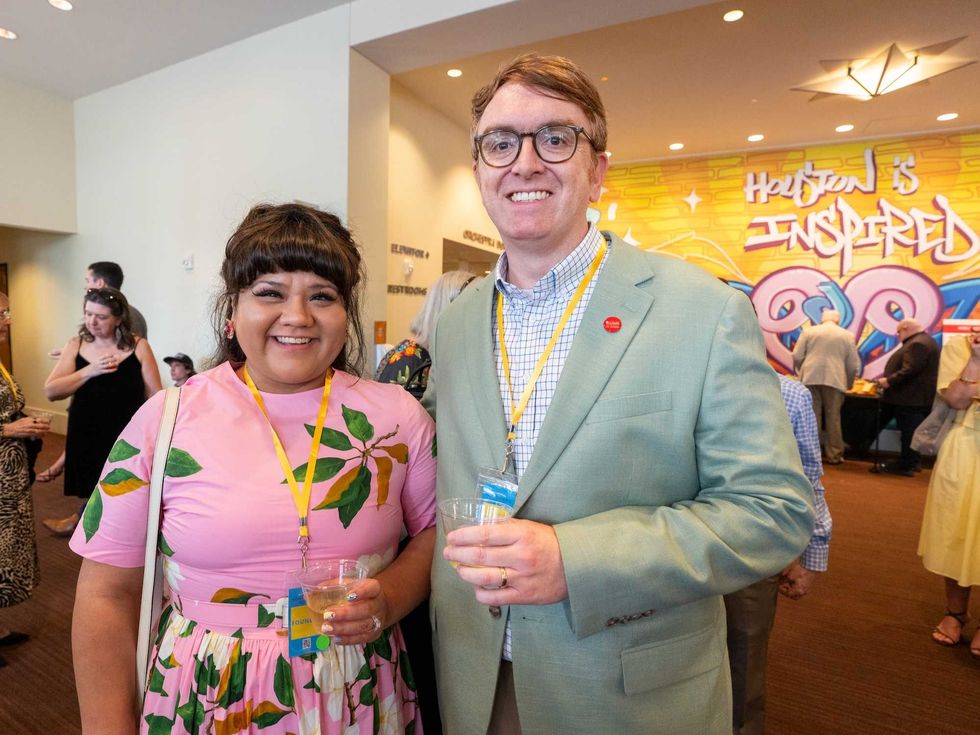
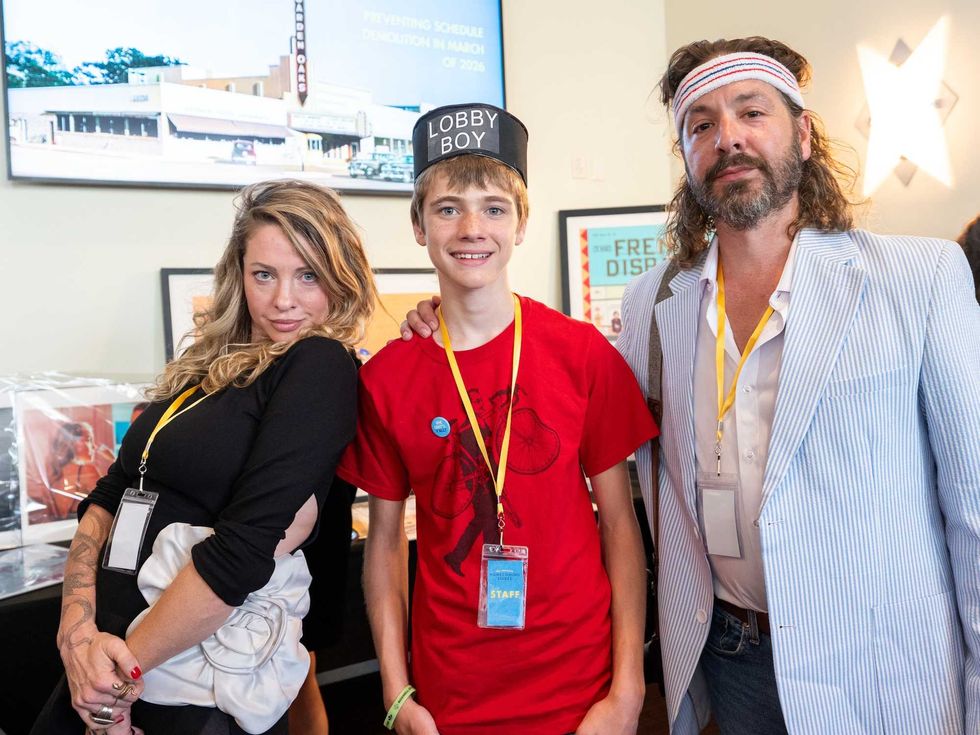
A fancy, eccentric-looking crowd showed up for the Wes Anderson Homecoming Soirée, held on Friday, July 17, at the Hobby Center for the Performing Arts’s Zilkha Hall.
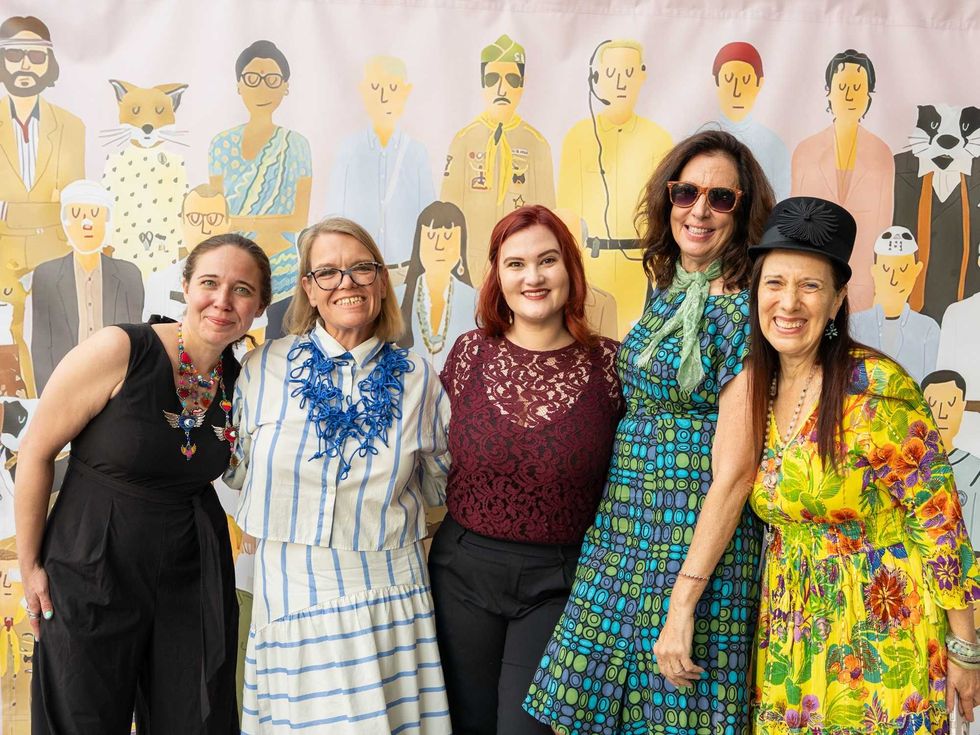
Fans of the Houston-born, Oscar-winning auteur paid hundreds of dollars to attend this benefit event. Guys dressed up like characters from The Royal Tenenbaums. Others wore red skull caps and low-top Adidas, like the characters from The Life Aquatic with Steve Zissou. Some people working the event even wore “Lobby Boy” hats, looking like the bellboy character from The Grand Budapest Hotel.
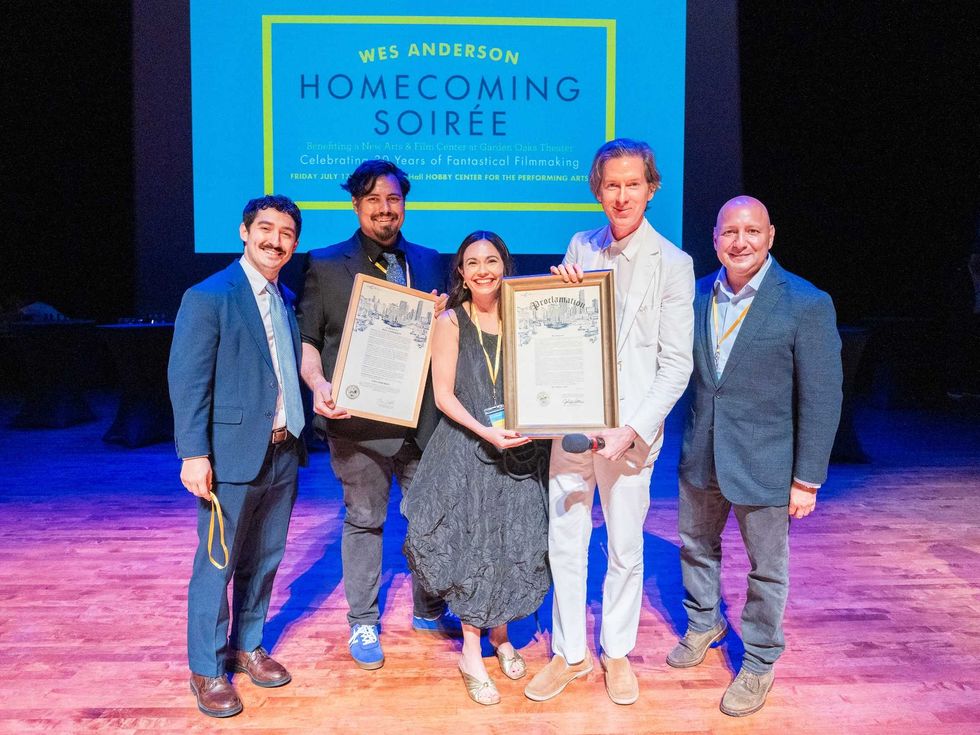
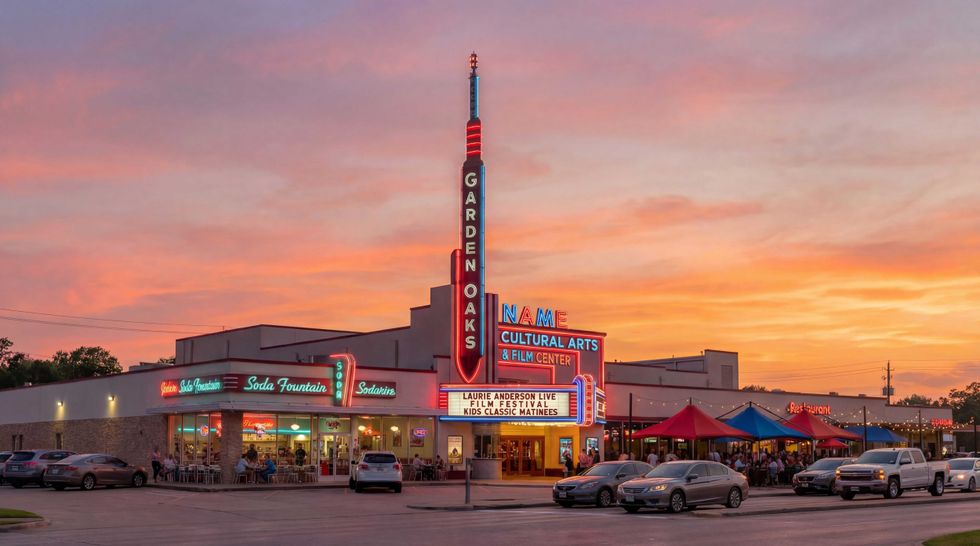
The people gathered for two reasons: 1) to get a chance to see Anderson in person; and 2) to raise money to renovate and restore the Garden Oaks Theater, a project spearheaded by local nonprofit Arthouse Houston. Top-tier “Founders Experience” ticketholders got a chance to meet Anderson onstage for pics. The St. John's School alum also received a proclamation from Mayor John Whitmire declaring it “Wes Anderson Day.”
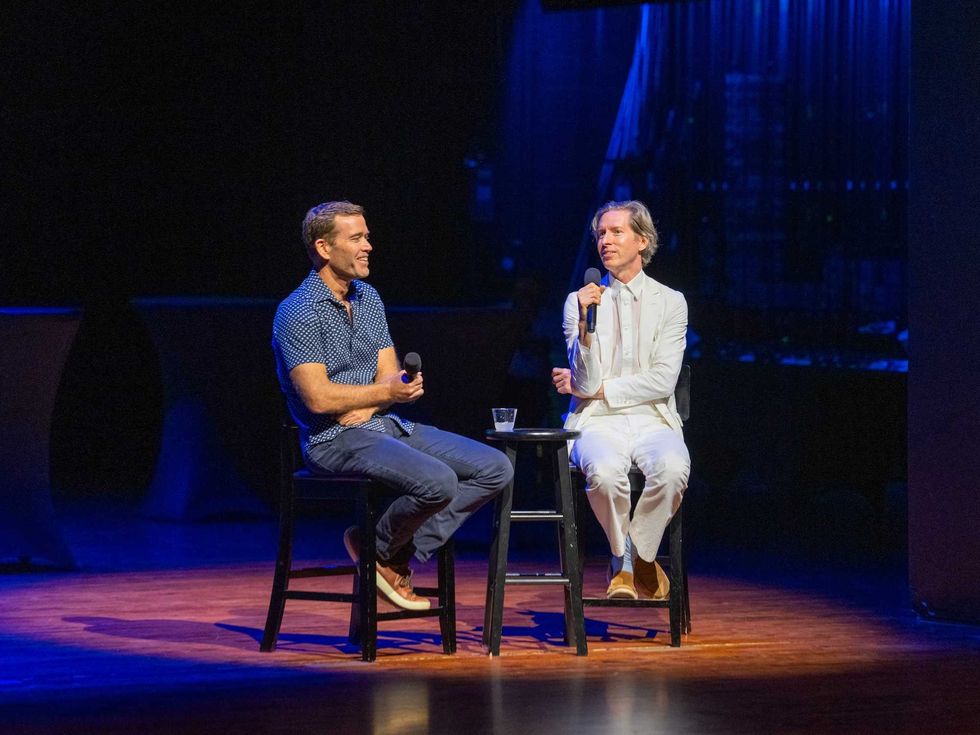
After that, he and actor/fellow SJS alum Michael Maggart (who has appeared in several Anderson films) held a half-hour discussion where they reminisced about making Rushmore here in Houston, Anderson’s days working at the Bookstop on W. Alabama (now a Trader Joe’s), and how he and frequent collaborator Owen Wilson used to sneak into the River Oaks Theatre. (It involved pretending to lose a pair of glasses.)
Of course, the conversation shifted to Anderson coming back home to support the Garden Oaks project. “I always say you can't build an old building,” Anderson said. “First of all, I mean, a beautiful old place has history, and has people's experiences tied into it, and it has stories involved in it. And I think an old cinema — these things are kind of endangered all over the world, and it's not just an architectural thing. It's not even just a community thing. It's a sort of delivery system for something that’s, to me, deeply important to our country.
“It’s one thing we can access these things on all these devices,” he continued. “It's a different thing when you go to a place that's designed to help you share the experience of a movie together. It's such a powerful art form. And, anyway, for me, it's worth making a bit of an effort to try to save a place like the Garden Oaks.”
After the convo, he introduced the quintet of films he curated for the event. (Unfortunately the DCP file for his 2007 short Hotel Chevalier had some technical difficulties and was cut short.) “We wanted to do a screening here, and I don't have a new movie to show,” he said. “I don't have something hot off the presses. So, I thought I'd put together a little something that just was different from what anybody else will see. So it's a sort of mixture… This is just for Texas, this little collection.”
He eventually left the stage, leaving Arthouse Houston co-founder/director Maureen McNamara and Houston Public Media host Ernie Manouse to auction off perks & gifts and encourage the audience in helping revive another legendary, local movie palace. Among other items, attendees bid for treasures such as a special John Waters backstage VIP experience at his upcoming Christmas Show, dinner with John Cameron Mitchell, and a rare set of photo portraits of a young Anderson and friends, circa Bottle Rocket. Others paid $5,000 for select seats in the future theater and $5,000 to restore one foot of the venue's neon sign.
So far, the effort has raised approximately $1.3 million of the $4 million required to begin the renovation project. The organization needs to raise $4 million by July 30 for the project to move forward. Those interested in securing naming rights will find more information here.
“River Oaks has 245 seats,” McNamara informed the crowd. “The Garden has over 700, and that is a place that we don't have in Houston. We have a need for that, for premieres, for performances in your life, for music, for a dynamic learning & exhibition space… So, we're building new on the shoulders of our history. I hope you guys will join us, and we need people to join us in a big way today.”