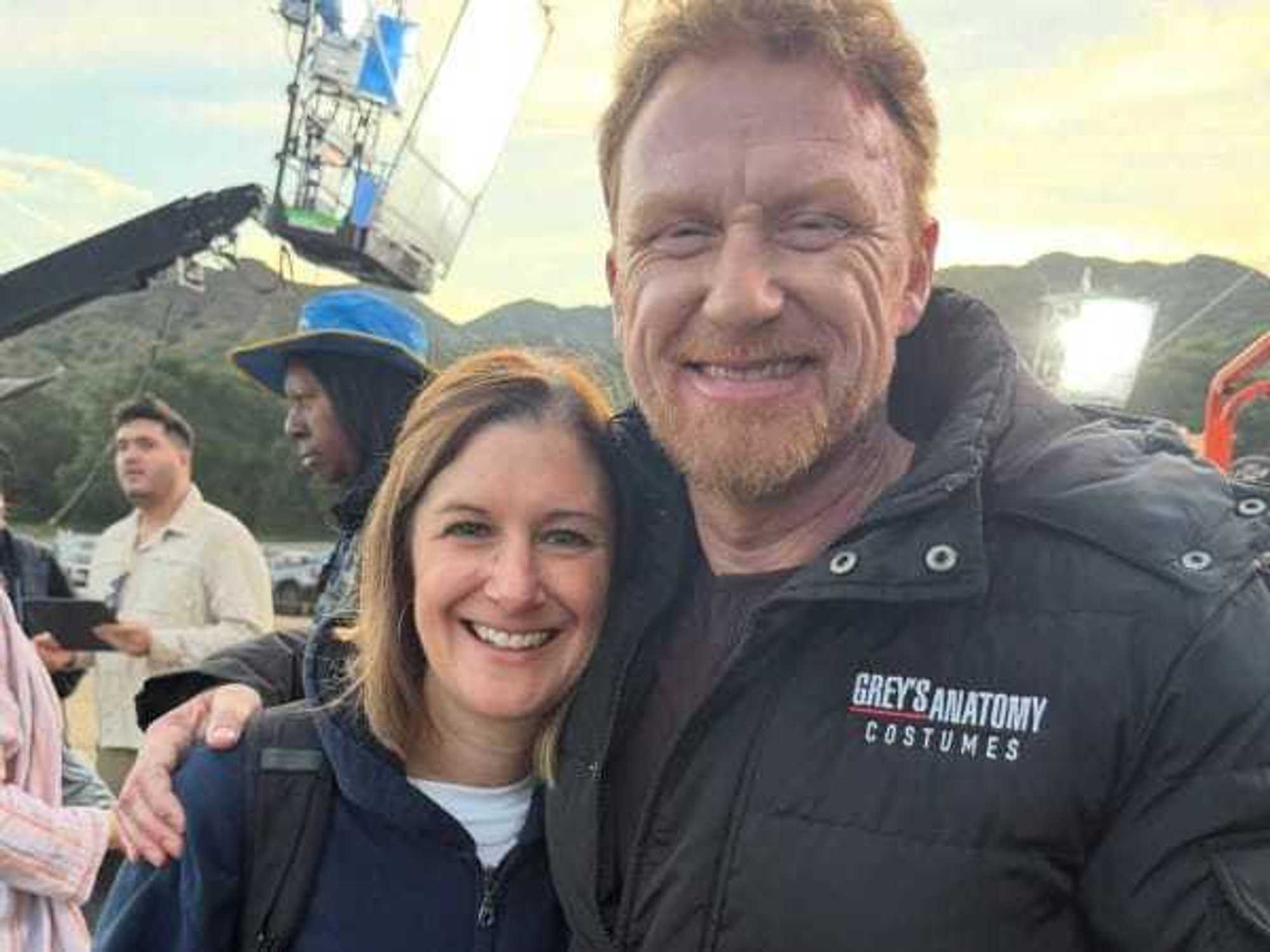
ABC is bringing the Grey's Anatomy universe to Texas with a new one-hour rural medical drama co-created by longtime showrunner Meg Marinis. Marinis was born in Houston and is an alum of both the Kinkaid School and the University of Texas at Austin.
According to an exclusive report from Deadline, which production company Shondaland shared on social media, the untitled series has received a straight-to-series order from ABC and will follow a team at a rural West Texas medical center described as “the last chance for care before miles of nowhere.”
The series marks the first Grey’s Anatomy franchise show set outside the West Coast, and it's the first that's not centered around an existing main character from the original series.
The new drama will be co-created by Shonda Rhimes and Marinis, who has spent nearly two decades working on Grey’s Anatomy. She joined the series during its third season as a production assistant before rising through the ranks to become a researcher, writer, executive producer, and now showrunner.
"This opportunity will bring new characters and stories to life that will embody the same heart, emotion, and connection audiences have loved from Grey’s for more than two decades, all set in my home state of Texas,” Marinis said in a statement announcing the series. "I am so grateful to Shonda Rhimes for creating this dynamic world and feel so fortunate that I get to be a part of it.”
Marinis’ path to running one of television’s biggest franchises started in Austin. In an interview with Shondaland last year, she recounted moving to Los Angeles during her final semester at UT through the university’s UTLA entertainment program, which allows students to complete coursework while interning in the industry. While finishing school, she interned at Universal before landing a production assistant role on Grey’s Anatomy in 2006.
Marinis has also woven Texas experiences into the flagship series itself in recent years. According to Deadline, she personally knew families affected by the Camp Mystic tragedy and rewrote part of a recent Grey’s Anatomy episode after becoming emotional while working on the script.
The West Texas setting is particularly timely, as rural healthcare access remains a growing issue across the state. According to the Texas Hospital Association, more than 20 rural Texas hospitals have closed since 2010, while roughly a quarter of the state’s remaining rural hospitals are considered at risk of closure.
By centering the new series on what ABC describes as “the last chance for care before miles of nowhere,” the franchise could bring national attention to healthcare access challenges facing communities across West Texas and other rural parts of the state.
The new series joins a long lineage of Texas-set television dramas, though not all were actually filmed in the state. Grey’s Anatomy itself is famously set in Seattle while primarily filmed in the Los Angeles area. Friday Night Lights became closely associated with Austin through extensive local filming, while series like Dallas often recreated Texas from California sound stages, with exteriors of Southfork Ranch serving as the Ewings' fictitious home. Walker, Texas Ranger, meanwhile, became one of the best-known examples of a network drama heavily filmed across Texas itself.
Even after more than 20 years on the air, Grey’s Anatomy remains one of television’s most durable franchises. According to ABC, the drama is now the longest-running primetime medical drama in television history and continues to rank among the network’s strongest scripted performers.
Ellen Pompeo, who stars as Dr. Meredith Grey in the original series, is attached as an executive producer, and the new drama is expected to premiere in 2027.