True horror fans will likely be familiar with the 1978 cult film Faces of Death, which purported to be a documentary showing real-life killings in gory detail. It didn’t, of course, but that didn’t stop rumors from continuing to spread for decades. Now, almost 50 years and multiple sequels later, comes a new version of Faces of Death, an actual movie that pays homage to the original in interesting ways.
Margot (Barbie Ferreira) works at a YouTube-like company called Kino as a content moderator, flagging videos that violate the company’s policies. This means her job often involves seeing some truly despicable things from all manner of depraved people. One day, though, she comes across a video that seems a little too real, and after seeing more similar videos, she starts to believe they’re genuine murders.
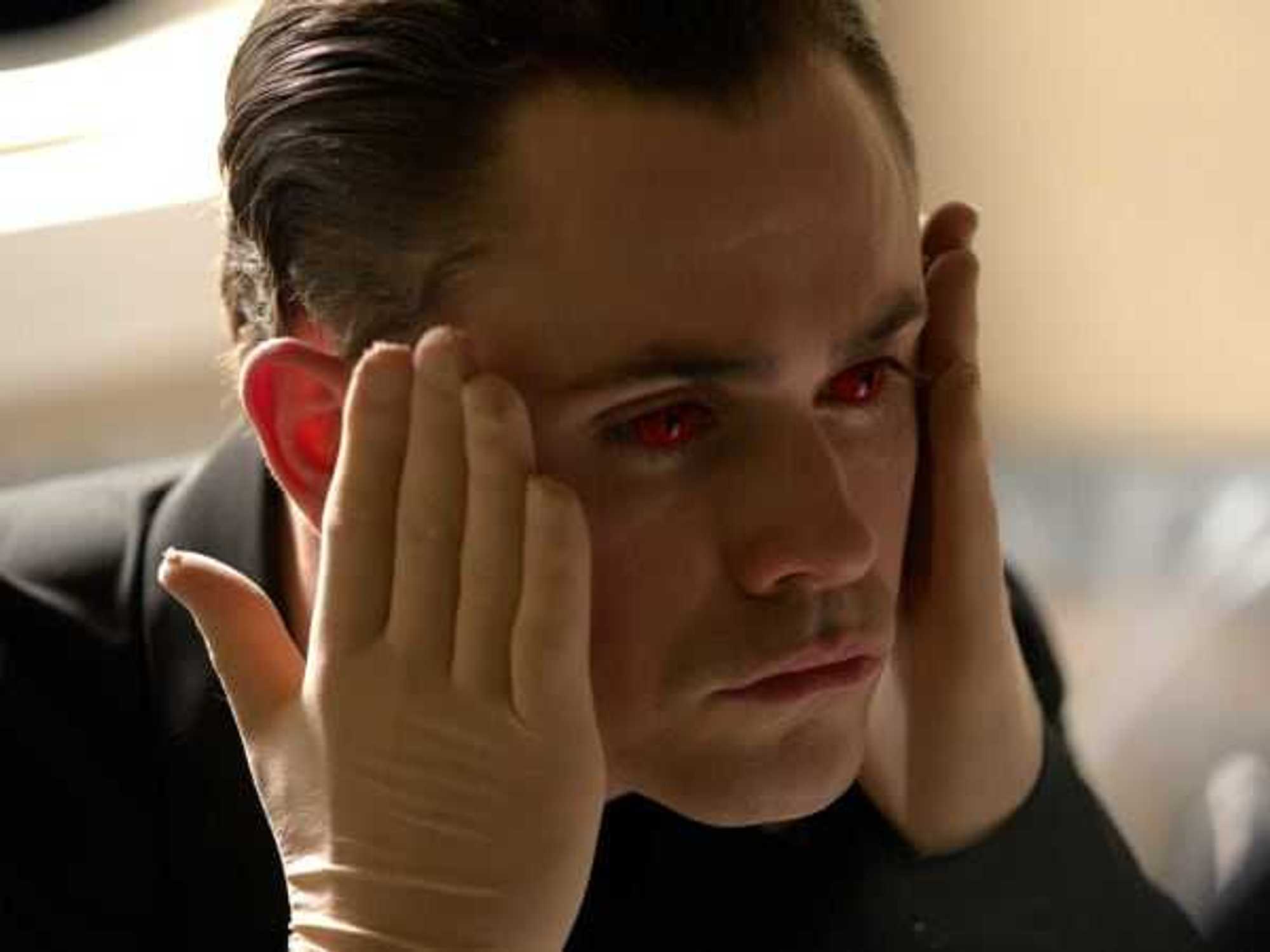
Going against her company NDA, she starts to investigate the videos on her own, which puts her on the radar of Arthur (Dacre Montgomery), who is actually kidnapping people and killing them on camera through methods seen in the original Faces of Death film. It’s not long before Arthur tracks her down, with a plan to make her one of his next victims.
Written and directed by Daniel Goldhaber (How to Blow Up a Pipeline) and co-written by Isa Mazzei, the film is not so much scary as it is creepy, with the occasional gross-out sequence. The idea of having someone emulate the killings in the cult film is a good idea, and pairing it with the modern-day attention economy — in which content creators go to increasing lengths for clicks — is a clever twist on a concept that other films have done.
The film as a whole is a commentary on how social media and video sharing sites have often decided to prioritize profits over the well-being of their users. Margot is shown allowing videos involving violence and sexual assault to stay on the site while nixing ones depicting how to use Narcan or demonstrating putting on a condom on a banana. Josh (Jermaine Fowler), Margot’s boss, is even explicit in the company mandate that outrageous videos drive views.
While Arthur has the makings of a good villain, there are few attempts to make him seem truly diabolical. His kidnappings often seem more spur-of-the-moment than calculated, and even though he has a well thought-out dungeon at home, the house’s location in the suburbs seems to make him vulnerable to easy discovery. Goldhaber and Mazzei leave more than a few unanswered questions along the way that take away from the intensity of the story.
Ferreira is yet another actor from Euphoria who’s capitalizing on her exposure from that show. She plays Margot’s increasing anxiety well, and when the action ratchets up in the final act, she meets the moment in a satisfying way. Montgomery returns to the vibe he had while playing the evil Billy on Stranger Things, and even though his character doesn’t fully live up to his potential, Montgomery sells his evil for all it’s worth.
The new Faces of Death may not be what some are expecting given the reputation of the previous films, but it’s a solid horror/thriller that uses the brand as a launching pad into something different. It doesn’t make much of a dent in the scare department, but it does give its violence and gore a degree of relevance in today’s often desensitized world.
---
Faces of Death is now playing in theaters.