In May 2016, Mark Neagli fell down the stairs at his home, resulting in a C2 spinal cord injury, one of the most severe types of injury.
During his initial hospitalization following the fall, he was unable to move his arms and legs and was dependent on a ventilator for breathing.
Today, Mark is the executive director of a foundation he helped to form, participates in clinical research projects, and is enjoying life with his five children and 11 (soon to be 12) grandchildren. He credits the Spinal Cord Rehabilitation Program at TIRR Memorial Hermann with getting him back to the people and activities that mean the most to him.
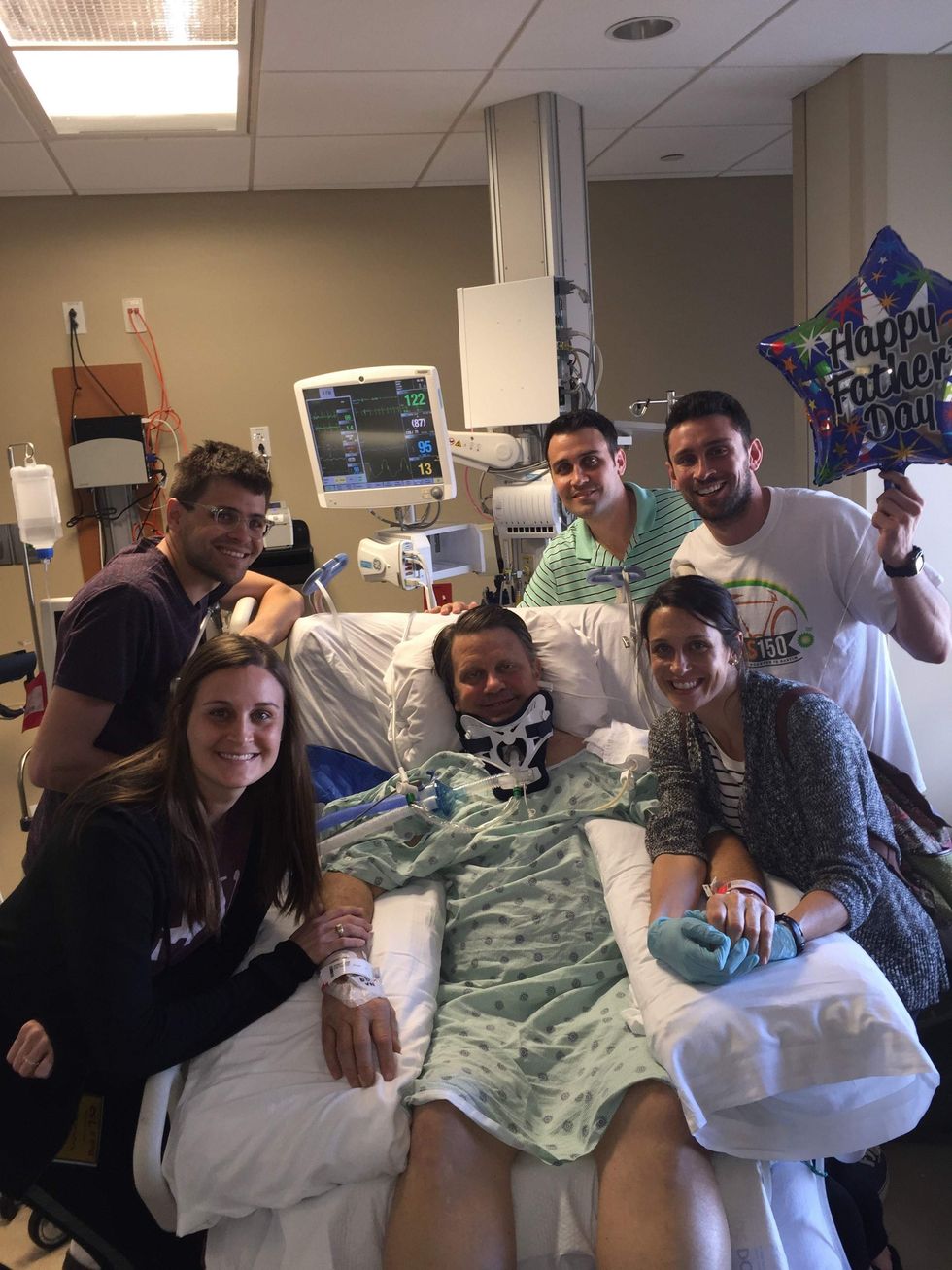 Photo courtesy of Memorial Hermann
When he fell down the stairs, his family immediately called emergency medical services and Mark was promptly taken via Memorial Hermann Life Flight to Memorial Hermann-Texas Medical Center, where he remained for about four weeks. Once he was medically stable, he was transferred to TIRR Memorial Hermann in the Texas Medical Center.
TIRR Memorial Hermann has been nationally recognized for its ventilator weaning pathway for spinal cord injury patients. This program has a success rate of over 97% in weaning patients from ventilator use prior to discharge.
The TIRR Memorial Hermann team of caregivers created a customized treatment plan for Mark that involved his entire family. At the time of his accident, Mark was a divorced father of five who worked as an executive with the National Multiple Sclerosis (MS) Society.
“Mark was not focused on if he was going to go back to work, but when and how he would be able to fulfill his roles as executive, father, and grandfather,” says his physical therapist, Adele Henry, PT, DPT, CPPS, CPHQ. “Mark learned to instruct his family on how to assist him, while making sure he was participating in the task to the greatest extent that he could. Mark and his family found a great balance working to return to the activities they enjoyed while also promoting his neurorecovery.”
Mark took ownership of his rehabilitation. “I was able to make my own decisions, and they had so much patience teaching my children to be my caregivers,” he says.
On a daily basis, Mark participated in physical, occupational, speech, and/or group therapies. “Mark’s dedication to his neurologic recovery was balanced by his desire to learn the most advanced adaptive technologies, like eye gaze technology, to ensure he would be able to reintegrate to the community as quickly as possible,” says Adele.
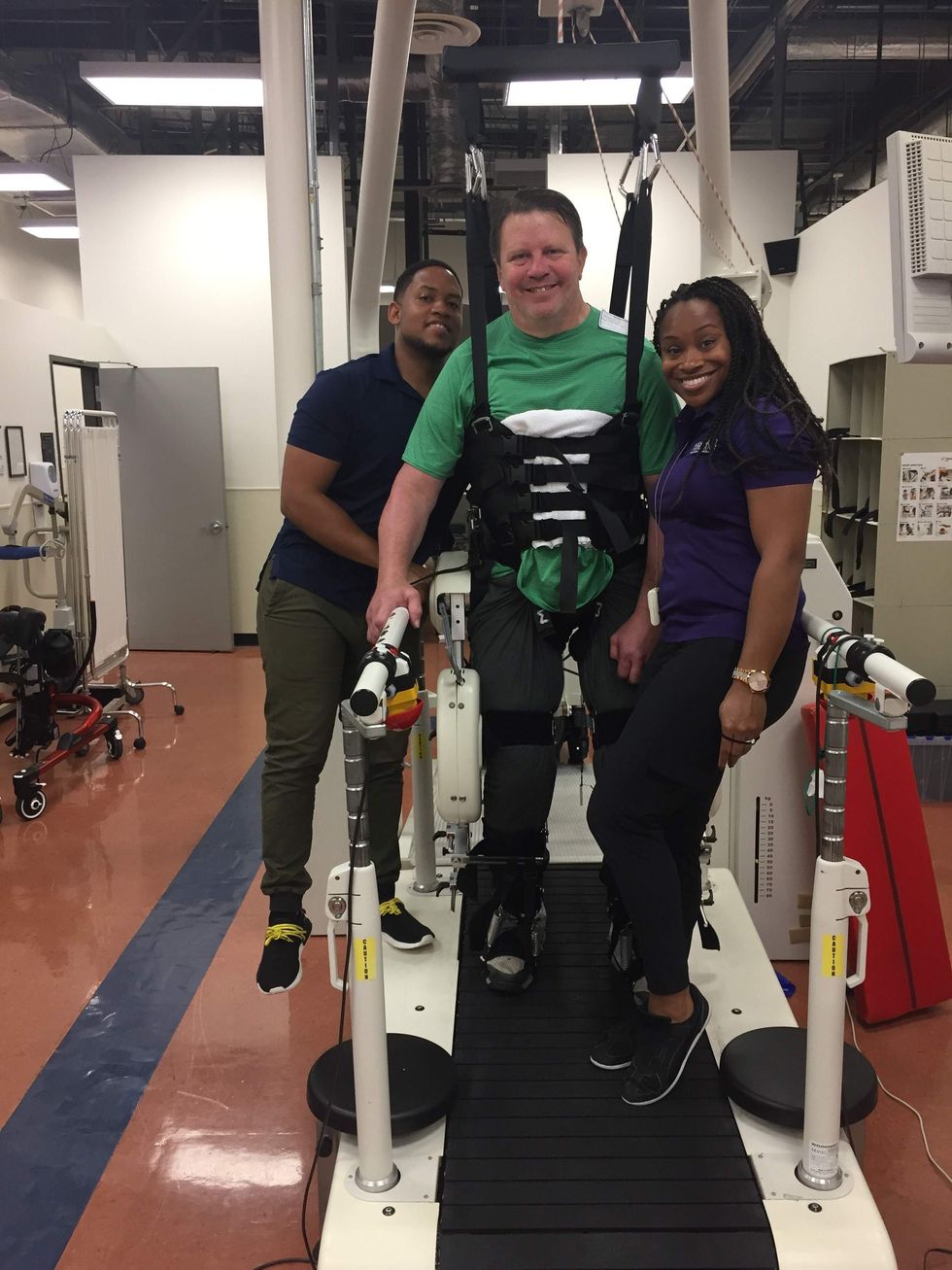 Photo courtesy of Memorial Hermann
TIRR Memorial Hermann’s Adaptive Technology Lab provides patients like Mark the opportunity to learn to incorporate technological devices into their daily activities. Mark finished his first phase of inpatient care at TIRR Memorial Hermann in August 2016.
In February 2017, Mark completed a second therapy phase lasting two weeks at TIRR Memorial Hermann.
After the two-week session, Mark was discharged from this second phase of inpatient care. At that point, he began outpatient therapy. “I went to TIRR Memorial Hermann Outpatient Rehabilitation – Kirby Glen Center as well as to TIRR Memorial Hermann Outpatient Rehabilitation – Memorial City for approximately one year,” says Mark. “I especially enjoyed the aquatic therapy. In the pool, I could walk forward and step up on a platform.”
Mark visits the TIRR Memorial Hermann Outpatient Medical Clinic periodically to address spasticity, a condition in which muscles stiffen or tighten. He also works with Radha Korupolu, MD, affiliated physician in the Spinal Cord Program at TIRR Memorial Hermann.
Mark serves as an advisory board member on research projects for Dr. Korupolu’s NIH-sponsored feasibility study on mindfulness-based meditation. “As a Community Advisory Board member, Mark has contributed valuable input on the study design, procedures, and data collection methods,” says Dr. Korupolu.
Following his injury and rehabilitation, Mark returned to work with the National MS Society until he retired from the organization in 2018.
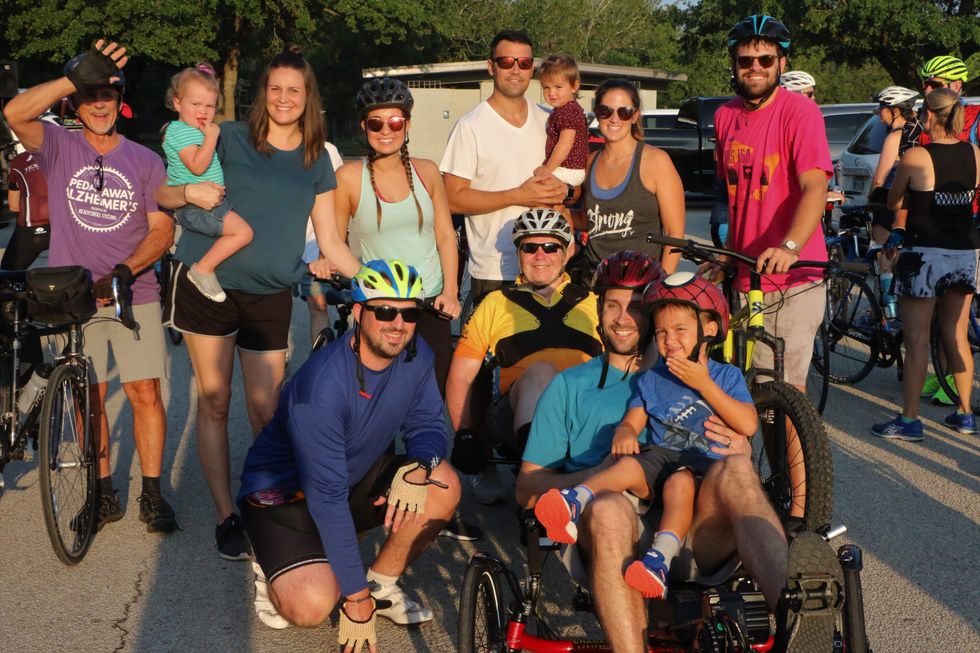 Photo courtesy of Memorial Hermann
Today, he serves as executive director (also a volunteer role) for the Victor Rivera Foundation, an organization that focuses on providing access to neurologic and neuro-ophthalmologic services for under-resourced individuals living with MS.
“Amazing work is done at TIRR Memorial Hermann,” says Mark. “Everyone was so kind. The little things they did, made a difference in my experience.”
Learn more about the Spinal Cord Rehabilitation Program at TIRR Memorial Hermann.