When 24-year-old tech consultant Rebekah Mann and her husband, Patton, discovered they were expecting, they were both elated and stunned. At seven weeks into the pregnancy, they learned that they were not just having one baby; they were having triplets.
“I’ve always wanted twins,” Rebekah says. “So, it was a great surprise. We were shocked when they saw a third baby, but we were excited for whatever having triplets was going to mean for us.”
While thrilled with the news, Rebekah also recognized early on that triplet pregnancies are medically complex. Known as multiple gestations, triplet pregnancies can carry greater risks for both the mother and babies.
At around 20 weeks, routine scans brought good news: the babies were healthy and growing strongly. “In fact, the triplets measured on the larger side of their percentiles, which my health care provider told me was a sign of healthy growth,” Rebekah recalls.
Rebekah’s obstetric care was anchored by an affiliated team at Women’s Memorial Hermann at Memorial Hermann Memorial City Medical Center, led by Joey A. England, MD, a fellowship-trained maternal-fetal medicine specialist and assistant professor with McGovern Medical School at UTHealth Houston. Dr. England has advanced experience caring for women with high-risk and complex pregnancies.
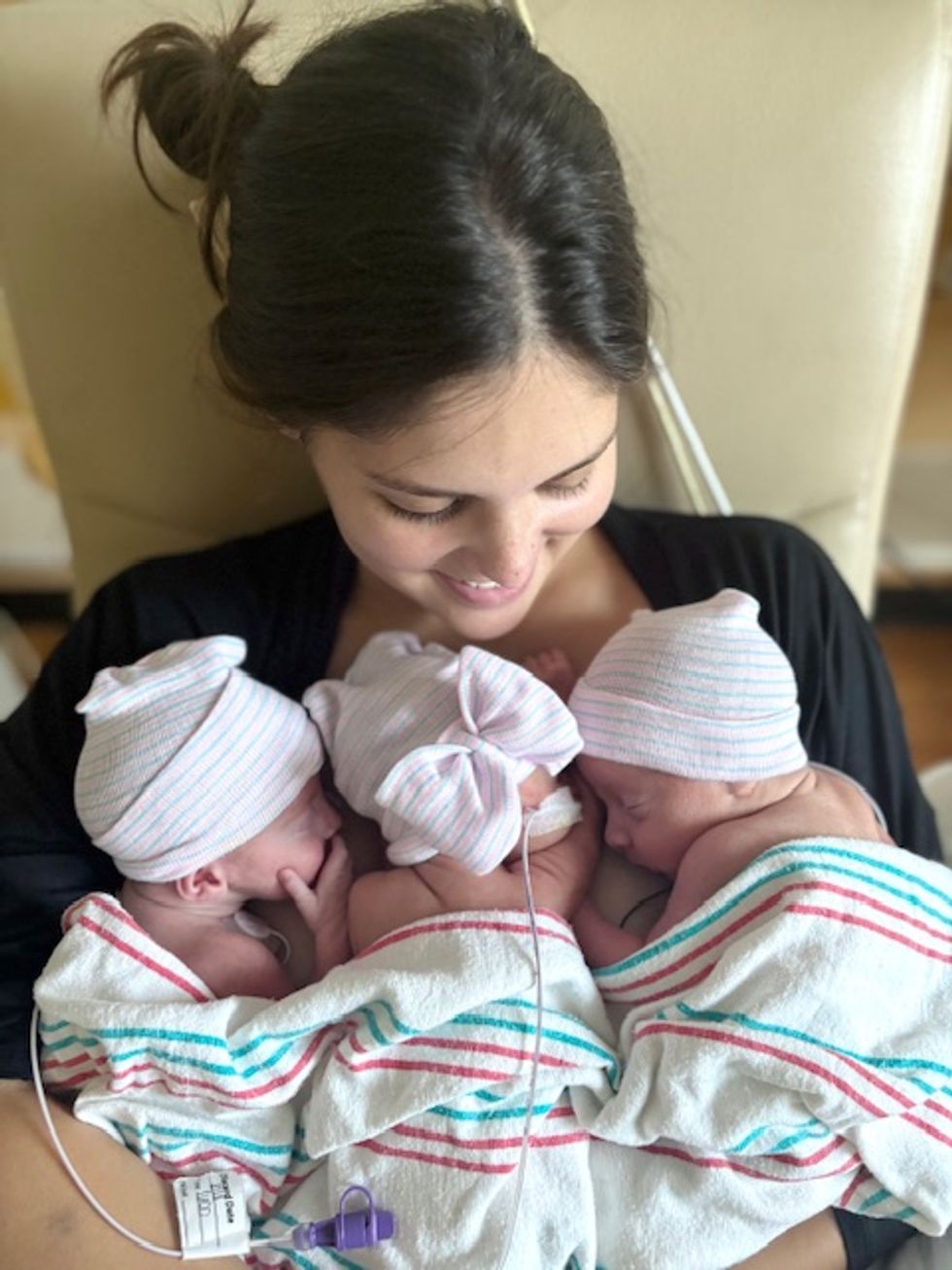
Photo courtesy of Women’s Memorial Hermann
Mom and babies are happy and healthy.
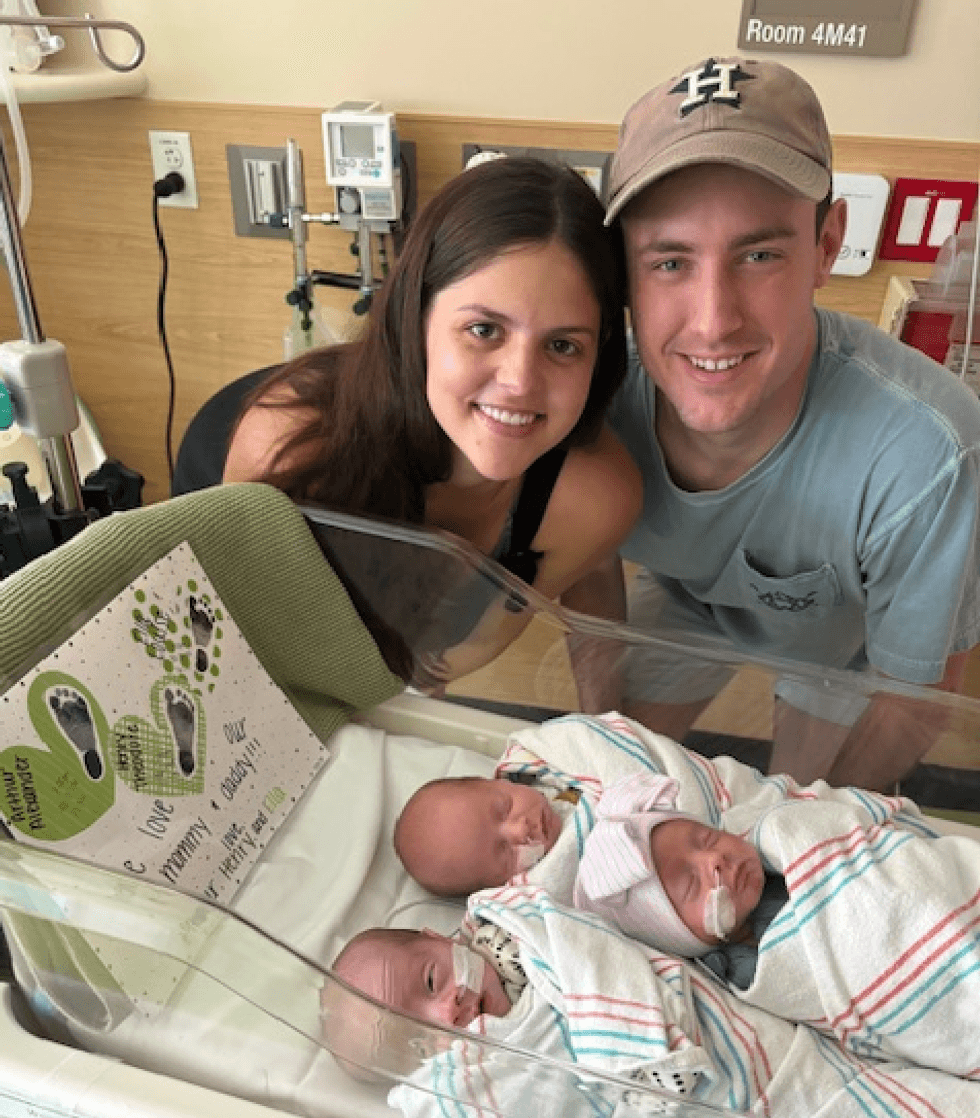
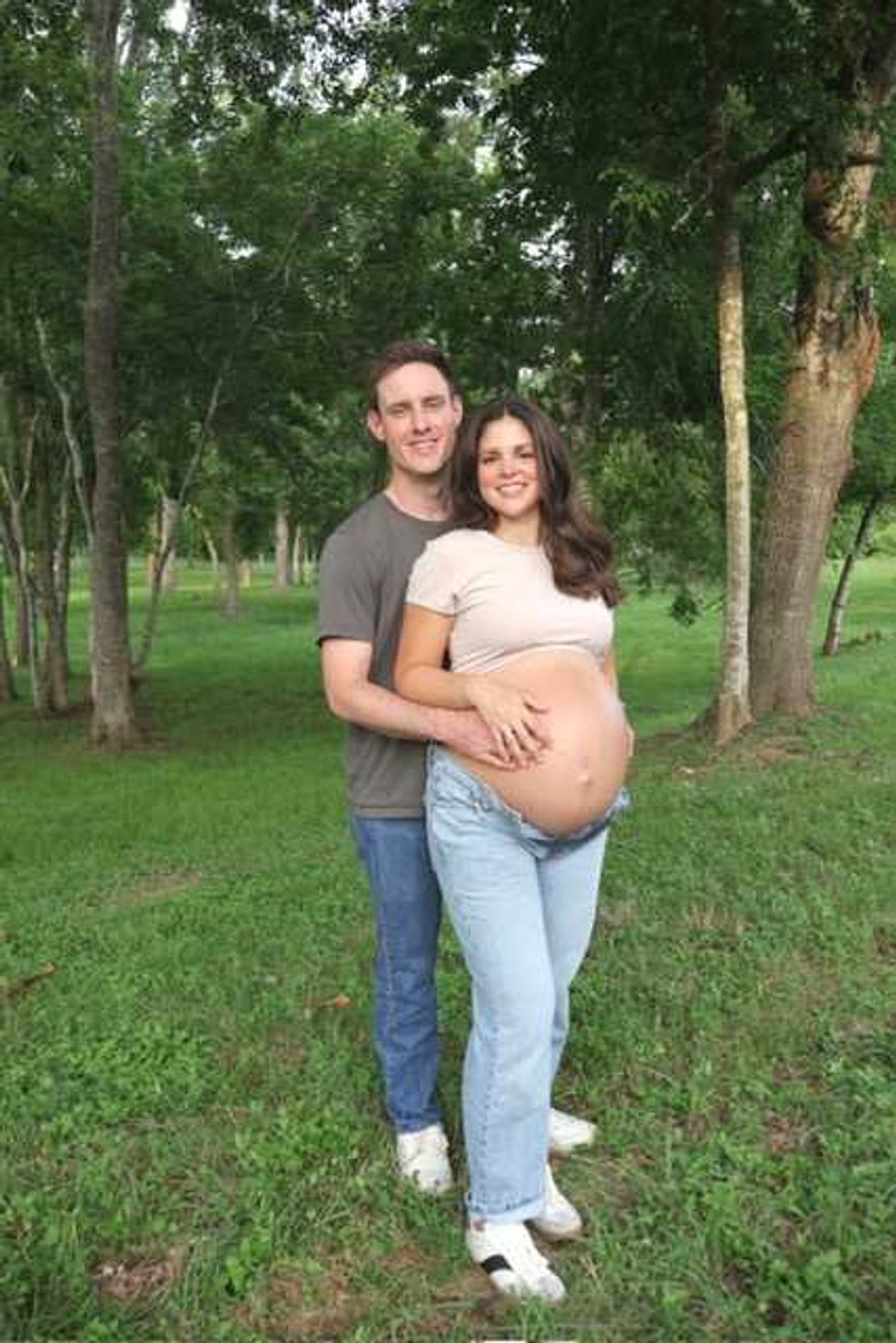
“Triplet pregnancies demand a high level of coordination and vigilance,” Dr. England said. “The risk of preterm birth is six times higher than in a singleton pregnancy, and mothers of multiples face increased risks for complications like preeclampsia, gestational diabetes and hemorrhage.”
At 29 weeks, Rebekah went into preterm labor. The team was able to halt her labor and admit her for around-the-clock monitoring. “With triplets, things can change quickly. Keeping her in the hospital allowed us to respond immediately to anything unexpected,” Dr. England said.
Rebekah was on bedrest for nearly three weeks. "Every night I thought to myself, ‘Okay, I’ve managed to keep them inside for another day,’” she said. “I made it thanks to Dr. England. She is one of my favorite doctors. She is attentive, a great advocate and fun to chat with. She helped make a difficult experience so much easier.”
During her hospital stay, tests revealed that Rebekah had developed preeclampsia, a serious condition marked by dangerously high blood pressure that can threaten the mother and her babies. The care team shifted focus to keep Rebekah stable while preparing for delivery, and she made it to 32 weeks and five days before going into labor and having her babies via C-section.
Their arrival was nothing short of a relief for Rebekah. Arthur and Henry each weighed 4 pounds, 10 ounces, and their sister Ella weighed 3 pounds, 11 ounces. All three cried immediately after birth, a sign they could breathe on their own. “I was scared,” Rebekah says. “I knew their lungs weren’t fully developed…so hearing them cry was a huge relief.”
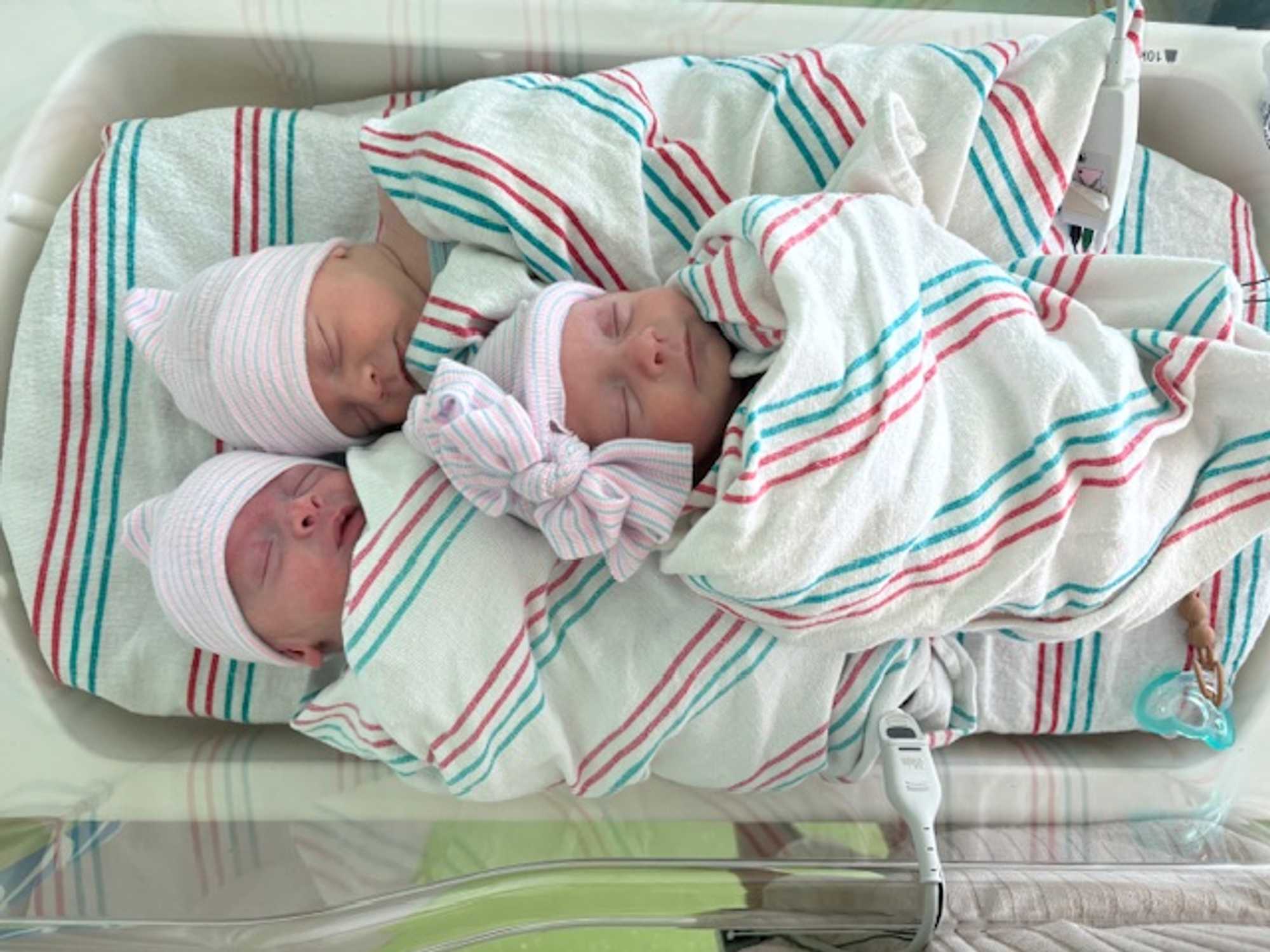 Arthur, Henry, and Ella make their debut.Photo courtesy of Women’s Memorial Hermann
The three babies spent 58 days in the hospital’s Neonatal Intensive Care Unit (NICU), learning to breathe and eat independently. Rebekah describes the staff as more than caregivers. To her, they became mentors and champions, teaching the family how to read infant cues, manage feeding challenges and feel confident as first-time parents.
Today, the triplets are healthy, feeding well, gaining weight steadily and thriving. “All the NICU nurses and doctors at Children’s Memorial Hermann at Memorial City are angels on earth,” Rebekah said. “They helped me become a mother and made sure my children came home healthy. I’m forever thankful.”
Learn more about high-risk pregnancy and NICU services at Memorial Hermann.